
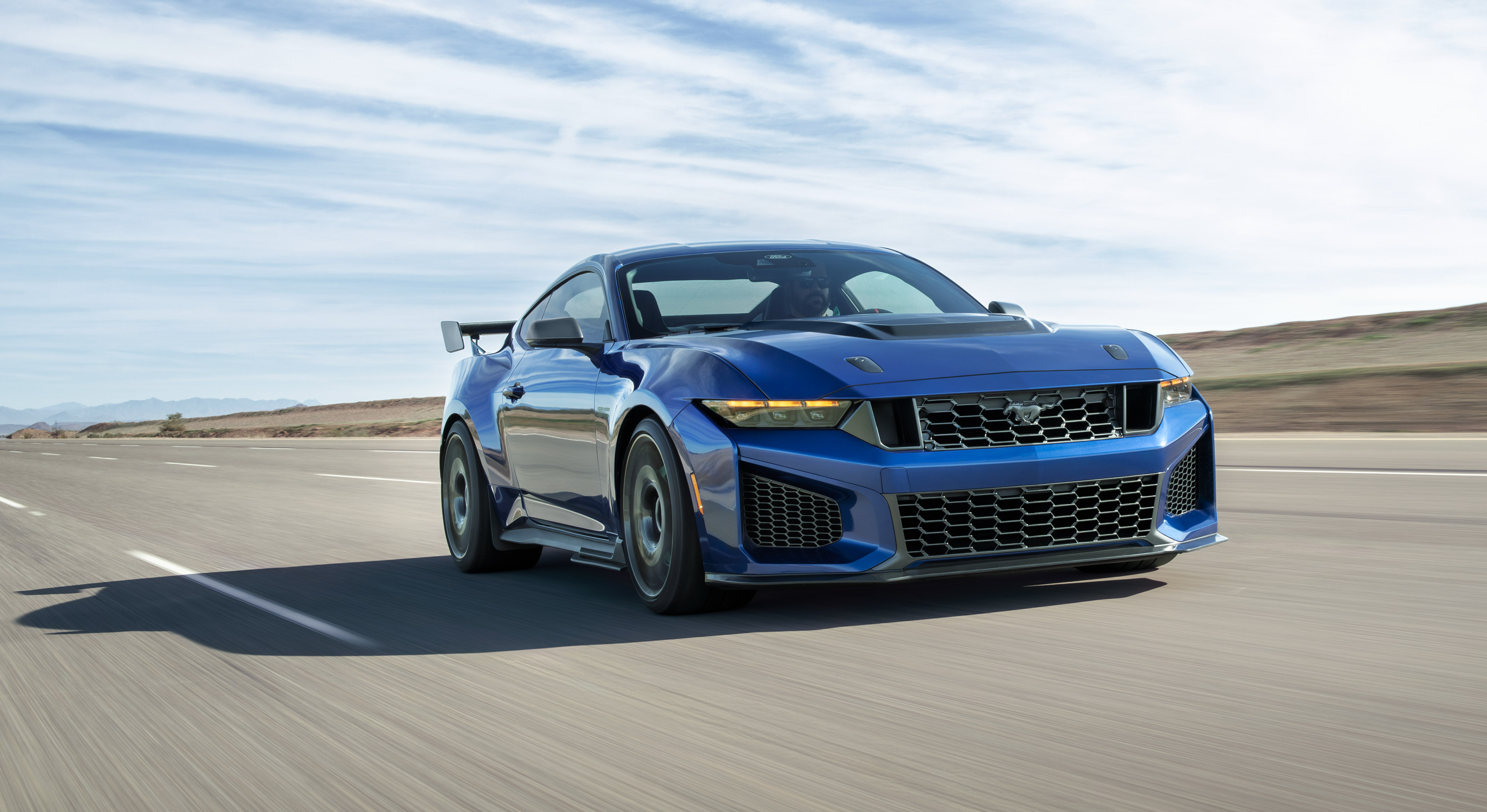

In my 30 years at Ford, I’ve worked on everything from powertrains to plant management, but I had never had the privilege of working on a Mustang.
When I was asked to serve as chief program engineer for a new high-performance Mustang from Ford Racing, I knew the assignment was a rare honour. There is an emotive power in a Mustang that you don't find anywhere else in the industry, and for the Ford Racing team, the track isn’t just a testing location, it’s a second home.
The Mustang Dark Horse SC was developed by engineers who live their lives at racing circuits, and that track-first mentality is woven into every bolt and calibration of this car.
To engineer the most advanced, powerful, and track-capable* Mustang Dark Horse in the stable, we didn't work in a vacuum. We took the Dark Horse SC to Sebring and Virginia International Raceway to test alongside the Mustang GTD supercar and the Mustang GT3 race car. This collaboration bore immediate fruit.
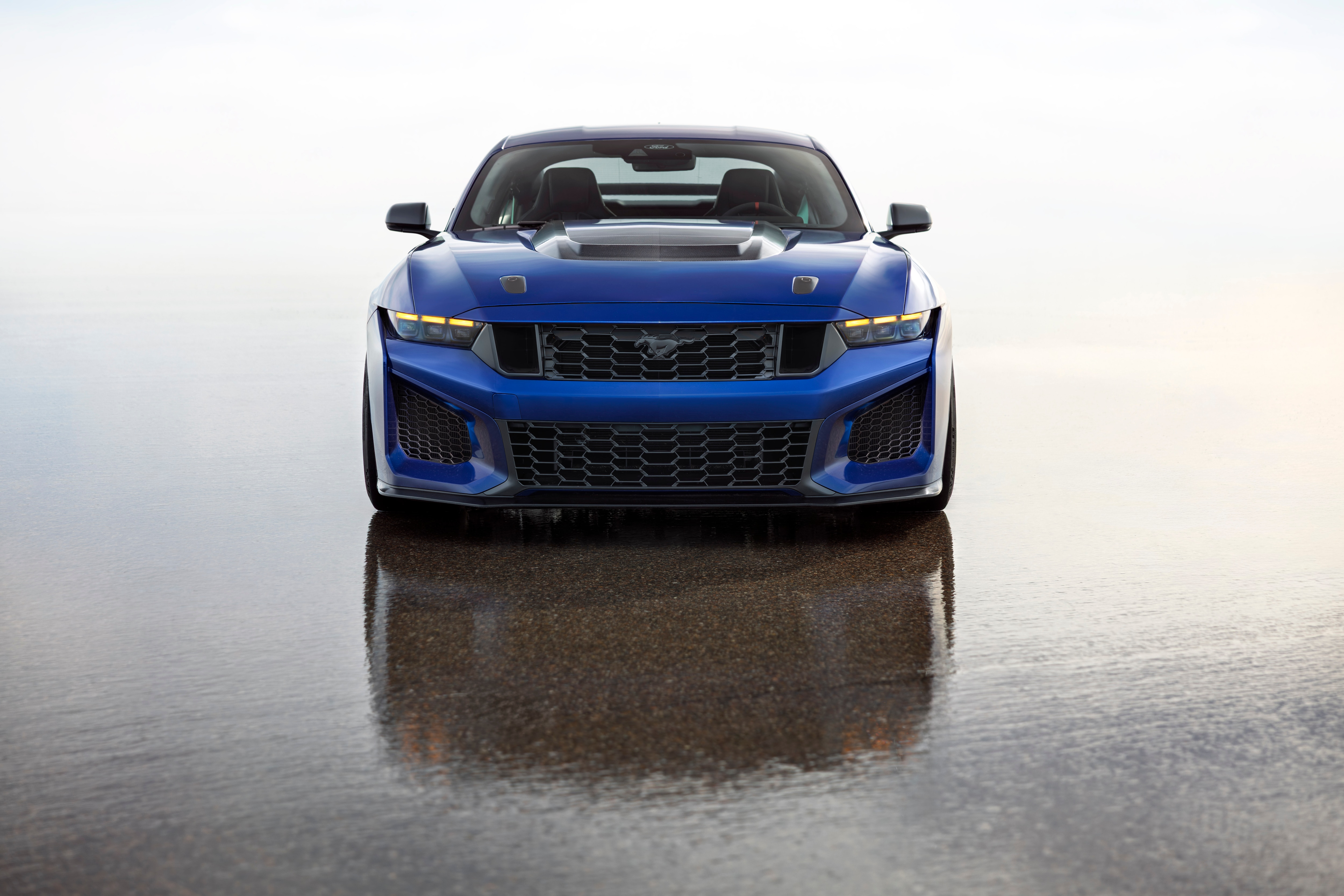
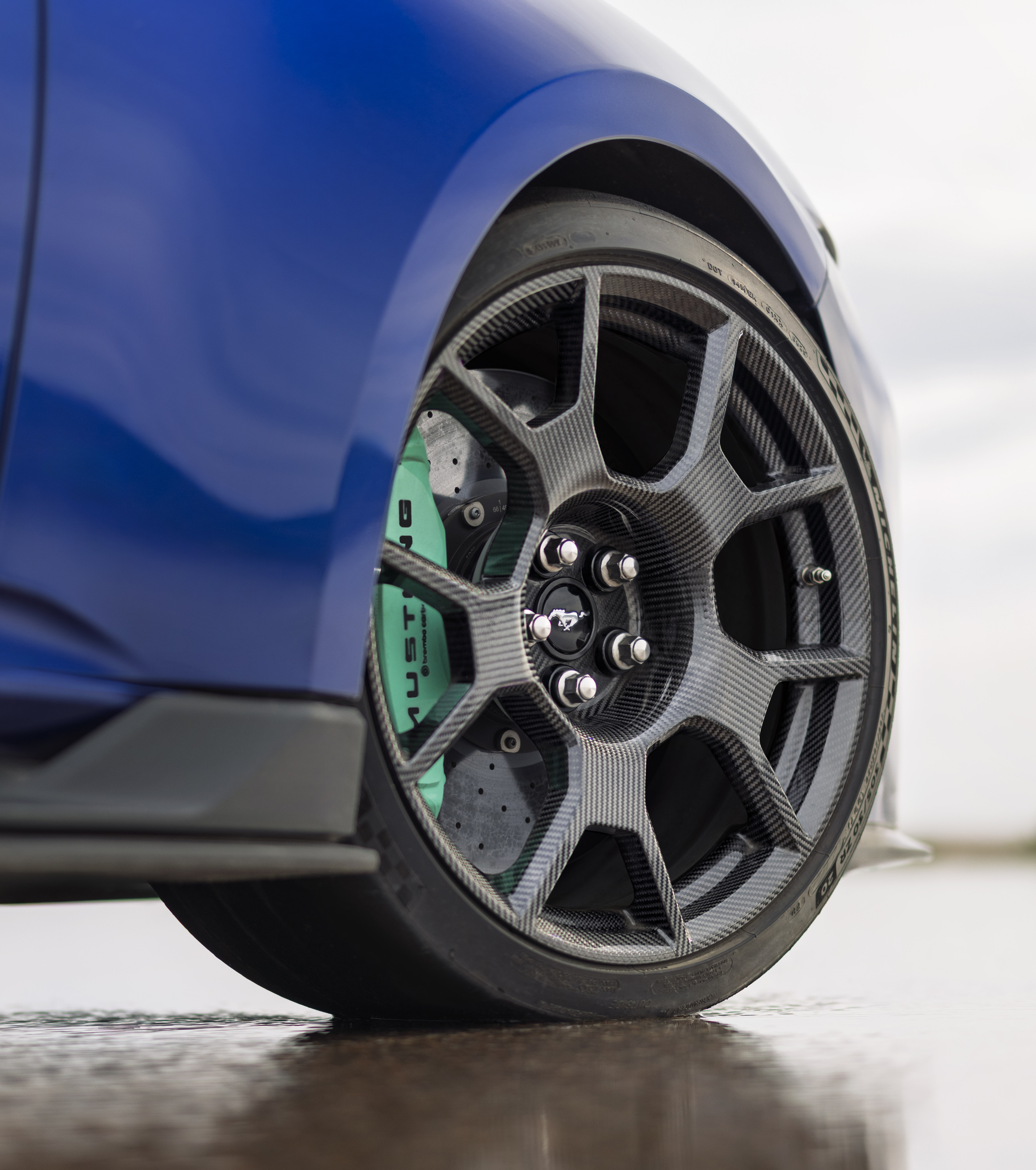
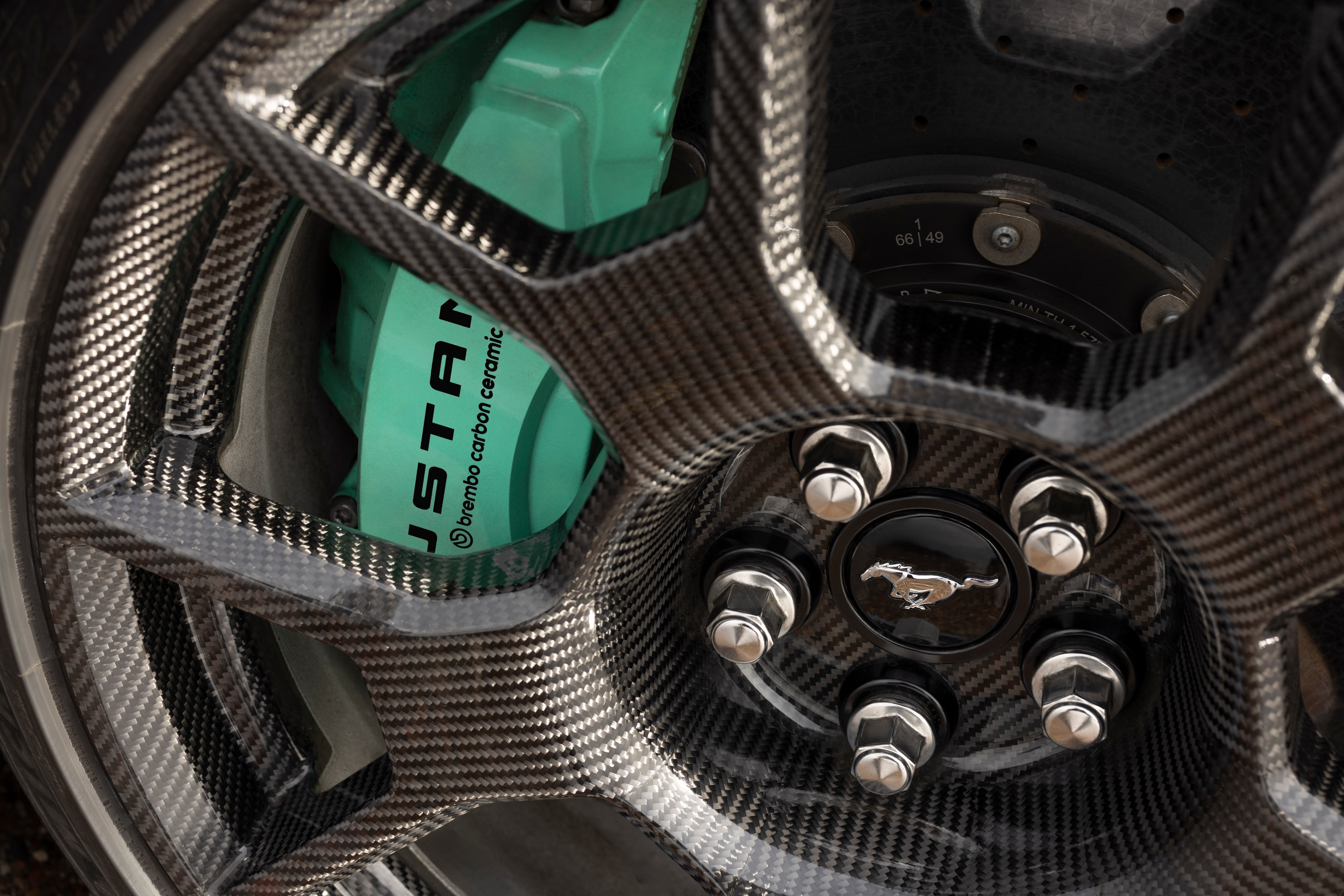
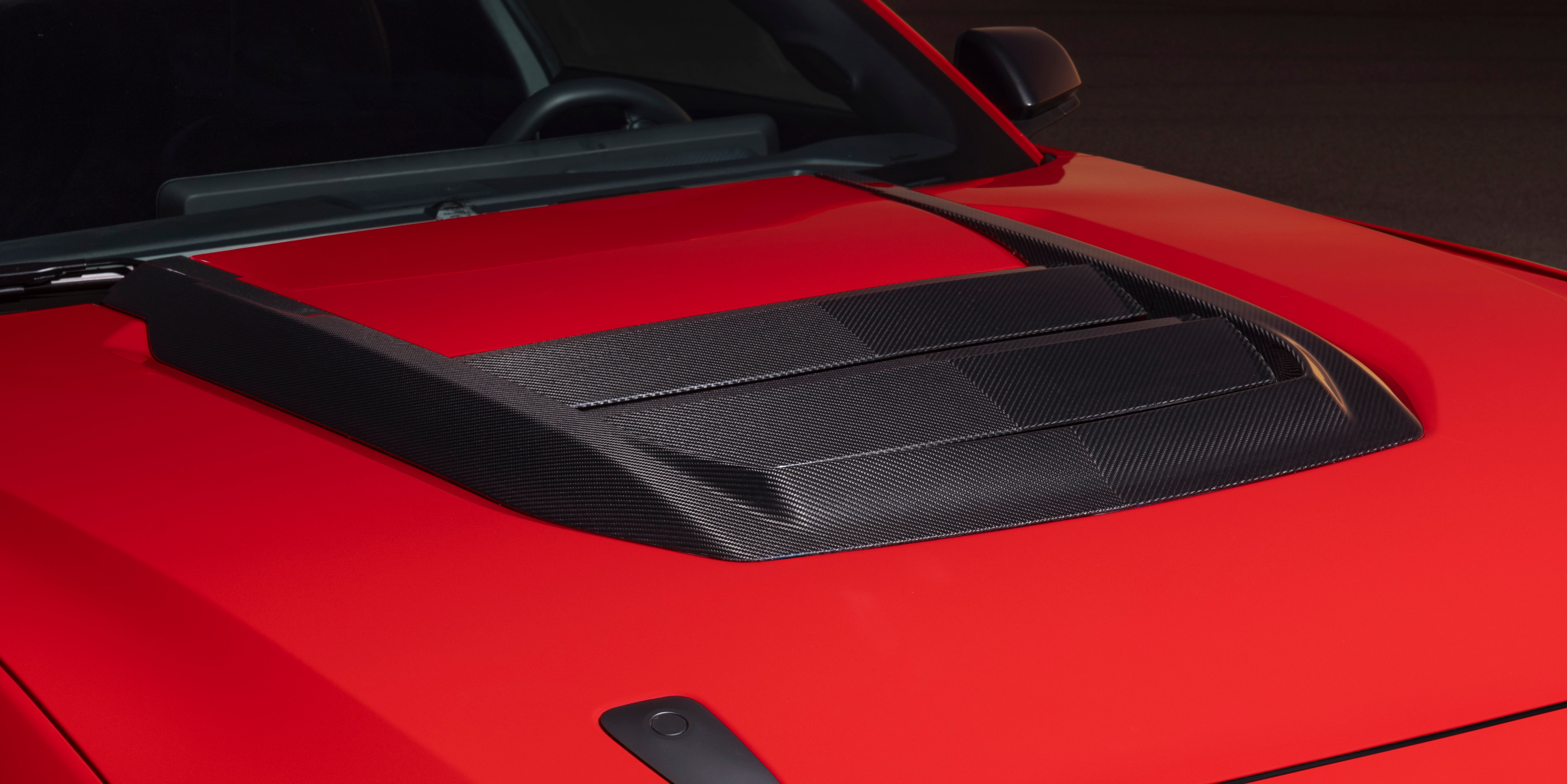
By working with the GTD team, we were able to adopt Brembo carbon-ceramic brakes and Michelin Pilot Sport Cup2 R tires for the Mustang Dark Horse SC Track Pack. The aerodynamic changes on Mustang Dark Horse SC — like its new hood and the carbon-fibre venting, as well as the revised fascia and underbody venting — all benefited from the raw data we shared at the track.
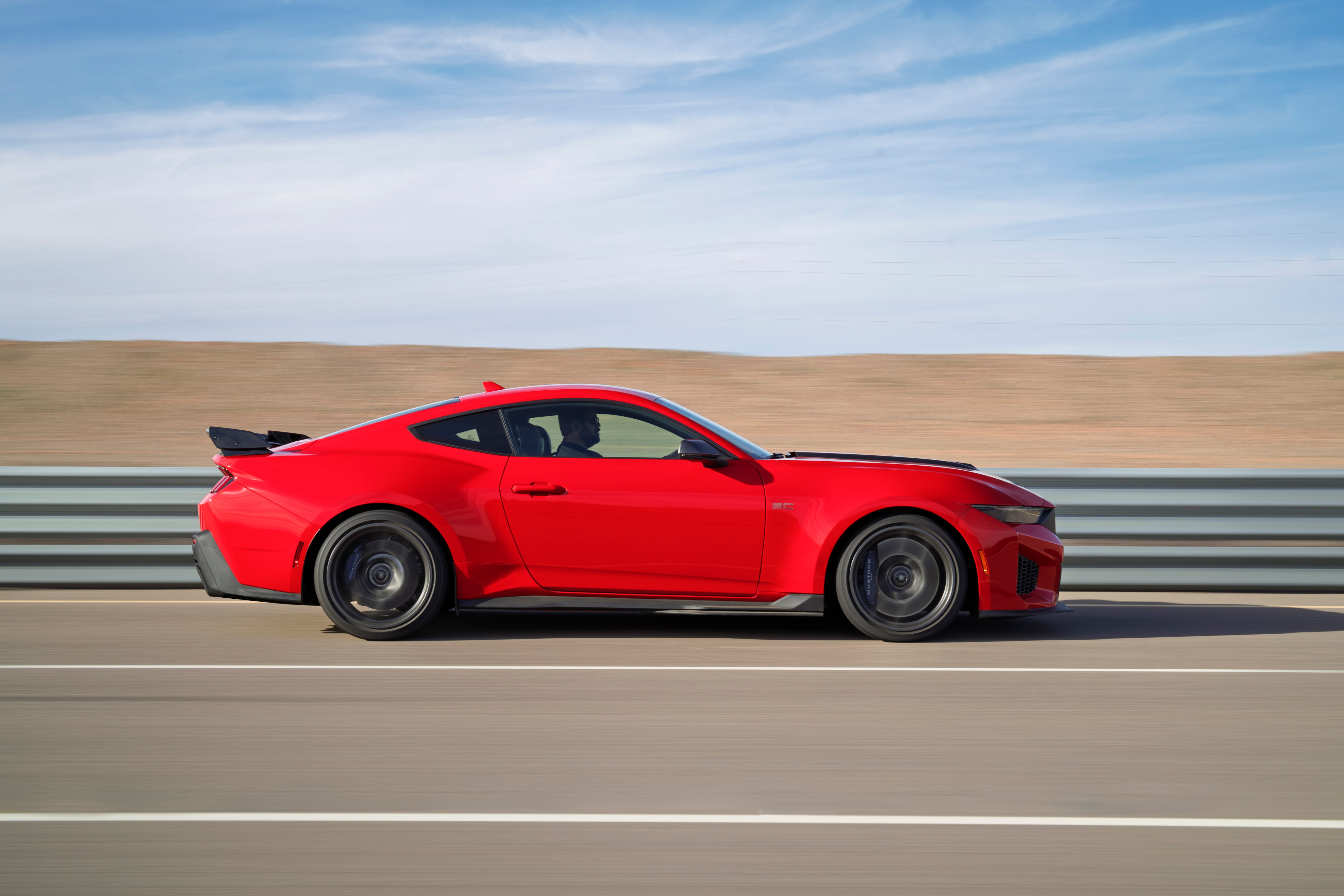
But this partnership was a two-way street. During development, our team engineered a specific ducktail-shaped decklid for the Mustang Dark Horse SC Track Pack that improved the rear wing’s efficiency by 10 percent without requiring a larger wing or higher angle of attack, both of which could impact rear visibility.
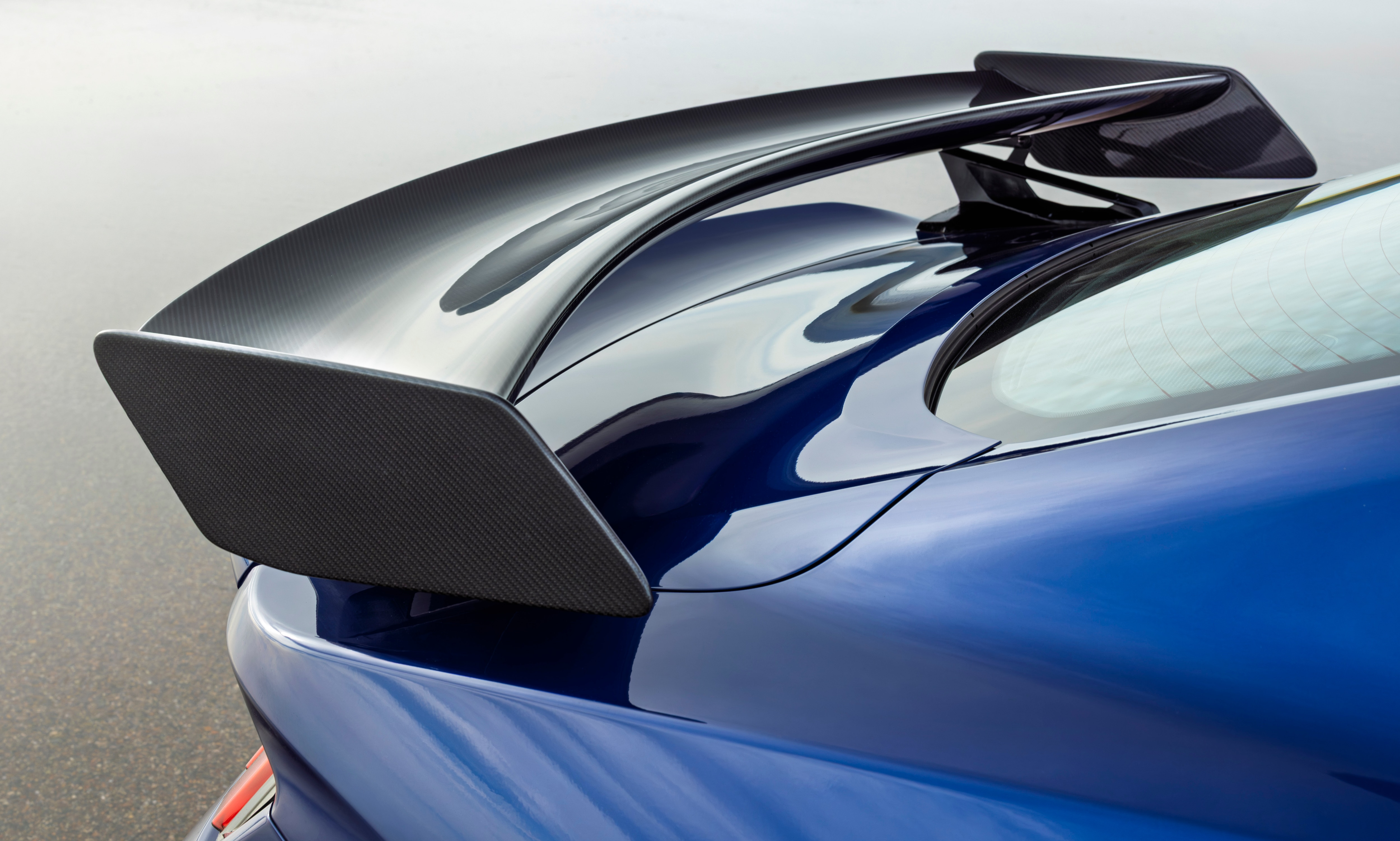
The impact was so impressive that the Mustang GTD team actually adopted a similar design for the supercar.
While the supercharged 5.2-litre V8 and seven-speed dual-clutch transmission provide the heart-pounding soundtrack, the real story of the Mustang Dark Horse SC is the relentless pursuit of physics.
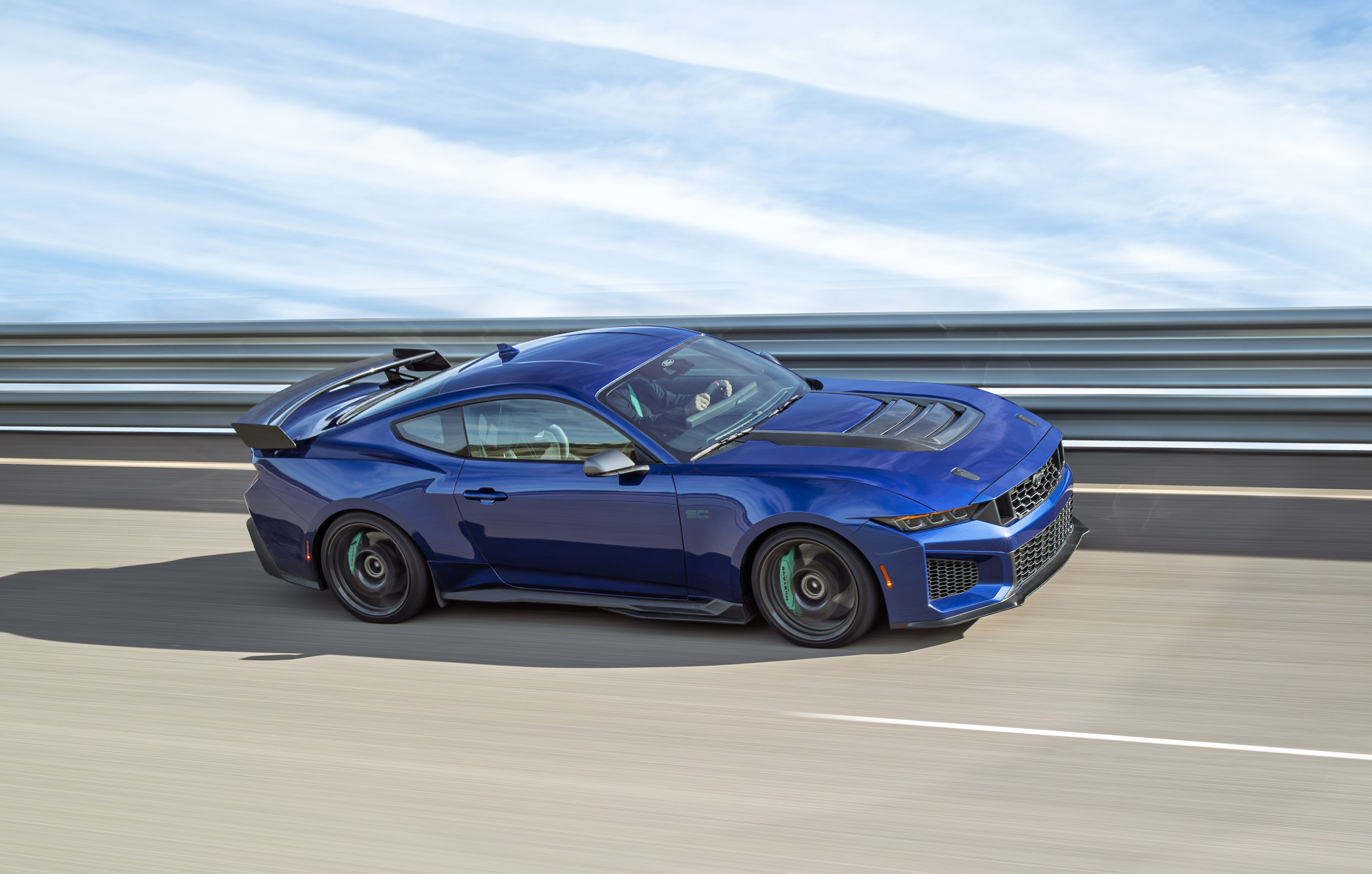
By utilizing carbon-fibre wheels, and those Brembo carbon-ceramics, we stripped 68 kilograms (150 pounds) of weight from the Track Package. We replaced standard steel suspension components with forged links and added a lightweight magnesium strut tower brace to sharpen steering feel and reduce unsprung mass.
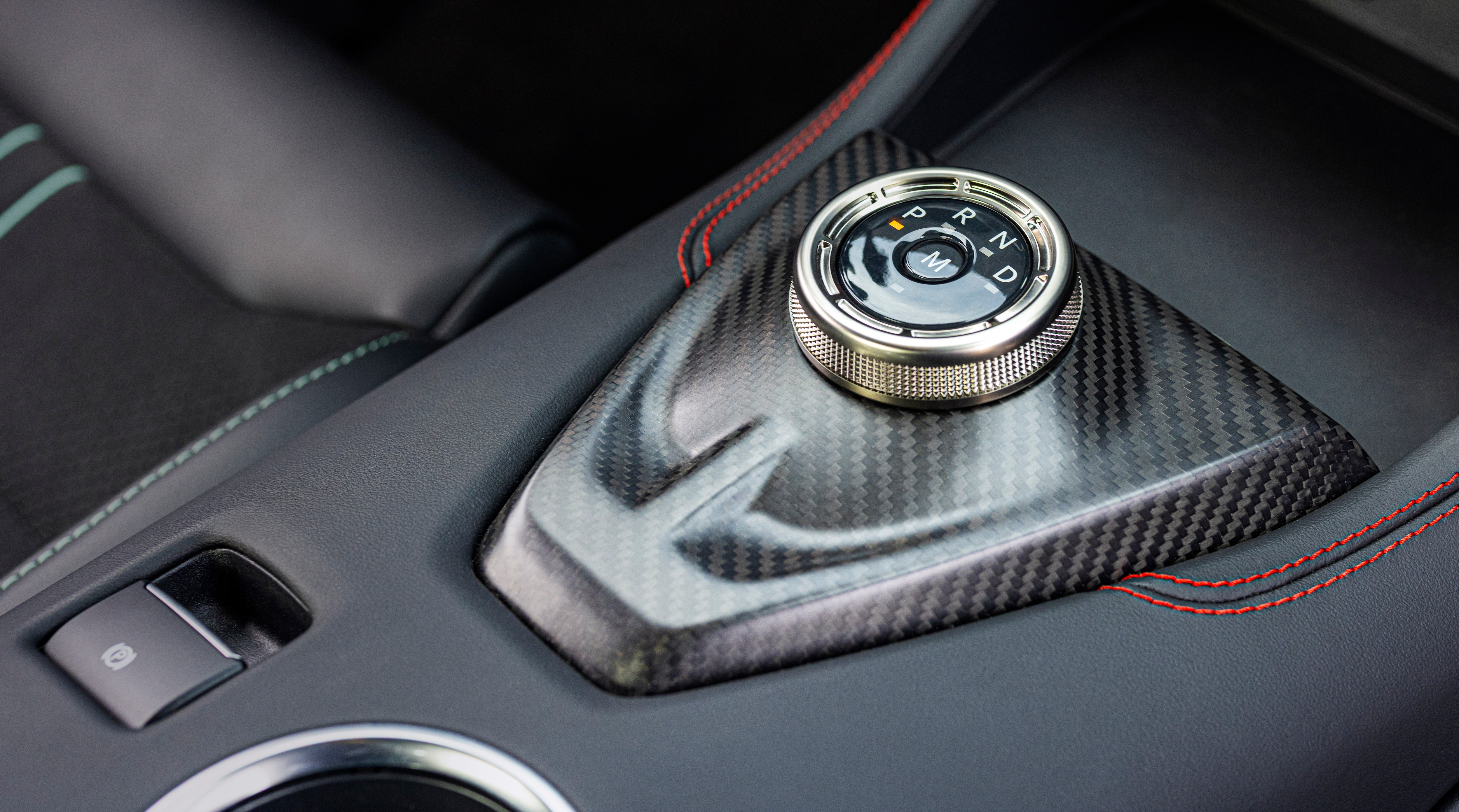
On the Mustang Dark Horse SC Special Edition, we even brought over 3D-printed titanium accents from the GTD program, because at this level of performance, every gram matters. This is a story about a total integration of hardware and software, including next-generation MagneRide dampers with revised spring rates and knuckles.
The aerodynamic profile was another area where we refused to compromise. The new aluminum hood features a massive vent that improves powertrain cooling and helps manage front-end dynamics. When the hood vent tray is removed, it creates 2.5 times the downforce of the standard Mustang Dark Horse hood vent, while the Mustang Dark Horse SC with Track Pack’s carbon-fibre wing helps generate a staggering 281 kilograms (620 pounds) of rear downforce at 290 kmph (180 mph).
To ensure the driver can actually harness this capability, we integrated a Variable Traction Control system with five distinct levels, in addition to fully deactivated ESC, to dial in the desired amount of traction assistance.
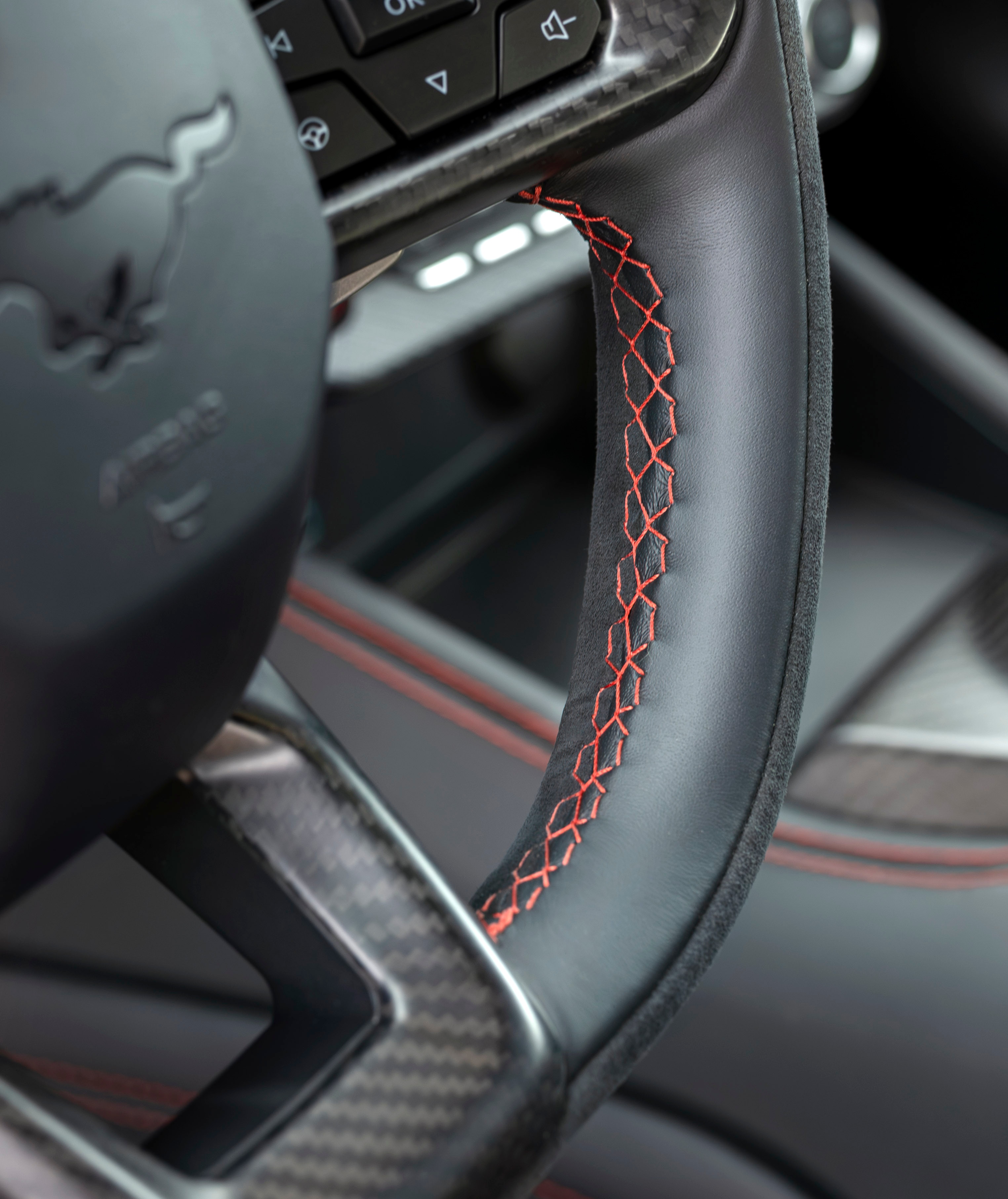
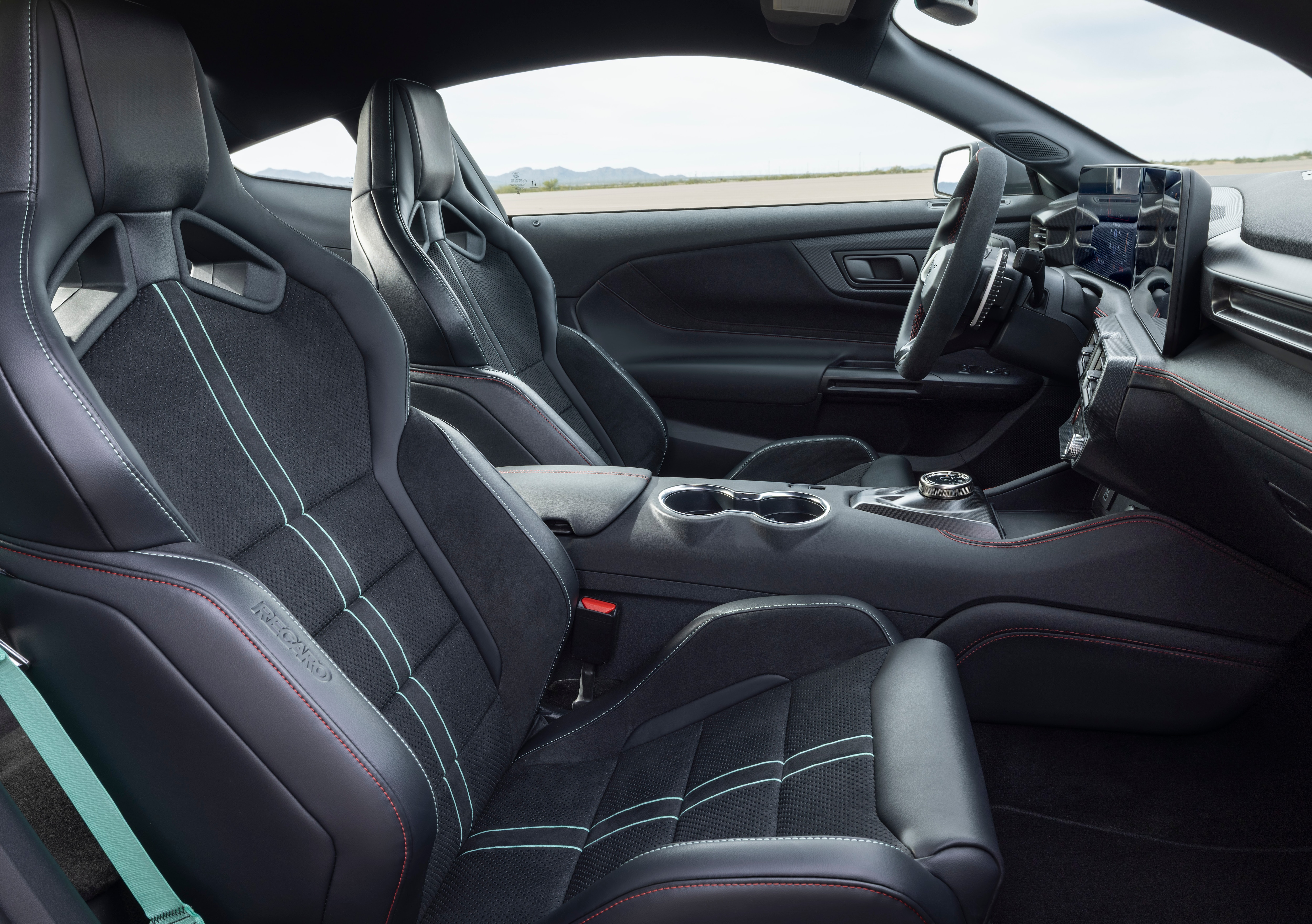
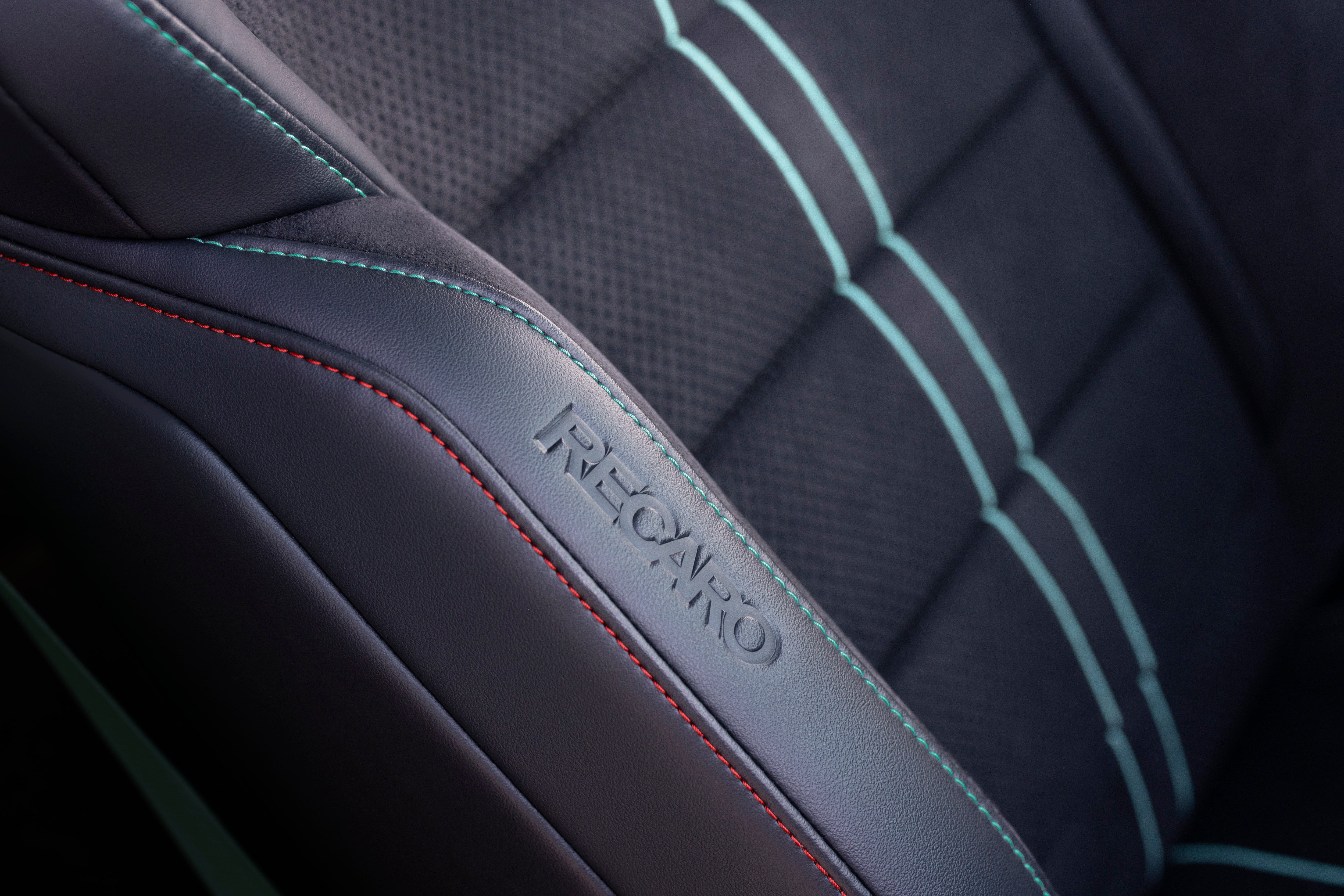
We also adopted the GTD’s leather-wrapped, flat-bottom steering wheel featuring a 12 o’clock stripe with integrated performance controls, surrounded by Alcantara and carbon-fibre accents. Optional Recaro leather and Dinamica sport seats are included in the Track Pack, which offers Space Gray or Teal accents and replaces the rear seats with a storage shelf.
The result is a vehicle that sits in the top tier of the Mustang stable — between the Mustang Dark Horse Performance Package and the Mustang GTD.
It is a high-powered Mustang that I don’t think the world saw coming, but it is exactly what happens when you let racing engineers design a road car.
Arie Groeneveld is Mustang Dark Horse SC chief program engineer.
*Track capability is dependent on environmental conditions, track conditions, and driver inputs. Always consult owner’s manual and drive within your and the vehicle’s capability limits.