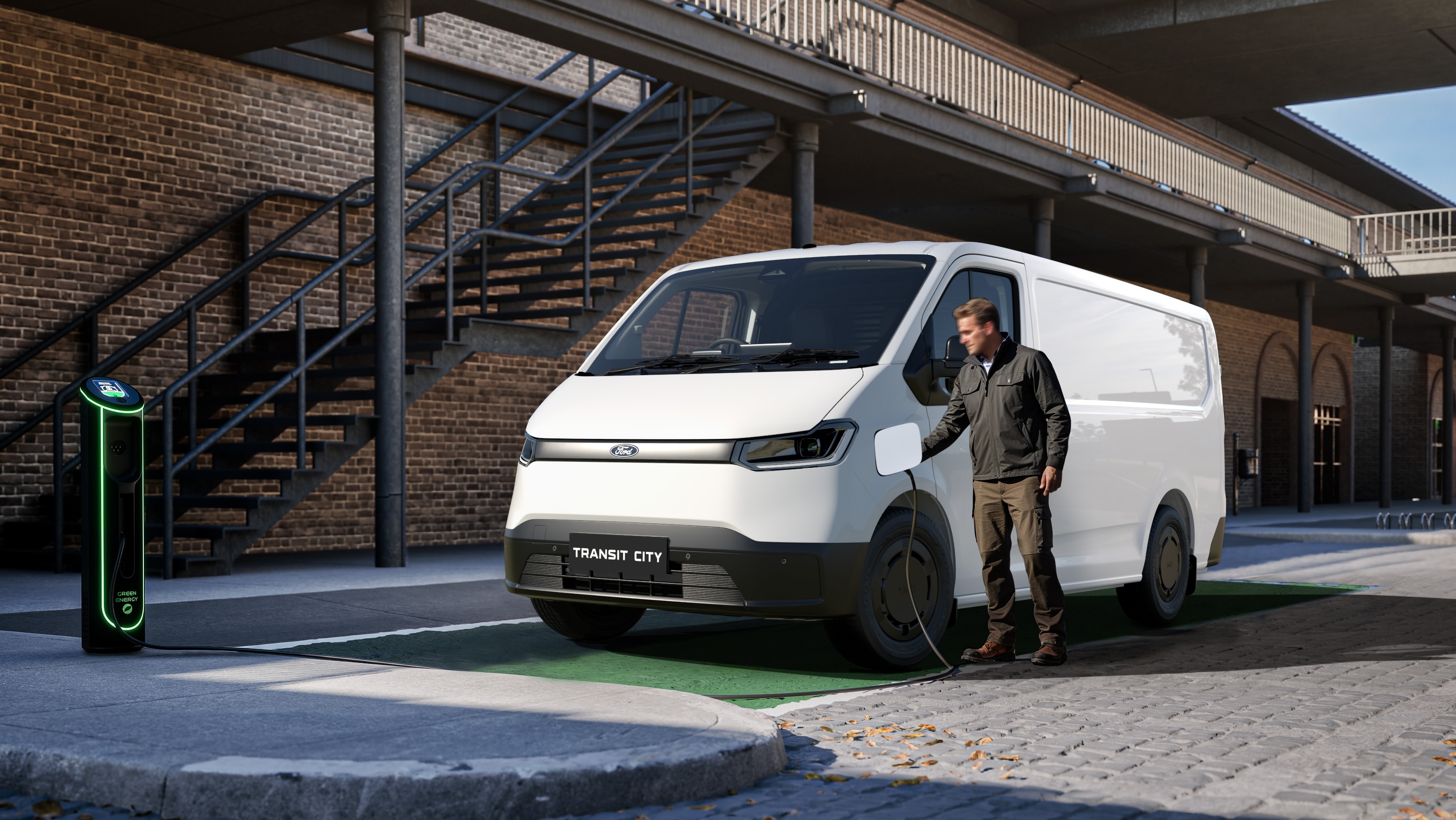

Since Ford launched the original Transit in 1965, the nameplate has continually evolved to meet the tough, uncompromising demands of working businesses. The latest evolution in that 60-year commercial lineage, the all-new, fully electric Transit City, takes a focused, engineering-led approach to the biggest operational shift facing commercial fleets today: the transition to zero-tailpipe-emission transport.
Designed specifically for dense urban environments, the Transit City bypasses long, complex options lists in favour of a single, uncompromised standard specification: one variant, equipped with just about everything a working driver needs from day one. The objective is simple, strip away ordering complexity, reduce operational downtime, and drive down total cost of ownership for Australian fleets ready to go electric.
"Transit City represents a new way of thinking about commercial vehicles for Australian and Kiwi businesses. We know urban operators need a van that's affordable, capable and ready to work from day one and that's exactly what Transit City delivers," said Fadi Mawal, President and CEO, Ford Australia and New Zealand.
At a Glance: Ford Transit City Electric Van Key Specifications (both AUS & NZ markets)
The fully electric Transit City van features a 56kWh LFP battery, targeted 254km 1 WLTP combined range, 380km 8 WLTP City range, 1085 kg 2 payload, and DC charging.
- Powertrain & Drivetrain: Front-wheel drive single e-motor (110 kW) 3
- Battery Chemistry & Capacity: 56 kWh Lithium-Iron Phosphate (LFP)
- Targeted Driving Range: Up to 254 km 1 WLTP combined range, and up to 380km WLTP City range 8
- Maximum Payload Capacity: Up to 1,085 kg 2
- Maximum Load Volume (with Bulkhead) & Euro Pallet Capacity: 6.4cu.m4 volume (Fits 3 Euro pallets)
- DC Charging Time (10–80%): Approx. 33 minutes 5 at 87kW DC. Approx. 68 km of driving range added in 10 minutes of DC charging 5
- AC Charging Time (10–100%): Approx. 5.5 hours 5 at 11 kW AC
- Service Interval & Maintenance: 1 year / 30,000km
- Vehicle Warranty: Up to 7 years / unlimited km 6
- High Voltage Component Warranty: 8 years / 160,000km 14
What is the Cargo Capacity and Payload of the Transit City?

The business end of any commercial van is its load bed. The compact configuration of the Transit City is tailored specifically for tight metropolitan streets, narrow alleyways, and congested loading bays. Despite its nimble footprint, it delivers an expansive 6.4cu.m 4 of cargo volume capable of swallowing three Euro pallets, alongside a maximum payload capacity of up to 1,085kg.2
In keeping with Ford’s single-model philosophy, every Transit City rolling off the line features heavy-duty commercial protection out of the box. A durable full-surface load liner, half-height protective interior trim, and robust tie-down lashing points are fitted as standard equipment, no expensive option packages required.
How Does the 56 kWh LFP Battery Suit Commercial Fleets?

In an electric commercial vehicle, battery architecture dictates payload, capital cost, and daily range viability. To determine the ideal battery capacity, Ford engineers analysed telematics data from more than 2,000 Transit Custom vans operating in real-world conditions. 7 Findings revealed that typical urban daily trips average 76km, with 90% of daily routes requiring 200km or less.
The Transit City features a 56kWh Lithium-Iron Phosphate (LFP) battery targeting a range of up to 254 kilometres WLTP combined range 1, and up to 380 kilometres WLTP City range 8 which should deliver more than the required daily distance for typical urban drop routes.
LFP chemistry was chosen specifically for its thermal durability, long cycle life, and greater resistance to degradation under frequent DC charging cycles, a critical operational advantage for multi-shift businesses demanding minimal downtime.
Power is delivered via a front-wheel-drive layout with a 110kW 3 e-motor generating instant, linear torque to move heavy payloads cleanly away from lights. Crucially, Ford chassis engineers fine-tuned the one-pedal driving calibration based on direct feedback from commercial EV operators, maximizing regenerative braking energy recovery while smoothing out driver fatigue during relentless stop-and-go urban traffic. 9
What Are the Charging Times and Estimated Running Costs?

Right-sizing the battery energy capacity directly accelerates turn-around times at the plug:
- 11 kW AC Charging (Depot / Overnight): 10% to 100% state-of-charge in approximately 5.5 hours 5.
- 87 kW DC Charging (Public / On-Route): 10% to 80% state-of-charge in approximately 33 minutes 5.
- Quick On-the-Go Top-Up: Adds approximately 68km of driving range in 10 minutes 5 on a DC charger.
Beyond electricity cost efficiencies, eliminating traditional internal combustion components (turbos, fuel injection systems, multi-speed gearboxes, and exhaust after-treatment) drops maintenance demands significantly. Ford projects scheduled maintenance costs to fall compared to an equivalent diesel van, thanks (in part) to service intervals of one year or 30,000 km (whichever occurs first).
What Standard Equipment and Driver Assist Features Are Included?
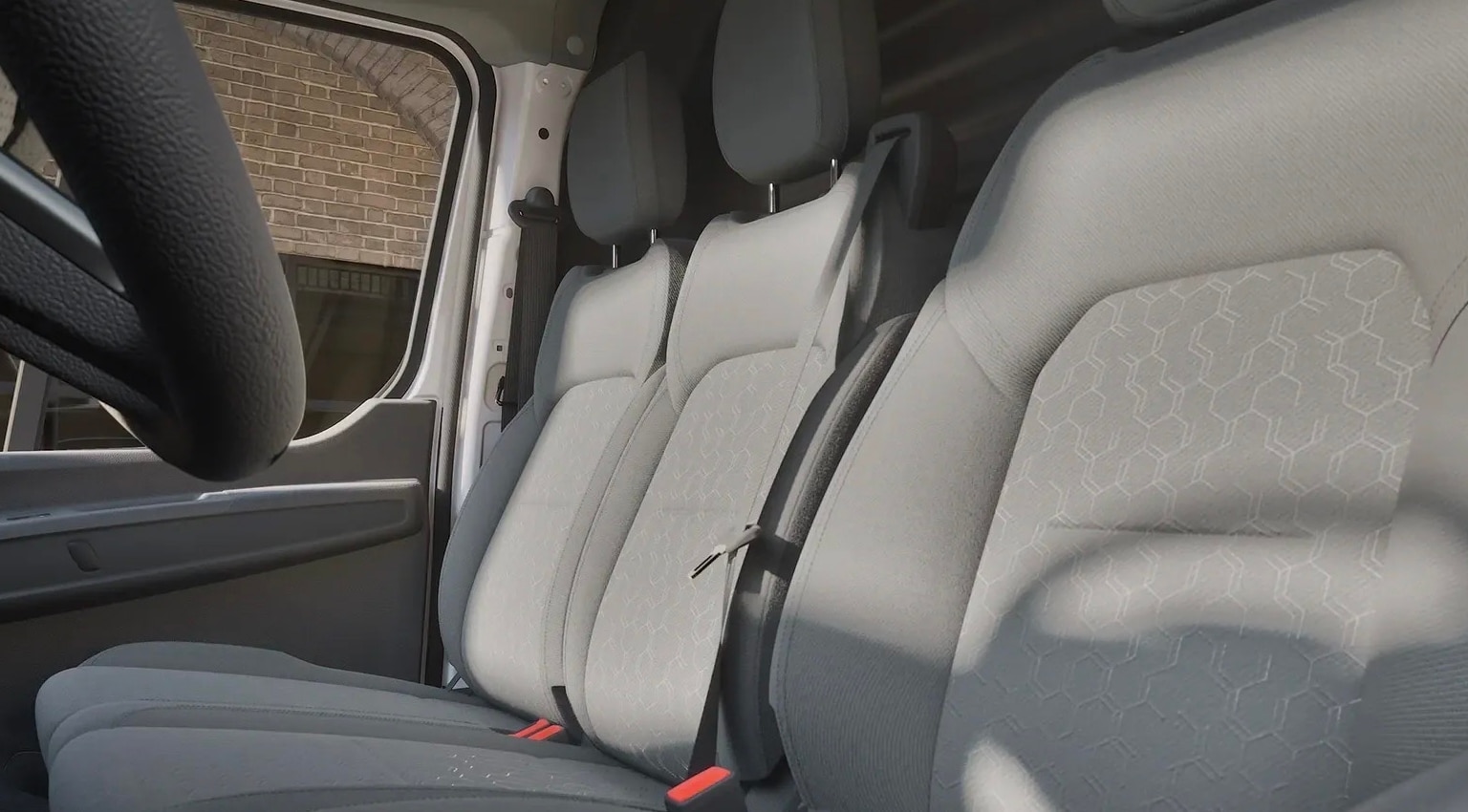
Throughout its engineering development, the Transit City was tailored around the physical reality of the driver's daily shift. Recognizing that urban delivery drivers sometimes enter and exit their cab over 200 times a day, every Transit City includes a high-efficiency heated driver's seat (which, on its own, consumes significantly less battery power than heating the entire cabin), alongside standard keyless push button start to eliminate friction on high-density, multi-drop runs.
In-cab technology is centred around a clear 12.3-inch central touchscreen running wireless Apple CarPlayTM and Android AutoTM integration for real-world route planning. 10

To help safeguard drivers, pedestrians, and cargo in crowded city precincts, a suite of advanced driver-assist systems comes standard on every vehicle:
- Automatic Emergency Braking (AEB) 11
- Front and Rear Parking Sensors 12
- Rear-View Camera with Dynamic Guidelines 12
- Adaptive Cruise Control with Stop and Go 13
- Lane Departure Warning 12
How Is the Transit City Tested to Ensure Commercial Durability?
The Transit City was subjected to the same gruelling global durability regime as every heavy-duty van in the Ford lineup, which is designed to simulate 10 years of severe commercial operating abuse.
Because urban courier workplaces extreme mechanical stress on high-use contact points, Ford engineers put the vehicle through relentless door-slam testing, mechanically slamming the rear cargo doors, side loading door, and driver's cab door over 200,000 times in extreme climate chambers.
The complete vehicle is backed by Ford Australia’s standard comprehensive base vehicle 7 Year Conditional Warranty, 6 paired with an eight-year / 160,000-kilometre warranty dedicated to high-voltage EV battery and drive components.
“The shift to electric doesn't have to be complicated. Transit City gives businesses a straightforward, fully equipped van that's ready to work, and the total cost of ownership makes a compelling case for fleets looking to make the switch,” concluded Mawal.
Transit City will be available at a recommended driveaway price from $50,000 in Australia, with first customer deliveries expected to commence from November 2026. 15
1 Estimated range using Worldwide Harmonised Light Vehicle Test Procedure (WLTP). Figures shown are for comparability purposes and should only be compared with other vehicles tested to the same technical procedures. Actual range varies with conditions such as external elements like temperature, driving behaviours, route profile, vehicle maintenance, and lithium-ion battery age and condition. WLTP Overall Range reflects a combined driving cycle. This test is conducted in controlled conditions with an ambient temperature of 23 degrees Celsius and no climate or electrical load.
2 Subject to State and Territory regulations. Maximum payload is calculated by deducting the vehicles Kerb Weight from its Gross Vehicle Mass (GVM). Payload is the maximum combined value of occupants, cargo, added accessories and added structures. Vehicles should be weighed before and after adding additional load or accessories to ensure the maximum Gross Vehicle Mass (GVM), Gross Combined Mass (GCM) and Gross Axle Weight Ratings are not exceeded.
3 Calculated via peak performance of the electric motor(s) at peak battery power. Individual results may vary.
4 Maximum load volume method simply measures the volume of a fine-grained material such as sand or rice which can be deposited into the loadspace. Load Area Protection Kit may impact cargo area dimensions and capacities.
5 Charging times may vary. Charging rate and time are dependent on battery state of charge, charger output, battery temperature and ambient temperature.
6 7 Year Conditional Warranty applies to new and demonstrator vehicles delivered from 1 September 2026 in Australia. All services must be completed at a Ford dealer within servicing intervals. Warranty exclusions and conditions apply and can be viewed here https://www.ford.com.au/owners/warranties/. Warranty Period commences on the date of delivery except where the vehicle is a demonstration vehicle, in which case it commences on the date on which it was first registered by a Ford dealer. Our goods come with consumer guarantees that cannot be excluded under the Australian Consumer Law. This warranty does not limit and may not exceed your rights under the consumer guarantees.
7 Based on telematics data collected from 2,312 Transit Custom vans operating in Australia between 23/11/2024 and 07/07/2026. Results are based on this sample only and may not be representative of all Transit Custom (or Transit City) vans, applications, or driver use cases. Actual driving distances and usage patterns will vary depending on vehicle usage, operating conditions, and individual requirements.
8 Based on a full charge. Estimated WLTP City Range is calculated using the Low and Medium speed phases of the Worldwide Harmonised Light Vehicle Test Procedure (WLTP) test cycle. Figures shown are for comparability purposes only and should only be compared with other vehicles tested to the same technical procedures. Actual range varies with conditions such as external elements like temperature, driving behaviours, route profile, vehicle maintenance, and lithium-ion battery age and condition. This test is conducted in controlled conditions with an ambient temperature of 23 degrees Celsius and no climate or electrical load.
9 One pedal drive is an extra driving aid. It does not replace the driver’s attention and judgement, or the need to apply the brakes.
10 Apple CarPlayTM / Android AutoTM requires phone with compatible version of Apple iOSTM / Android™ (as applicable), active data service. Apple / Google and other third parties are responsible for their respective functionality. Message and data rates may apply. Apple CarPlay, Siri Eyes Free, iPod and iPhone are trademarks of Apple Inc. registered in the US and other countries. Android Auto and Google Maps are trademarks of Google Inc. Warning: Local laws prohibit some phone functions while driving. Check your local road rules before using these functions.
11 Driver-assist features are supplemental and do not replace the driver’s attention, judgment and need to control the vehicle. May not operate at certain speeds, or in certain driving, road or weather conditions. See Owner’s Manual for details and limitations. Autonomous Emergency Braking detects pedestrians, but not in all conditions, and can help avoid or reduce a collision. Intersection Assist does not detect all vehicles in intersection, pedestrians or cyclists. These do not replace safe driving. See Owner’s Manual for Limitations.
12 Driver-assist features are supplemental and do not replace the driver’s attention, judgment and need to control the vehicle. May not operate at certain speeds, or in certain driving, road or weather conditions. See Owner’s Manual for details and limitations.
13 The Stop & Go functionality of this system operates as low as 0km/hr in traffic jam situations. Customers should read the Owner's Manual for full details and limitations of the ACC system before activating the system
14 Warranty conditions apply. Our goods come with consumer guarantees that cannot be excluded under the Australian Consumer Law. Our warranty does not limit and may not exceed your rights under those guarantees. See https://www.ford.com.au/owners/warranties/ for warranty terms.
15 Recommended driveaway price for Transit City BEV MY27 at participating dealers, while stocks last. Available to Private and Blue, Silver, Gold and Demonstrator customers only. Ford Australia may vary this offer at any time.