
.jpeg)
Before the engines fire, the crowds gather and the first race vehicle charges into the dust, another journey has already begun.
It starts before sunrise, when the service park is quiet and the day's heat is only beginning to build. Navigation systems are checked, recovery equipment is secured and coffee is packed for the long hours ahead
Then the Ford Ranger rolls out.
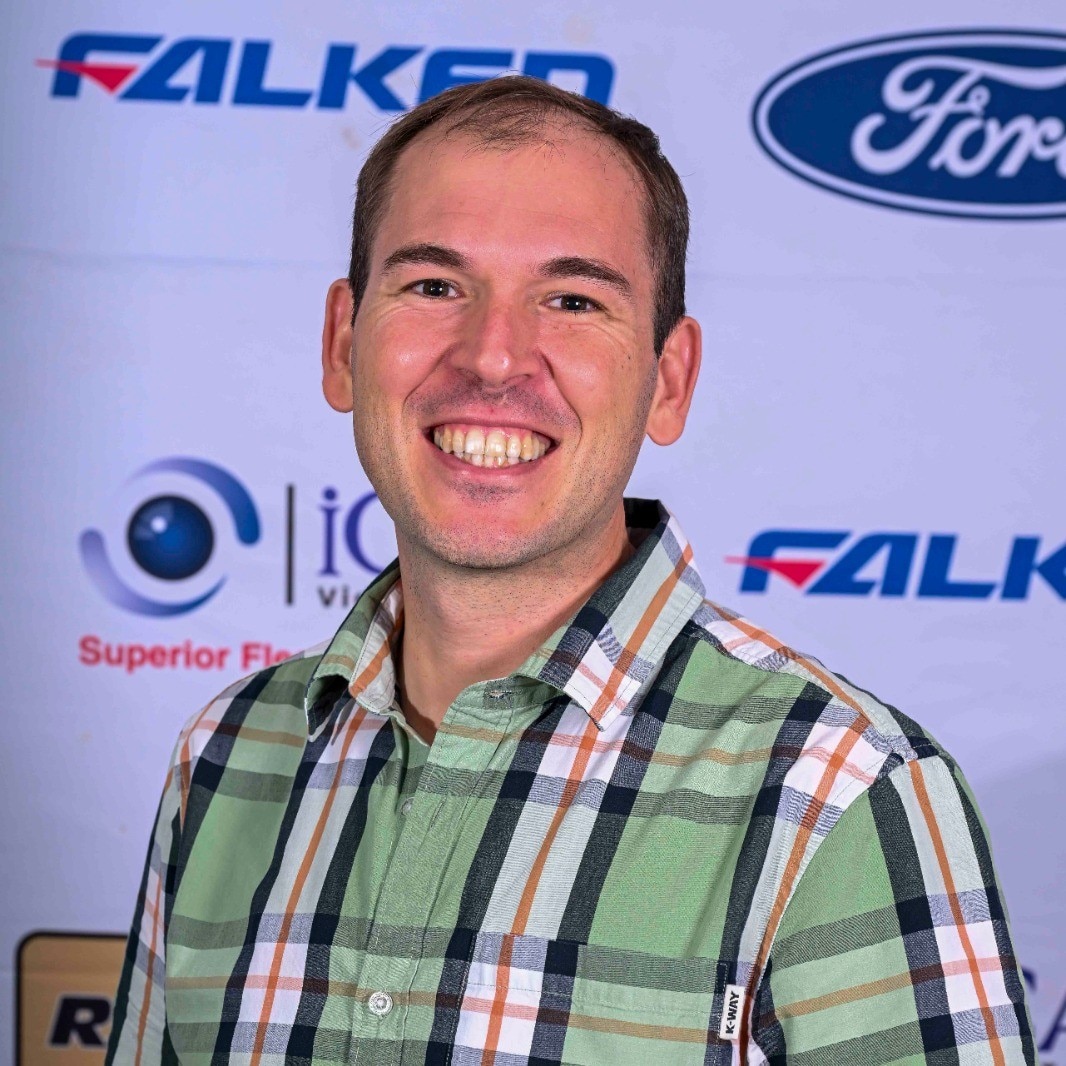
I'm Jaco Jonk, Competitor Relations Officer for the South African Rally-Raid Championship, and this is my office. Not a desk, not a building. A Ranger 3.0L V6 Wildtrak, a stack of route notes and several hundred kilometres of terrain that nobody else has driven yet.
Our task is not to chase podiums or championship points. There are no cheering spectators waiting at the finish and no cameras following our progress. Yet we perform one of the most important roles in the championship: preparing the road before the race.
Long before competitors tackle the first racing kilometre, the route and reconnaissance team is already deep into the landscape. We cover hundreds of kilometres through remote terrain, inspecting routes, checking access roads, assessing safety points and confirming navigation markers.
For the past season, the Ranger has quietly become the backbone of this operation.
.jpeg)
At a Glance: SARRC Reconnaissance Vehicle Specs & Data
- Vehicle Model: Ford Ranger 3.0L V6 Double Cab Wildtrak 4x4
- Specification: Standard production vehicle with All-Terrain (A/T) tires
- Annual Recce Distance: 35,000 km (approx. 80% off-road)
- Recce Hours per Event: 20 to 60 hours in-cabin
- Championship: South African Rally-Raid Championship (SARRC)
- Key Terrain Covered: Northern Cape (sand/rock), Free State & North West (farm tracks/corrugation), Bushveld (extreme heat), Outeniqua (mountain passes)
- Essential Gear Carried: Kinetic recovery ropes, shackles, air compressor, tire deflators, saw, hammer, portable lighting, jump starter, full tool kit, medical kit, operational monitors/printers.
What does it take to prepare a Rally-Raid route?
Race vehicles may command the spotlight, but the recce vehicle often faces the route at its most unpredictable.
Unlike the highly modified machines built specifically for competition, our Ford Ranger Wildtrak remains largely in standard production specification, with little more than a set of all-terrain tyres to prepare it for the task.
A lesson we learned the hard way. At the first event of the season, we ventured out on normal road tyres. Three flats later, we'd earned our education. That rookie mistake was also our last. The remainder of the season was completed on a single set of all-terrain tyres without incident.
Yet even properly shod, the Ranger must travel across much of the same terrain as the race vehicles.
There is deep sand and sharp rock in the Northern Cape, thick mud and river crossings after unexpected rain, and technical farm tracks through the Free State and North West. Long sections of corrugation test both the vehicle and its occupants. If you asked the Ranger which is worst, I think it would agree with us: definitely mud.
.jpeg)
The reality is that the recce vehicle does not get an easy life. It is effectively the first vehicle into every route and often the last to leave. It carries equipment, personnel, recovery gear, navigation systems and communications equipment while operating in terrain most standard vehicles would never encounter.
Over the course of a season, our Ranger covers approximately 35,000 kilometres. Nearly 80% of that distance is completed off-road, often in extreme heat, unpredictable weather and isolated areas where assistance may be hours away.
For us, reliability is not simply convenient. It is essential.
How does the Ford Ranger Wildtrak serve as a mobile workplace during long recce days?
Toughness, however, is only part of the story.
Recce days are long. Our hardest stretch this past season was the Northam Platinum Bushveld 400, where we were in the vehicle from 6 a.m. to 6:30 p.m. Some days begin even earlier and continue until the last available light disappears behind the landscape. Our crews can spend entire days inside the vehicle, moving between remote sections, recording changes, solving problems and preparing for the arrival of competitors.
As the hours pass, comfort becomes a form of capability.
Fatigue is real when the road stretches from dawn to dusk. A supportive cabin, modern safety systems and driver-assistance technology help the crew remain alert and focused during hours of slow, technical driving. When I think about the two most important qualities this vehicle gives us, it comes down to durability and technology. You need both when your workday looks like ours.
The Ranger's ground clearance and four-wheel-drive capability allow it to tackle difficult terrain with confidence. Its towing capacity and load space provide the practicality needed to transport everything required during an event weekend.
And the recce vehicle carries more than you might expect. Beyond recovery gear and navigation systems, ours becomes a mobile office, workshop and recovery unit all in one:
Safety & Recovery Gear: Kinetic recovery ropes, shackles, air compressor, tyre deflators, repair kits, jump starter, first aid kit, and fire extinguisher.
Hardware & Infrastructure: Saw, hammer, portable lighting, full tool kit, operational monitors, printers, and official event infrastructure.
If it is needed on the route, it travels in the back of the Ranger. The vehicle does not simply transport the team. It becomes part of the team.
.jpeg)
What punishment does an off-road recce vehicle endure over a season?
The evidence of the work is written across the vehicle.
Fine dust settles into every exposed corner. Stones leave marks on the bodywork and undercarriage. Water crossings test seals and systems, while sharp rocks threaten tyres and endless corrugations place sustained pressure on the suspension. (Ask our mechanics what takes the biggest punishment over a season, and the answer is immediate: suspension and shocks.)
These are not imperfections. They are reminders of the places the Ranger has been and the work it has completed.
The recce vehicle often goes where nobody else has gone yet. If there is a problem on the route, it is our crew that usually finds it first.
You need a vehicle you can trust completely, because there are many situations where you are hours away from assistance.
.jpeg)
There have been moments when we questioned whether the road ahead was passable. Sand became deeper than expected. Mud concealed the condition of the track. Steep climbs and washed-away sections looked capable of bringing progress to a halt.
Time and again, the Ranger continued, calmly and confidently pushing through obstacles that had seemed impassable at first glance.
Major failures or breakdowns over the entire season? None.
What makes South African Rally-Raid reconnaissance unique?
For all the hard work, there is an undeniable romance to reconnaissance.
We see the country before the noise and urgency of race day arrives. We watch the sun rise over open plains, cross remote rivers and follow tracks into valleys hidden from the main road. We travel through mountain passes and stretches of bushveld that feel untouched. The best scenery in this past championship? The Outeniqua 400, without question. Though the mountain passes were also among the toughest routes we faced all season.
There is time to notice the landscape: a herd moving in the distance, first light catching the dust behind the vehicle, or the sudden silence after the engine is switched off in the middle of nowhere.
.jpeg)
Long days on the road also create a bond you can't build any other way. Problems are solved over maps and open tailgates. Stories are shared while tyres are inspected and equipment is repacked.
We even become the unexpected rescue crew. At the VAPS HCV Vryheid 400, we came across a farmer whose tractor had broken down on the route. We stopped, helped him get it running again and sent him on his way. Our knight-in-white-armour moment of the season.
It is a bond built through exploration, shared responsibility and the knowledge that every detail matters.
Why the road before the race matters
Rally-raid is not only about the vehicles that cross the finish line. It is also about the people who travel the route first, marking the way and ensuring that others can compete safely.
While drivers and navigators ultimately battle for trophies and championship points, none of it would be possible without the countless unseen kilometres completed beforehand.
If our Ford Ranger could talk, it would probably say it didn't sign up for this, and that rally-raid is far less glamorous and far more relentless than most people imagine.
It would be right. But I wouldn't trade a single kilometre.
.jpeg)
One thing people would be surprised to learn about recce operations? The process is often equally as mentally demanding and operationally complex as the race itself. We spend anywhere from 20 to 60 hours in the vehicle per event. We carry kinetic recovery ropes, shackles, an air compressor, tyre deflators, repair kits, a saw, a hammer, portable lighting, a full tool kit, a jump starter, a first aid kit and a fire extinguisher. All of it in a production vehicle, on roads that don't appear on any map.
Through every dusty trail, muddy crossing and punishing corrugated road, the Ford Ranger continues to prove its place at the heart of rally-raid. Not only as a capable 4x4, but as a trusted companion on the long road before the race
Jaco Jonk is the Competitor Relations Officer (CRO) for the South African Rally-Raid Championship (SARRC) and an experienced cross-country racing competitor.
