
The Storm Passed. The Work Began. Ford Helps the Philippines Rebuild.

Community
.png)
 Dean Miller.png)
I was about 8 years old when I got a snorkel set, waded into some very shallow water and watched a few crabs scuttle around in the seagrass. I came back and said to my mum, "How do I do that forever?" She said, "Marine biologist. You can be a marine biologist." And that was it. I was sold.
Growing up in Melbourne, the Great Barrier Reef felt like another planet. I knew it was this kaleidoscope of life, the largest living structure on the planet, and I knew it was going to be a big part of my life. What I didn't know was that one day, my entire existence would be devoted to saving coral.
I came up to the Great Barrier Reef because it's the most biodiverse marine ecosystem on the planet. Back then, diving was about all the cool stuff you could see, not about rushing to see it before it's gone. Coral was part of the backdrop. It wasn't at risk.
Then 2016 came along.
.png)
The first mass coral bleaching event of recent times was devastating. It was like an underwater bushfire had gone through the northern part of the Great Barrier Reef. My camera became instrumental in showing the world what was happening. My images were some of the first that got out there.
Unfortunately, bleaching has become the norm. We've had six mass coral bleaching events in nine years. Even though coral reefs represent less than 0.1% of ocean area, they support over a quarter of all marine life. The corals are the absolute foundation. Everything depends on them to survive. Without them, you start losing other species.
.png)
It's on par with melting ice caps, with glaciers failing. This is another canary in the coal mine showing us that we're going through a phase shift.
It was one thing to watch it, to document it. It was another thing to start thinking about how we help the reef.
So, while research teams are trying to come up with solutions, genetic manipulation, assisted evolution, helping coral adapt to warmer oceans, we need to put the brakes on biodiversity loss. We need an insurance policy.
.png)
That's where the Forever Reef Project came from. A very simple idea. Think about Noah's Ark: go out there and collect multiples of everything and hold onto them in a safe place.
.png)
Our job is to collect every species of coral on the Great Barrier Reef, about 415 known species; we've collected more than 200 so far and keep them alive in state-of-the-art tank facilities. We make tissue samples, genetic material and live fragments available for reef research and restoration efforts. Effectively, we're making a living backup of what's on the Great Barrier Reef. It's never been done before.
.png)
Corals are the perfect organism to do this, because they're effectively immortal. In our tanks, we can control the chemistry, water temperature and light conditions with very stable parameters. Our corals will literally live for thousands of years in those tanks as long as we keep them going. That's why we call it The Forever Reef Project.
.png)
It's weird to think that in the tanks, there may already be the last living representatives of some species of Great Barrier Reef coral.
When people hear about the Forever Reef Project, they usually ask about the science. The tanks, the genetics, the coral itself. They don't often ask how we get the coral from the ocean to the facility.
.png)
Great Barrier Reef Legacy, the organisation behind The Forever Reef Project, is a Ford Australia not-for-profit partner, which is how the Ranger Hybrid ended up becoming part of the operation. And it does a lot more than carry coral.
The Ranger Hybrid really is the workhorse of our entire operation. We tow our boat 1 out to the reef for coral collections and then transport the corals from the ocean back to our main facility in Port Douglas in the back of the ute. It moves our corals around. It moves our team around. It does the heavy lifting that a project like this demands.
.png)
.png)
But here's where it gets interesting. With the Ranger Hybrid's 11.8kWh (usable) battery and Pro Power Onboard 2, we can use the vehicle as a life support system for our coral. We plug our tank systems directly into the Ranger and keep the corals alive for up to two days when the vehicle is fully charged.
In Port Douglas, tropical north Queensland, we're in a cyclone area. Cyclones generally mean power outages, and when you're keeping the most biodiverse coral collection on the planet alive in tanks that depend on stable water chemistry, temperature and light, losing power isn't an inconvenience. It's a potential disaster.
It's keeping the corals alive. That's what this vehicle does for us.
“Even when I’m running in Hybrid mode (using a mix of petrol and electric), the truck regularly returns between 1-2L/100km. That’s phenomenal. ”Dean Miller, The Forever Reef Project
My daily turnaround trip from home to the facility is less than 40 kilometres, which sits, when I’m not towing the boat, within the Ranger Hybrid's estimated electric range. 3 So, most days, I'm operating on pure electric (EV Now) - no petrol at all. With petrol prices rising, that’s win-win.
.png)
When your whole life is about protecting the environment, the vehicle you drive matters. You can't spend your days trying to save the reef and then burn through fuel getting there. To have a full-optioned dual cab ute that can run purely on electric allows us to not only talk the talk but walk the walk in terms of moving towards renewables.
.png)
Even when I’m running in Hybrid mode (using a mix of petrol and electric), the truck regularly returns between 2-3L/100km. That’s phenomenal.
Can we rebuild the reef like it was 20 years ago? Maybe not exactly like it was. I think that reef has probably changed forever. But we do have an opportunity to rebuild it for the future.
.png)
In our tanks is an ultimate collection of hope. Something we can hand on to the next generation and say: we collected what's out there today, so you have options for tomorrow.
You can help protect the Great Barrier Reef right now by adopting a coral through the Forever Reef Project. Visit foreverreef.org to adopt a coral today.

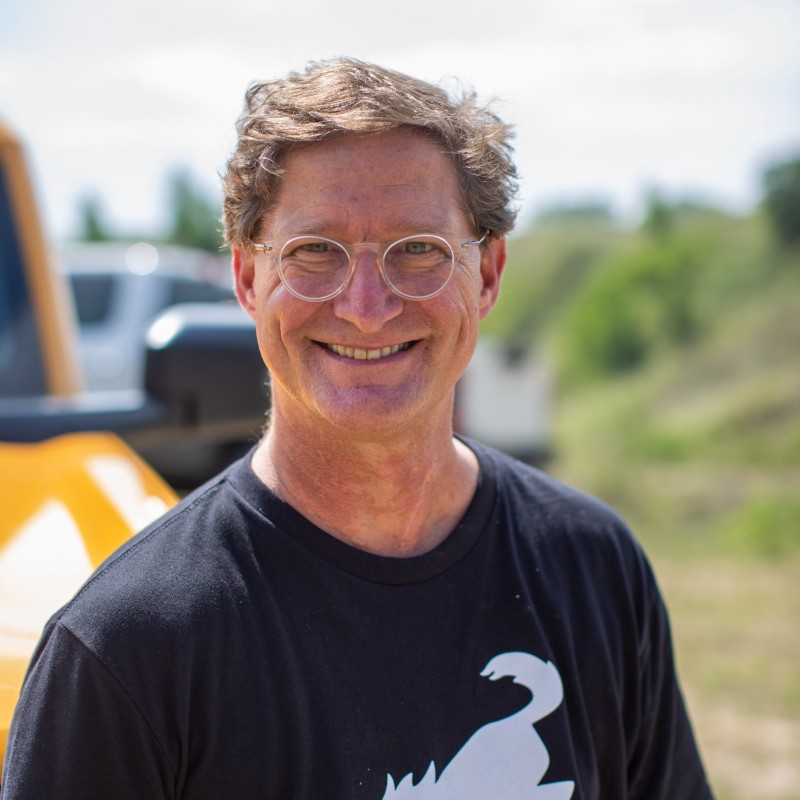
Dean Miller is the CEO of The Forever Reef Project
Disclaimers:
1 3,500kg maximum towing capacity braked using a Genuine Ford tow pack optional at additional cost. Subject to State and Territory regulations. To comply with these limits, any load transported by the vehicle may need to be restricted to not exceed the GCM and GVM limits. For further details regarding load restrictions, please consult your authorised Ford Dealer and / or refer to the vehicle brochure and owner's manual.
2 Pro Power Onboard offers up to a maximum total power output of 6.9kW in the Ranger PHEV range. The total power output may be 6.9kW or less depending on variant and configuration and will be confirmed closer to on-sale date. Pro Power Onboard has three power outlets-one in cabin and two in load box. 2.3kW limit on cabin and 3.45kW limit on each load box outlet provided there is a maximum power output of up to 6.9kW. 2.3kW limit on each outlet when all outlets are used simultaneously provided there is a maximum power output of up to 6.9kW. Pro Power Onboard may not sufficiently power all equipment and its use will decrease battery charge. Speak to your Ford dealer for information.
3 Based on a full charge. Estimated range using Worldwide Harmonised Light Vehicle Test Procedure (WLTP). Figures shown are for comparability purposes and should only be compared with other vehicles tested to the same technical procedures. Actual range varies with conditions such as external elements like temperature, driving behaviours, route profile, vehicle maintenance, and lithium-ion battery age and condition. WLTP Overall Range reflects a combined driving cycle. This test is conducted in controlled conditions with an ambient temperature of 23 degrees Celsius and no climate or electrical load.