
.png)

TL;DR: Night driving is three times more dangerous than daytime driving despite being only 25% of driving time. Essential tips include cleaning your windscreen inside and out, scanning farther ahead, watching for animals, and managing glare. Ford's Matrix LED1 headlights help eliminate the high beam compromise, letting you keep full illumination while automatically creating shadow zones around oncoming traffic, so you see road shoulders where hazards hide.
According to research, night driving accounts for only 25% of your road time, but it's three times more dangerous than daytime driving. The reasons are familiar: reduced visibility, slower reaction times, and the constant compromise between needing to see ahead and not blinding oncoming traffic.2
The anxiety is real and widespread. Ford research across more than 2,500 European drivers found that 48% had declined evening social events or changed their mode of transport specifically to avoid driving in the dark. The biggest concerns? Being able to see clearly at night and being distracted by other vehicles' headlights.
Young drivers face even steeper odds, statistics from the U.S. show they're three times more likely to be involved in a fatal collision between 9pm and midnight than during daylight hours,3 while in Australia, young drivers are seven times more likely to be killed or injured when driving in the dark.4
But here's the encouraging news: 62% of those same European drivers said better lighting technology would have the greatest positive impact on their confidence and safety when driving in the dark. Safer night driving isn't about one perfect trick, it's a combination of practical habits and lighting technology that's finally solving problems drivers have faced for decades.
.png)
Six essential night driving habits
Clean the inside of your windscreen first: Most people focus on dirt outside, but interior film creates just as much glare. When external light hits smears on the inside glass, everything looks hazier than it should.¹ A clean interior surface dramatically reduces that washed-out feeling from oncoming headlights and reflective signage.
Scan much farther ahead than feels natural: Low beam headlights illuminate about 70 meters ahead, while high beams reach 200 metres. Look as far down the road as conditions allow, spotting hazards early gives you time to respond smoothly rather than react desperately.
Watch for eyes before you see the animal: Many animals are most active after dark. Their eyes reflect light as bright pinpoints, often your first and best warning. You'll typically see those reflective dots before you can make out the whole animal, giving you precious extra seconds.
Don't stare into oncoming headlights: Your eyes adjust to the dark road and dim cabin. Sudden bright lights reduce contrast in your night vision, making hazards harder to spot.¹ If you're being dazzled, look slightly to the side of the beam to protect your night vision. Dimming your dashboard lighting also helps.
Check intersections left-right-left: Dense traffic means hazards come from all directions, turning vehicles, pedestrians stepping off kerbs, cyclists moving through gaps. Slow your scanning down and methodically check side streets as you approach intersections.
Leave more following distance than daytime: Reaction times slow at night, especially as fatigue sets in.¹ Extra space gives you room to brake smoothly if the vehicle ahead stops suddenly, and helps you avoid the tail-gating trap when visibility drops.
Matrix LED headlights: Solving the high beam dilemma
For decades, night driving meant choosing: keep your high beams on to see the road, or turn them off to avoid blinding oncoming drivers. The problem is, when you dip your lights, you lose visibility of the road shoulder, exactly where cyclists, wildlife, and pedestrians are most likely to appear.
Matrix LED headlights eliminate this compromise entirely, addressing exactly what drivers told Ford they needed most.
Instead of one bulb that's either on or off, Matrix LED systems use clusters of individual LEDs, like pixels on a screen. Each LED operates independently, so the system can turn off specific parts of the beam while leaving others fully illuminated.
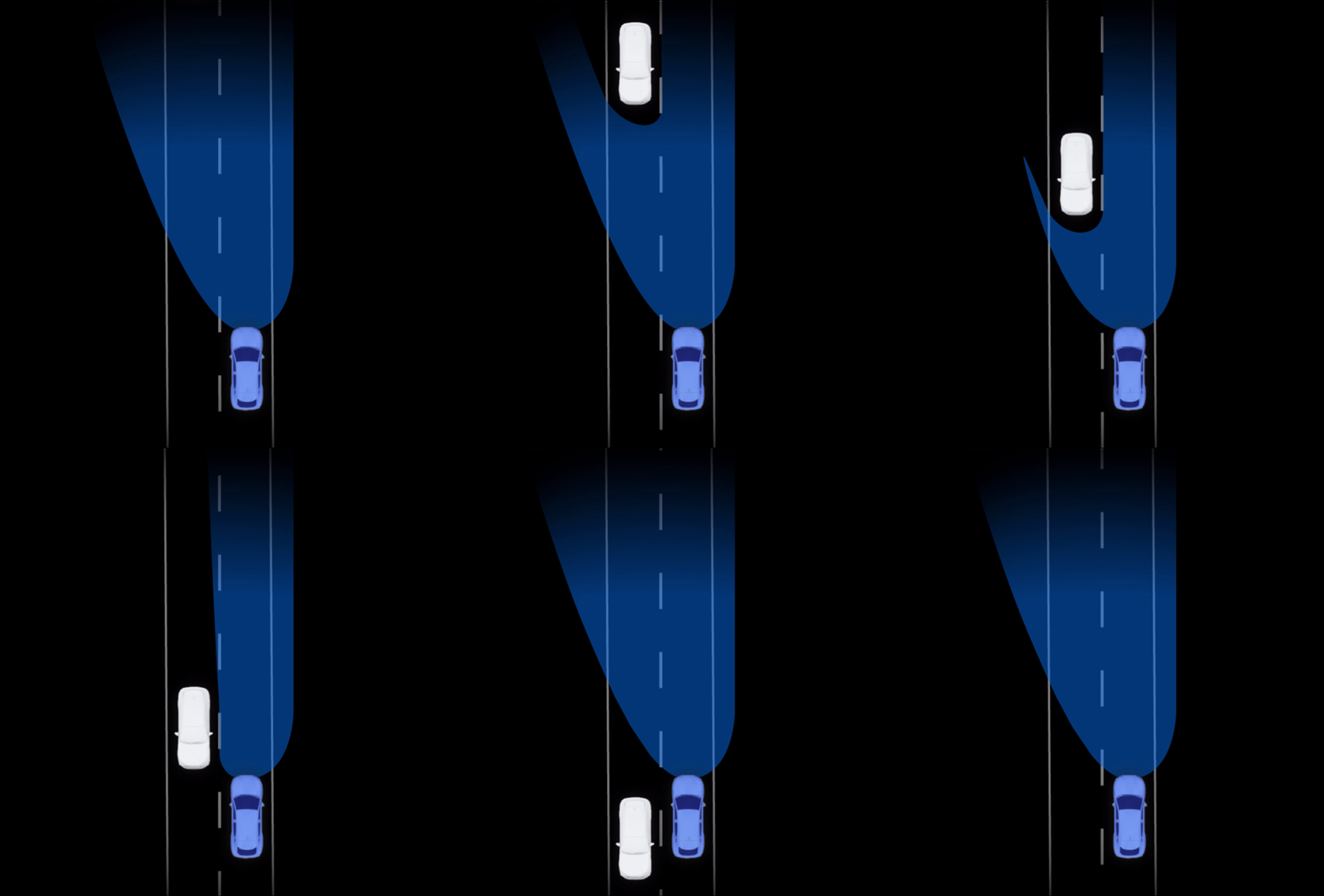
Here's how it works: A windscreen-mounted camera continuously scans for headlights and taillights, detecting vehicles up to 800 meters away, often before you consciously notice them. When the system spots another vehicle, it doesn't dim your entire headlight. Instead, it instantly shuts off only the specific LEDs projecting light at that vehicle.
This creates a dynamic shadow zone that tracks the other car as it moves. The oncoming driver sees only standard low beams and isn't blinded, while the rest of your high beam stays active, fully illuminating trees, signs, and road markings on either side.
Highway performance gets a boost When you're travelling at highway speeds with no traffic ahead, Matrix LED systems activate high beam boost, specialized high-intensity LEDs that provide up to 30% more light, projecting much farther down the center of your lane. This extended range illuminates debris, animals, or stopped vehicles much earlier, giving you those crucial extra seconds to react safely at 100 km/h.
Intelligence around corners The system also uses dynamic bending technology, monitoring your speed and steering angle to pivot the beam up to 15 degrees into curves. This illuminates what's around the corner before you turn the wheel fully, revealing what's hiding in the bend rather than just lighting up roadside trees.
.png)
Auto high beams: Let technology handle the work
Most drivers hesitate to use automatic high beam systems, worried about reaction time or accidentally blinding other drivers. The reality is, the system is faster and more courteous than manual switching.
Your Ford's camera-based system scans dozens of times per second, detecting headlight signatures from hundreds of meters away, often before your eyes register them as definite vehicles. It switches between high and low beams instantly, maximizing the time you spend with full illumination while never keeping other drivers waiting.
The system also understands context. Approaching a well-lit town? It detects ambient light and keeps high beams switched off. Back onto a dark highway? It recognises the drop in light levels and re-engages automatically.
This matters for safety: studies show pedestrians and obstacles are much harder to see at night, and high beams significantly improve your ability to spot hazards early. By handling the switching automatically, the system maximizes your visibility without the mental fatigue of constantly monitoring your light stalk.
Technology serving real needs
Matrix LED headlights represent something rare in automotive innovation, technology that solves a genuine daily problem rather than adding complexity. The compromise between seeing ahead and being courteous has frustrated drivers since cars first had headlights. Now, you don't have to choose.
For the 48% of drivers who've changed plans to avoid night driving, this technology offers a path back to confidence. Night driving will always require more attention and different skills than daytime travel. But with proper habits and lighting technology that adapts in real-time, those dark roads become less about managing limitations and more about confidently reaching your destination.
The road ahead is clearer than it's ever been, literally and figuratively.

Disclaimers
1 Not all vehicle features are available in all markets or on all variants. Consult your local market representitive for product availability.
2 The Royal Society for the Prevention of Accidents, June 2017, Driving at Night Factsheet. Accessed June 2023. https://www.rospa.com/rospaweb/docs/advice-services/road-safety/drivers/driving-at-night.pdf
3 Governors Highway Safety Association, May 1, 2013, Promoting Parent Involvement in Teen Driving. Accessed June 2023. https://www.ghsa.org/sites/default/files/2016-11/TeenDrivingParentReport%20low.pdf
4 Transport Accident Commission. Accessed June 2023. https://www.tac.vic.gov.au/about-the-tac/media-and-events/news-and-events/2022/encouraging-night-driving-practice-to-save-young-lives
