

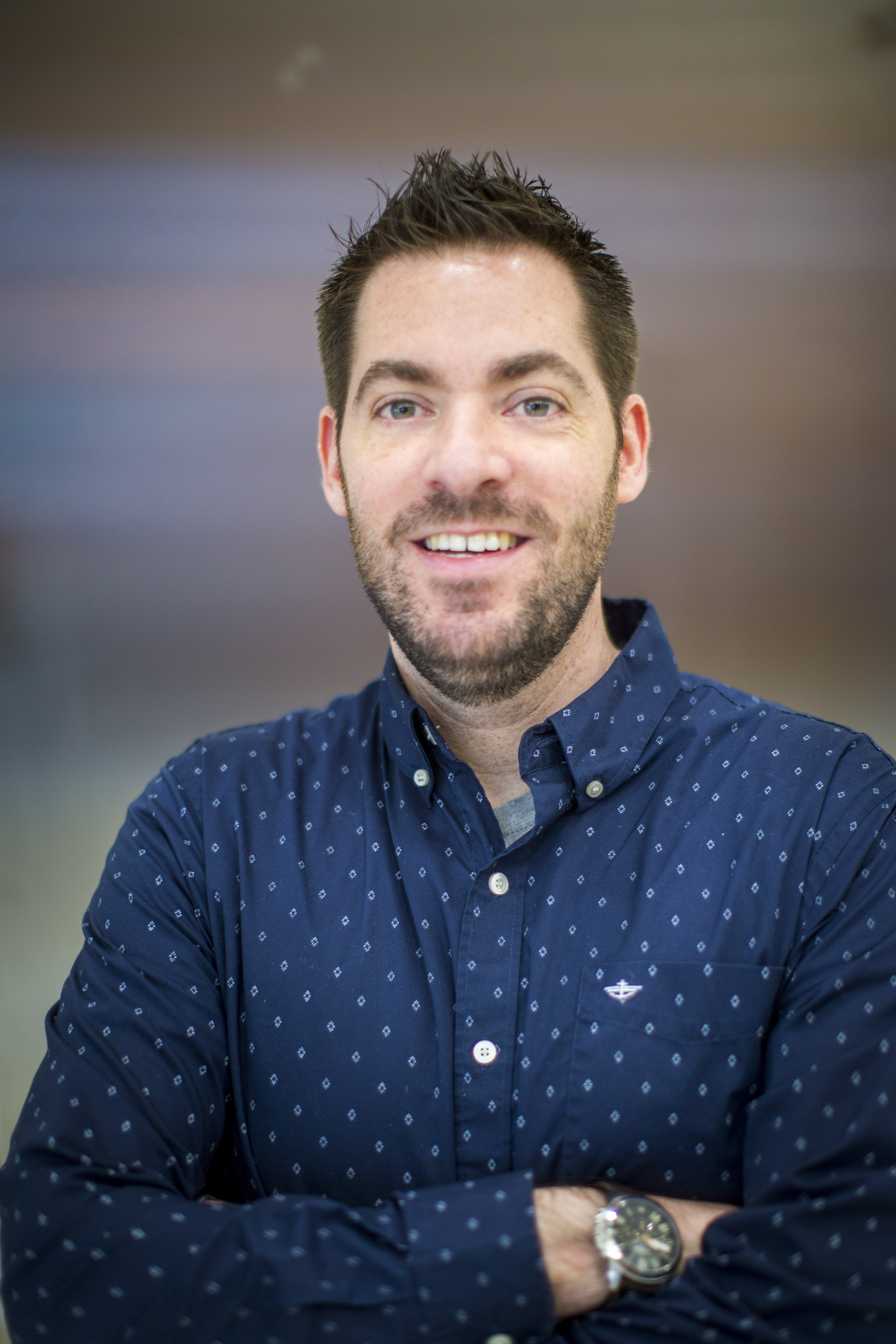
As a child in the mid-1990s, Ashley Karsten recalls feeling lethargic and not feeling well. The 10-year-old’s water consumption had also increased significantly. Her family assumed her body was responding to some kind of virus or infection, but days later, she was diagnosed with Type 1 diabetes (T1D).
She was taken to University of Michigan Hospital in Ann Arbor, where she was kept for five days. It was there that she learned how she, and her family, would need to check her blood sugar and how to administer insulin injections.
“When you’re 10, getting shots every day is very traumatic,” she said. “I have vivid memories of my parents chasing me around and me hiding behind the couch, because every time I ate, I had to have a shot of insulin.”
Doctors and staff taught her parents what to do to care for their daughter and coached them all on diet changes. That’s when they were also introduced to Breakthrough T1D, formerly known as JDRF (Juvenile Diabetes Research Foundation), a worldwide leader in Type 1 diabetes research and advocacy — and one of Ford’s largest charitable beneficiaries.
Her father, Eric Karsten, would later come to work at Ford. Today, he is director of engineering for Ford Pro and the Enterprise Technology lead for Breakthrough T1D. Although at the time of his daughter’s diagnosis, he was unfamiliar with the organization and had no idea his future employer was so heavily involved in supporting it.
Ashley Karsten recalls her parents were nervous, but they found a community and resources for her care and management, which offered some relief. Years after her diagnosis, by this time 14 years old, she was one of the youngest recipients of an insulin pump in the state of Michigan, which Breakthrough T1D helped facilitate.
The equipment arrived shortly before she started high school, and it had an incredible impact on her quality of life at a critical time in adolescence. She would use the equipment throughout high school, where she was able to compete in sports because of the pump, and for a portion of her time in college at Central Michigan University. She has alternated between pumps and injections since that time and currently uses daily injections.
“Having the pump was life-changing for me, because it was one poke every five days instead of being poked multiple times per day,” Ashley Karsten said. “My parents could just dial in the amount of insulin that I needed, and I didn’t have to think about the pokes that had been happening multiple times each day.”
While she no longer fears needles, she will be forever grateful for the help of Breakthrough T1D.
“The fact that I'm living a pretty normal life ... can be credited to the support of Breakthrough T1D.”Ashley Karsten

“Breakthrough T1D was a huge support to my parents, and I was able to learn from them to be able to make the best decisions for myself,” she said. “Sometimes diabetes can be really lonely. It’s a lot of responsibility and your mind never stops thinking about it. To know that I have the support of both my parents was huge.”
Today, Ashley Karsten, who works as the director of early childhood programs at Kent County Intermediate School District in western Michigan, is a busy mother of two competitive dancers, Ella, 14, and Molly, 8.
“I’m a very healthy adult who was able to have two healthy pregnancies and children,” she said, noting that she is thankful she learned how to manage her diabetes at a young age. “There’s a lifetime of issues that can happen if you’re not managing your diabetes properly and I don’t know if I would’ve been able to have kids … The fact that I’m living a pretty normal life, and I don’t have to take any other medicines besides insulin, can be credited to the support of Breakthrough T1D.”
Today, thanks to advances in medicine, delivered in part by donations from Ford employees, Ashley Karsten, now 38, manages her diabetes with insulin shots. Meanwhile, technology used in insulin pumps and other devices has advanced, as well.
Forever thankful for the organization’s support, Eric Karsten has been involved with the Ford Global Action Team since 2004, a year after joining Ford. Since then, he has participated in various fundraising activities, including selling paper shoes, organizing golf outings, motorcycle rides, a Texas Hold ‘em tournament, and a Pinewood Derby event.
“Their support revolutionized my daughter’s ability to kind of have a real life (and) do things that normal kids would do while she was in high school,” Eric Karsten said, adding thanks to those he has worked with to raise funds for Breakthrough T1D. “Those types of innovations come from the money that we raise, and to me, it's huge. It has a personal impact on the families who have kids and are going through Type 1 diabetes.”
Breakthrough T1D is No. 1 for Type 1 diabetes
Type 1 diabetes, formerly known as juvenile or childhood onset diabetes, results from a lack of insulin production in the pancreas and requires daily doses of the hormone.
The cause of the autoimmune condition is unknown, and more than nine million people in the world are living with Type 1 diabetes according to the T1D Index, which Breakthrough T1D and other organizations support. The Index is the most accurate, data-based resource representing the true global scope and impact of Type 1 diabetes.
Breakthrough T1D, the world’s leading funder of research for Type 1 diabetes, recently changed its longtime name from JDRF to more accurately reflect the scope of the nonprofit organization’s work to benefit the entire community of patients affected by Type 1 diabetes, which can develop at any age.
Adult-age diagnoses account for nearly half of all Type 1 diabetes diagnoses. The organization’s mission is to accelerate life-changing breakthroughs to cure, prevent, and treat Type 1 diabetes and its complications.

United for a cure
Ford’s involvement with Breakthrough T1D dates back to 1983 with support through corporate grants, but increased fundraising and employee involvement would come closer to the turn of the century. In 1998, Ford created the Ford Global Action Team with former longtime Ford Director Edsel B. Ford II as the executive champion for the cause.


The mission is near and dear to Ford — his son, Albert, has been living with Type 1 diabetes for more than 25 years. To date, the Ford Global Action Team has raised more than $80 million, with annual contributions rising from $180,000 at just three Southeast Michigan sites in 1998 to $3 million annually across 35 sites in 11 countries today.
Employee-led fundraising initiatives include parking spot raffles, auctions, job-switch drawings, sneaker sales, jeans days, bake sales, car shows, golf tournaments, and participation in Breakthrough T1D fundraising Walks and Rides. Ford Dealers also support the fundraising efforts through test-drives, family walk team sponsorships, social media and advertising, golf outings, and vehicle displays.
Ford is one of Breakthrough T1D’s largest global partners. Ford’s annual donation to Breakthrough T1D has rebounded to $3 million after taking a hit during the COVID pandemic that forced many employees to work from home. In 2021, Darwin Ost, a former UAW-Ford employee from Buffalo Stamping Plant, raised $22,000 for Breakthrough T1D riding his bicycle along a 2,400-mile route that traced a portion of Ford’s production footprint through the Midwest and Canada.
.jpg)
How $10 becomes $3 million
Just before the pandemic, Ford’s Dearborn-based salaried and manufacturing employees combined to raise a record $1 million in 2019. Ford’s Windsor plants and Kentucky Truck Plant, where efforts have included a long-running golf scramble event, are two of the company’s largest Breakthrough T1D contributors.
Gael Sandoval, national director of the Ford Global Action Team, said many employees who raise money and volunteer for Breakthrough T1D don’t even have a personal connection to Type 1 diabetes — they just do it because being a Ford employee means giving back to your community and getting involved. And that comes on top of their day-to-day responsibilities.

“A lot of times people envision Ford Motor Company raising $3 million for Breakthrough T1D and they assume it comes from one of our company leaders or a Ford family member writing a big check to charity and it’s not,” Sandoval said. “Half of that $3 million we raise comes in $10 chunks at best. They all add up.”
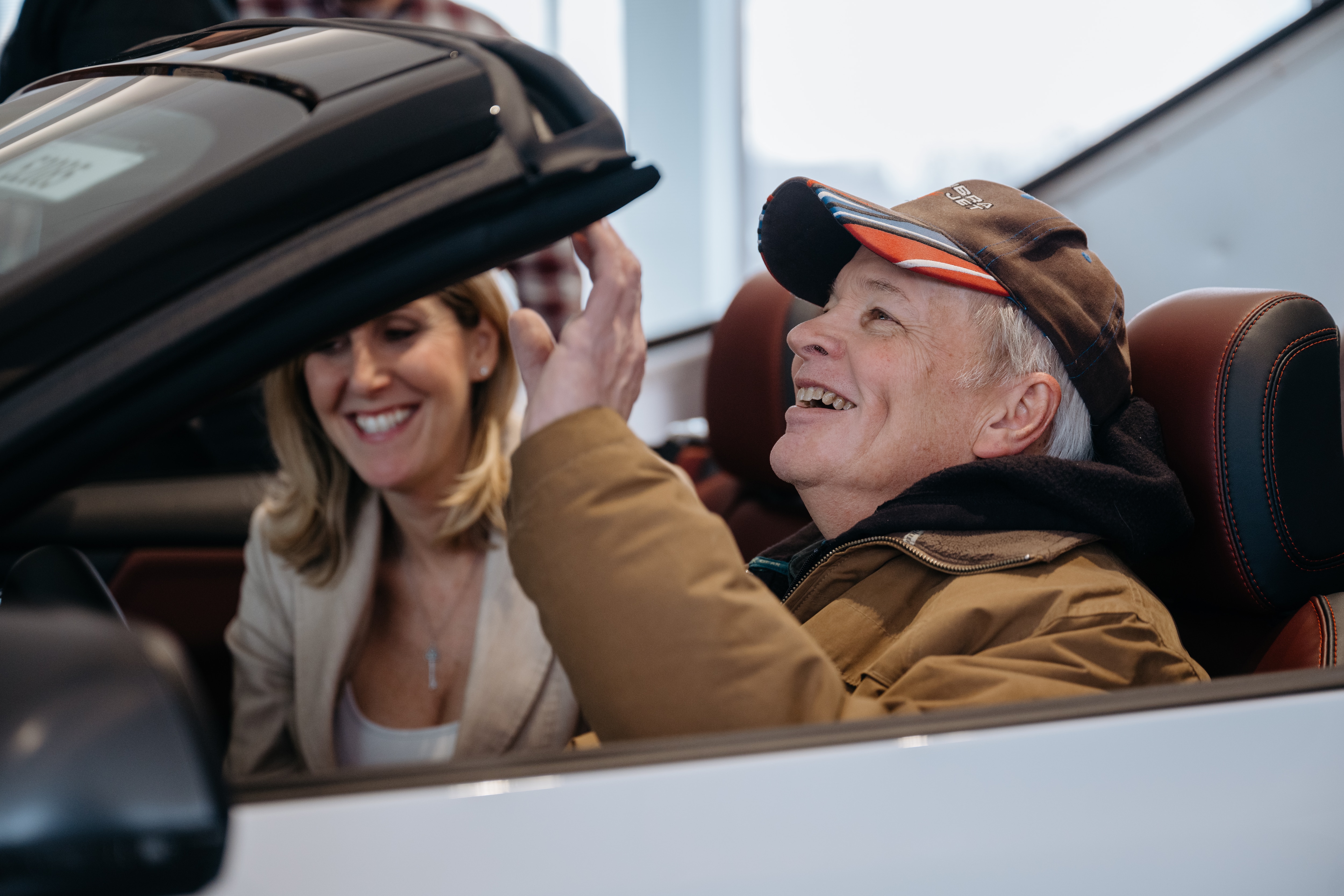
There are also corporate initiatives like auctions of unique vehicles done in partnership with Barrett-Jackson or the annual sweepstakes, which awarded a Texas man a one-of-one Mustang Dark Horse convertible in 2024. These special vehicles can be a significant undertaking for the Ford teams involved, but they end up raising hundreds of thousands of dollars for Breakthrough T1D. It also gets the teams thinking ahead about what kind of vehicle they can cook up for the next year.
“All of the employees that worked on that made it something special,” Sandoval said of the Dark Horse convertible. “It’s not just ‘you won a car, take it and go away.’ The winners become part of our Ford and Breakthrough T1D families.”
Ashley Karsten remembers her family’s involvement in fundraising for the organization and she continues to contribute to this day. She remembers the strength it gave her, noting that she also ensures that other families are aware of Breakthrough T1D and its mission.
“Being at fundraisers and seeing my whole family and my friends showing up to support (Breakthrough T1D) was really important when I was young, because I could see that so many people cared and wanted me to be healthy and to succeed.”
How Ford employees make a difference
Most of the money Ford and its employees raise goes to research for a cure of Type 1 diabetes, but funds are also directed to Breakthrough T1D’s advocacy work, as well as community support, education, and outreach. The organization is emphasizing its reach to underserved markets and its efforts to help reduce the cost of insulin.
Since its founding in 1970, Breakthrough T1D has played a role in nearly every major Type 1 diabetes advancement, including drugs, devices, and cell therapies, according to its website. In 2023, through its investments and funding from other organizations, corporations, and governments, Breakthrough T1D drove a total of $449.4 million to T1D research and therapy development.
“Ford is in it for the long haul until there is a cure.”Gael Sandoval, national director of the Ford Global Action Team
One of the latest significant advances is the approval of a drug that can delay the onset of Type 1 diabetes in individuals eight and older—the development of which Breakthrough T1D had supported since the 1980s.
The many advances in diabetes treatments Eric Karsten has seen since his daughter was diagnosed include longer-acting and more precise insulin, as well as easier means for carrying insulin pumps and smaller, smarter insulin pumps. Continuous glucose monitors, which can track insulin levels by smartphone in real time, are another big revelation.
“Those are the kinds of advancements that really have made a difference in people’s lives — kids and adults — because it’s not something that goes away as you get older,” Eric Karsten said. “You still live with it. We just think about it as kids because that’s what age they are when they typically get diagnosed with it.”
Life expectancy for Type 1 diabetes patients and the outlook for pregnant women dealing with the disease have improved significantly in recent decades. In some cases, Type 1 diabetes and Type 2 diabetes research can impact people living with either variation — as such, research that goes into complications of the disease, such as blindness, kidney failure, circulation issues, neuropathy, and more, can have a greater impact.
“Ford is in it for the long haul until there is a cure,” Sandoval said. “It’s exciting to see how lives have changed because of it.”
Change has also come within Ford Motor Company, where diabetes impacts 8% of employees and their family members, as well. Sandoval said Ford of Europe has adapted its hiring policies for potential hires dealing with Type 1 diabetes. The company has also updated its health insurance for employees to cover the costs associated with diabetes medications, devices and supplies.
Paul Kampe writes for the Ford Communications team.
