“Just go southeast to La Paz.”
That was the guidance Rod Hall remembered receiving before the inaugural Mexican 1000 in 1967. There were no GPS tracks guiding competitors through the peninsula, and little of the communications and support infrastructure that surrounds desert racing today. Hall recalled seven checkpoints, fuel stops the competitors had to find themselves and a compass handed to him before the start. He and Larry Minor got lost repeatedly. They made repairs beneath the desert sun. Somehow, they won their class.
“I loved the challenge of not knowing where we were going,” Hall would say decades later.
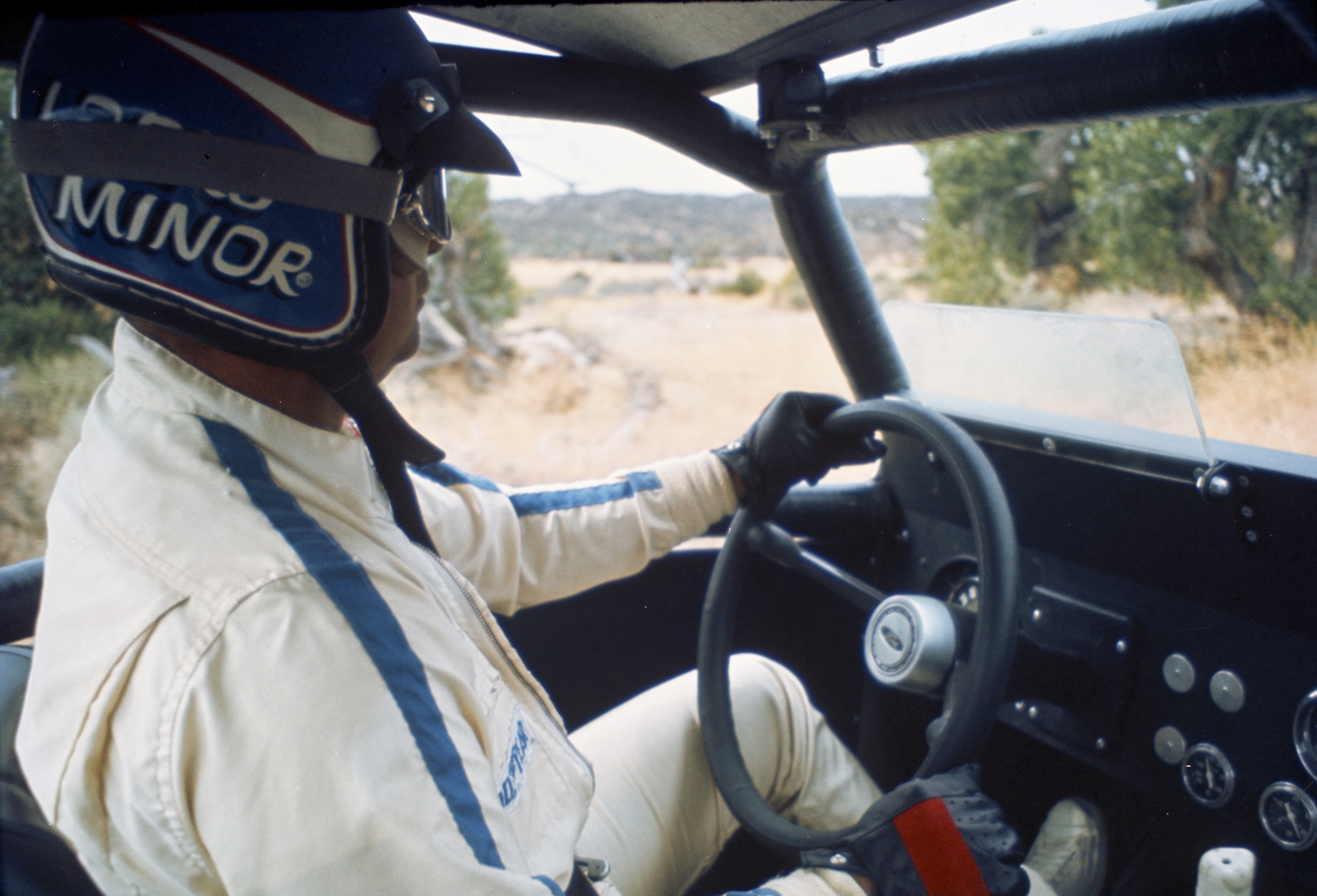
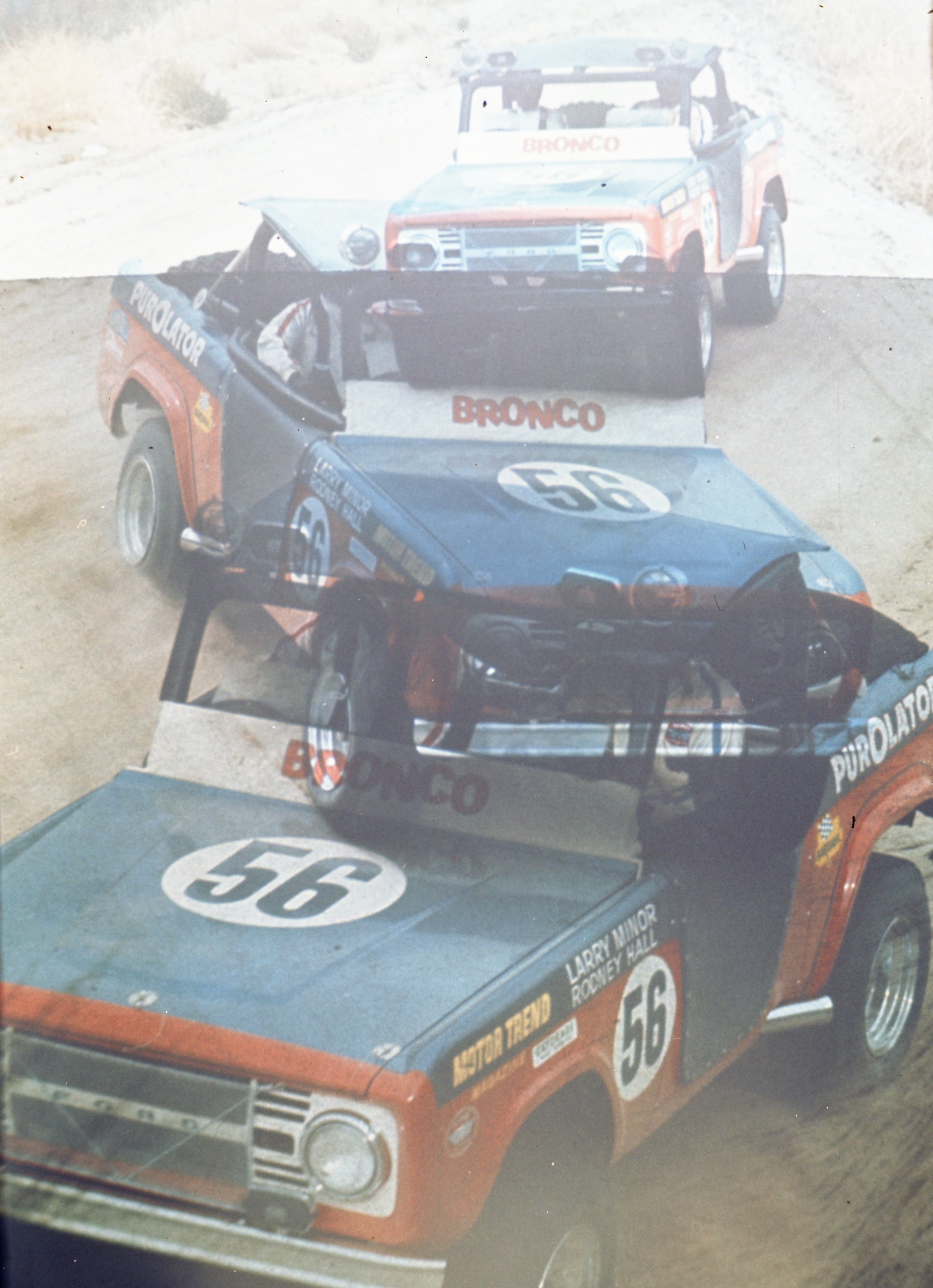
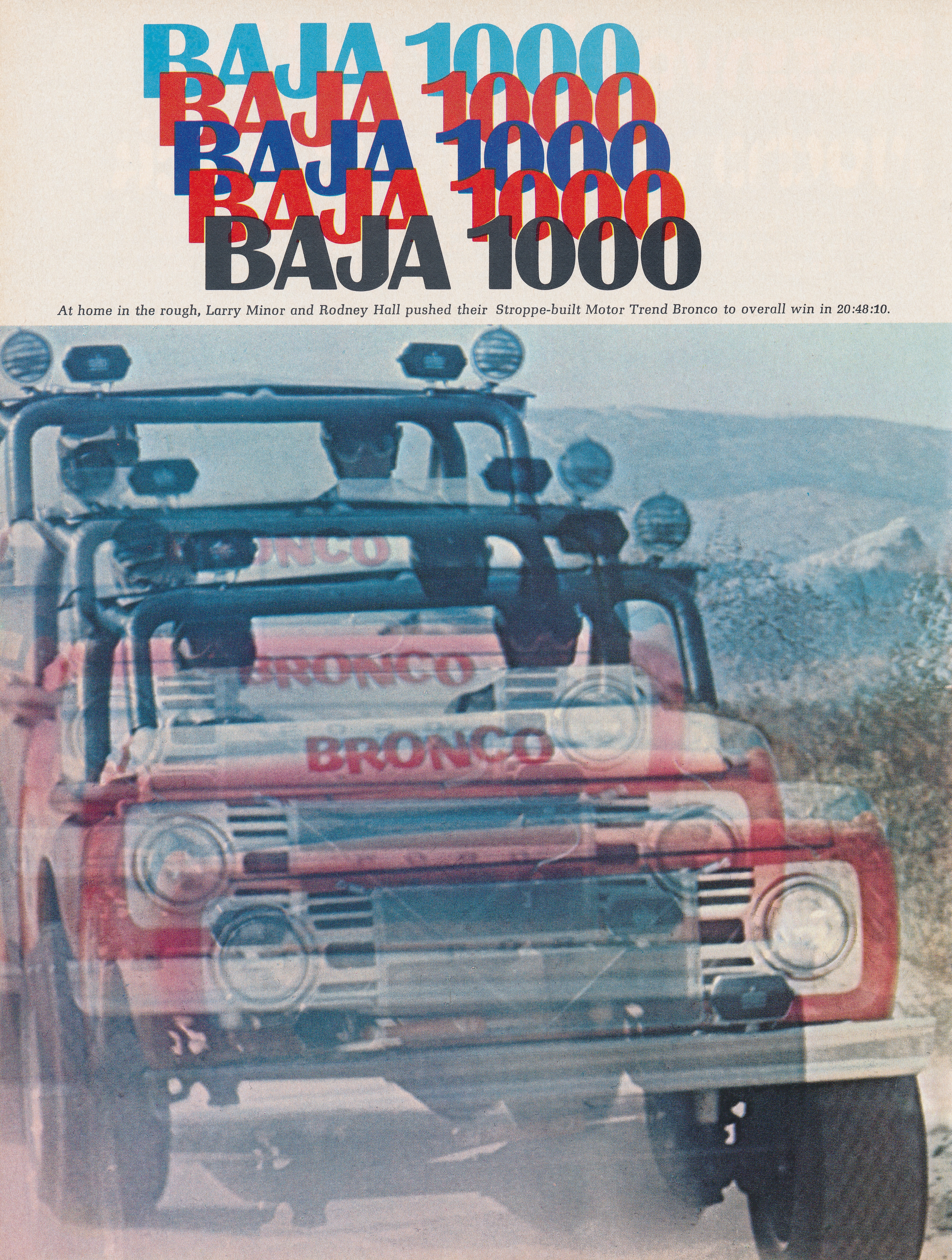
Two years later, Hall and Minor were back, this time in a Ford Bronco prepared by Bill Stroppe. They did considerably more than find La Paz. Their Bronco was the first four-wheeled vehicle across the finish line in the 1969 Mexican 1000, earning the overall victory and setting a record. More than half a century later, Bronco remains the only four-wheel-drive vehicle to win the event overall.
It was an extraordinary result for a vehicle that had existed for only a few years. Bronco had been introduced for the 1966 model year, and Ford had put one in Stroppe's hands before the public could even buy it. Stroppe, a racer, builder and team owner with deep Ford ties, prepared the new utility vehicle for competition and quickly began finding success. By 1968, Stroppe Broncos were winning at Riverside, the Mint 400 and in class at the Mexican 1000.
Baja was becoming part of Bronco's identity almost as quickly as Bronco was becoming part of Baja.
Then Parnelli Jones arrived - and started breaking things. Jones was already one of America's great racing drivers. He had won the Indianapolis 500 in 1963, captured a USAC stock car championship driving for Stroppe and raced successfully across disciplines. Desert racing did not immediately interest him, but Stroppe knew how to fix that.
When Jones resisted an invitation to try the Mint 400, Stroppe questioned whether he was tough enough to do it. “That was like throwing a red flag,” Jones remembered.
Jones went racing. It did not go particularly well.
He had entered the desert with the instincts of a pavement racer, which meant that when he saw open terrain, his inclination was to cross it as quickly as possible. He had not pre-run the course. Before the first checkpoint, he had already knocked tires from their wheels. He kept going until the damaged rims had folded themselves around the hubs badly enough that they eventually had to be cut away.
Before the race, Jones had told his co-driver, Ray Harvick, to tap him on the knee if he thought Jones was pushing too hard. Harvick spent much of the race hitting him.
Jones later laughed about the lesson. “I realized what an idiot I was,” he said. But he had also discovered that he liked off-road racing.
That combination would prove consequential: Jones had found a new form of competition he wanted to master, but he had little intention of changing the way he raced.
So… the vehicles would have to change instead.
The Bronco That Wasn't Supposed to Exist
Jones' early struggles exposed a fundamental tension in desert racing. A driver could possess enough speed to lead the race and still never reach the finish. Baja demands something more complicated: speed that could survive.
A possible answer appeared in Stroppe's shop in the form of an experimental Bronco. Ford had asked Stroppe to explore a lighter, two-wheel-drive version using an I-beam front suspension. According to Jones, Ford ultimately decided the idea strayed too far from what a Bronco was supposed to be.
Jones saw the rejected truck and wanted it immediately. He raced the lighter Bronco in the Baja 500 - and won. “Now I knew exactly what I wanted,” he recalled.
What he wanted was a Bronco designed around Parnelli Jones rather than the other way around. This is where Dick Russell enters the story.
Russell was one of Stroppe's fabricators, the sort of person whose contribution to racing history tends to be visible in metal long after his name faded from popular memory. Jones approached him about creating something that would be faster, stronger and lighter than the production Broncos they had been racing.
Accounts of Big Oly's creation describe Jones taking Russell to lunch and the two sketching ideas for a tube-frame race vehicle. Russell agreed to build it at his home, away from Stroppe's Long Beach operation.
This was not a minor modification being performed after hours - Jones and Russell were effectively reconsidering what a desert race truck could be.
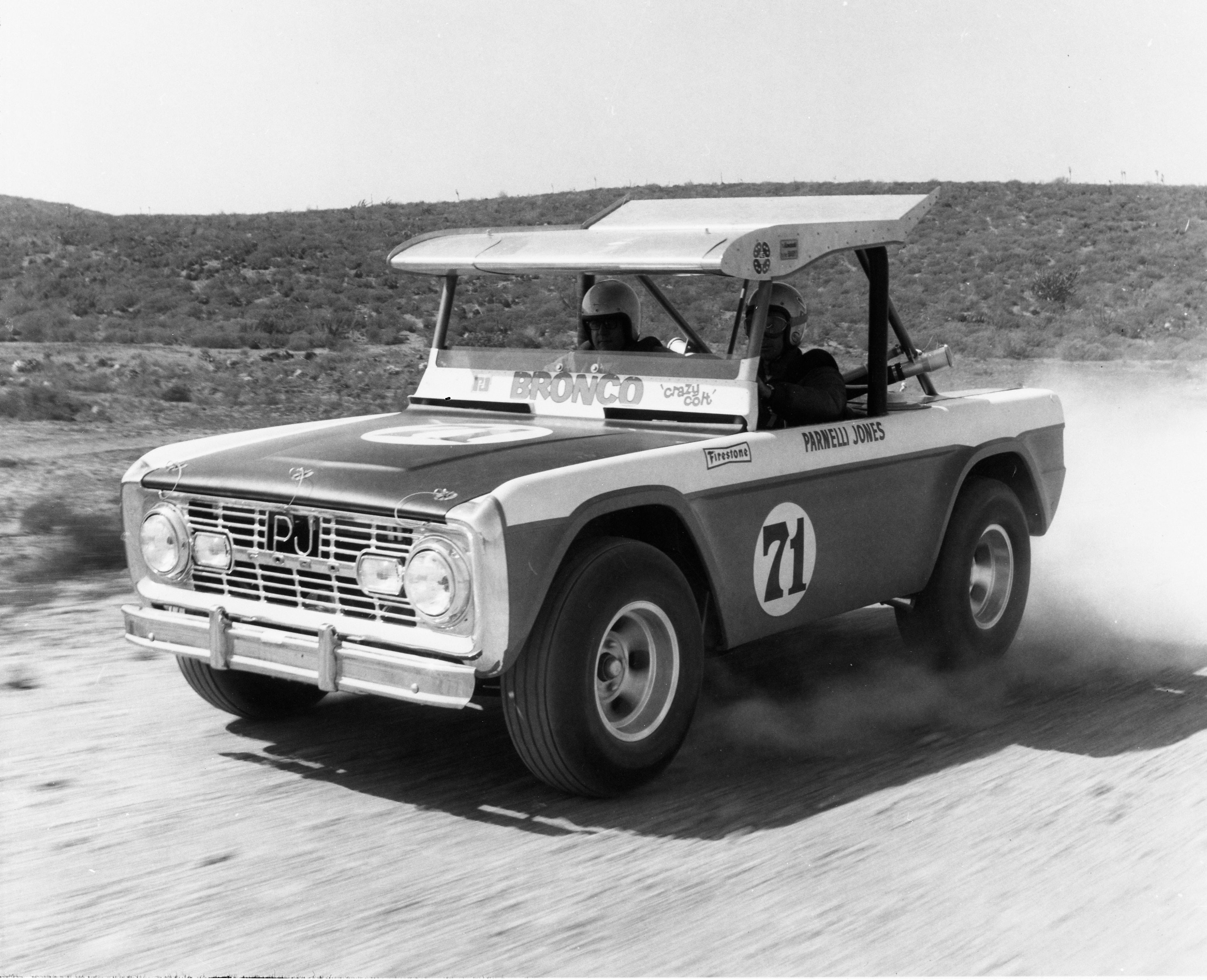
Instead of starting with a production Bronco frame and strengthening it until it survived, they would construct a purpose-built chassis from 4130 chromoly tubing. Lightweight fiberglass and aluminum would create the silhouette of a Bronco around it. The vehicle would remain two-wheel drive and use Ford's Twin-I-Beam architecture at the front. A 351-cubic-inch Windsor V8 would provide the power.
They were beginning with the race and working backward toward the vehicle.
Eventually, Stroppe found out. Jones remembered that moment rather delicately: Stroppe “was not too happy.”
Other accounts describe a stronger reaction. Russell was Stroppe's employee, after all, and he and Jones had begun constructing a radical race vehicle outside Stroppe's shop without telling him. But whatever disagreement followed did not last. Stroppe saw what was taking shape, the project moved into his Long Beach facility, and the machine was finished with the resources of the operation Jones had initially circumvented.
The result looked enough like a Bronco to make the connection obvious and little enough like one beneath the skin to represent something new. It was first known as Crazy Colt. Olympia Beer sponsorship eventually supplied the gold-and-white livery and the name that stuck: Big Oly.
Fifteen Hours to La Paz
By November 1971, the Mexican 1000 had existed for only a few years, but it had already established a reputation as one of motorsport's great tests of endurance.
The course ran south through Baja California toward La Paz. Rocks, sand, dust, washes and mountain terrain punished machines for hundreds of miles. Mechanical trouble could occur far from meaningful assistance. Darkness eventually overcame competitors still out on course.
Jones was not interested in winning just his category. He wanted to beat everybody. The goal included the motorcycles, which enjoyed an enormous advantage over the heavier four-wheeled vehicles across much of Baja's terrain.
Before the race, Jones estimated that Big Oly could reach La Paz in about 15 hours.
He was off by roughly a minute.
Jones and Stroppe covered the course in 14 hours and 59 minutes, winning the 1971 Mexican 1000 and lowering the previous record by more than an hour. Big Oly had done what Jones envisioned when he began pushing for a vehicle that could keep up with him.
Jones and Stroppe returned in 1972 and won a second consecutive Mexican 1000. Big Oly's career would also include victories in the Baja 500 and Mint 400, helping establish the truck as one of the defining vehicles of desert racing's formative era. SCORE today credits Jones' legacy with helping pave the way toward the modern Trophy Truck.
For Jones, however, Baja never seemed to reduce itself to a collection of trophies. “For me, racing in Baja ended up being more of a personal thing,” he said years later.
That may help explain why Big Oly remained with him for decades after its competitive career ended. The truck represented a peculiar intersection of nearly everything that made Jones who he was as a racer: speed, stubbornness, mechanical curiosity and an unwillingness to accept that the existing vehicle dictated how quickly he was allowed to drive.
What Came Back From the Desert
The Big Oly story can easily become a Parnelli Jones story. His personality almost demands it. But that risks missing what was happening around him.
Before Jones and Russell imagined a purpose-built Bronco-shaped racer, Stroppe had already spent years sending Ford's new utility vehicle into competition. Minor and Bayer had won their class in Baja in 1968. Hall and Minor had won the entire event in 1969. The experimental two-wheel-drive Bronco taught Jones what a lighter vehicle with I-beam suspension could do. Russell translated the driver's demands into tubing and geometry. Stroppe took an initially unauthorized project and helped turn it into a race winner.
The exchange eventually traveled back toward Ford's customers. The Stroppe racing program became so deeply associated with Bronco that a Baja Bronco reached Ford dealerships beginning in 1971. Finished in Stroppe's recognizable red, white and blue, those Broncos could receive upgraded suspension, steering and other performance equipment through Stroppe's operation.
Competition had helped give Bronco credibility. The identity created in competition then became something customers could participate in themselves. That idea has survived far longer than Big Oly's racing career.
Ford engineers still use Baja as a development environment. Even in 2026, Ford’s 125th anniversary of racing, America’s Race Team competes essentially stock Broncos in Mexico precisely because the desert creates random, changing conditions difficult to reproduce elsewhere. Every vehicle that crosses the terrain changes it for the next one. The variability that makes Baja challenging for an engineer is also what makes it valuable.
The Desert Doesn't Care What You Claim
The solution to win Baja was not for Jones to race slower. It was for the vehicle to become better. That is what makes Big Oly more than a famous old race truck in Ford's history: it’s a physical record of a process.
Race the Bronco. Find any weaknesses. Change the Bronco. Race again.
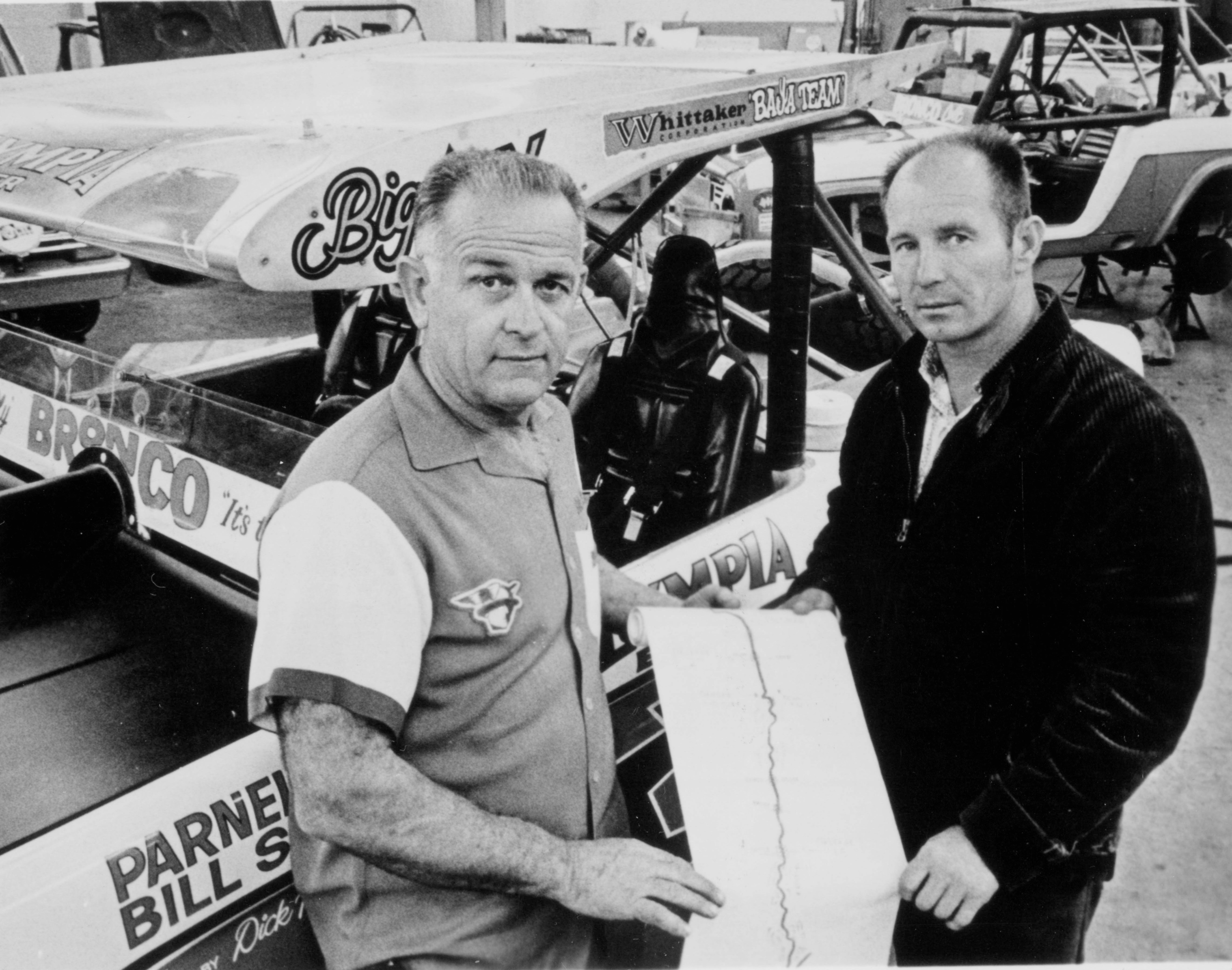
Jones died in 2024 at age 90. Stroppe died in 1995. The era in which the two men could disappear into Mexico in a race truck with comparatively little communication to the outside world has disappeared with them.
Big Oly remains. So does the race, now known as the SCORE International Baja 1000. And 55 years after Jones and Stroppe reached La Paz in 14 hours and 59 minutes, Ford is still going back to the desert looking for the same thing they were.
The limit… and whatever lies beyond it.
Kelsey Quartuccio writes for the Ford Performance Communications team.