

Restoring a 1936 Ford pickup wasn’t just a project for Bill Knapp. Every hour spent calling junkyards and hand-crafting components from scratch honored a family whose ties to Ford stretched back generations.
Over the years, Knapp, his father Leo, two brothers, and other relatives all worked on Ford assembly lines or in dealerships. One brother still runs a Ford dealership in Ontario, Canada, where his sister and nephew also work.
So when Knapp began restoring old vehicles, he saw a classic pickup as a natural choice. He found a battered ’36 Ford in rough shape and spent the next seven years bringing it back to life.
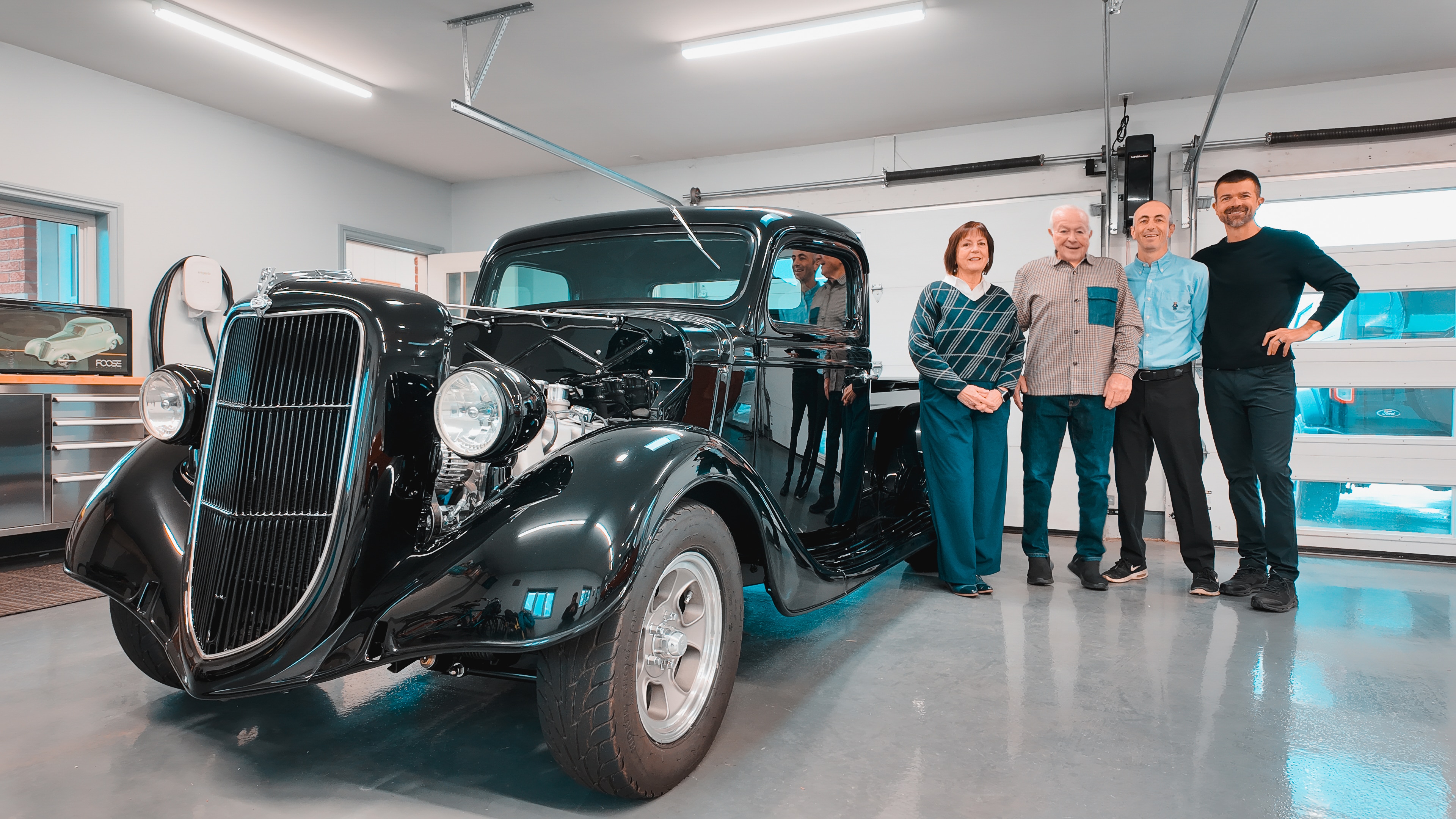
Today it sits fully restored, its glossy black finish catching the light in his custom garage.
“The truck is just unbelievable,” he said. “It’s hard to put into words what this means to me.”
His sister, Mary, emailed Ford executives to share the story and the family’s deep connection with the company.
“Whenever I see this truck, I’m right back at those family barbecues, listening to everyone reminisce about the Fords we’ve always loved.”Mary Knapp
Their father started at a Ford plant in the early 1930s grinding crankshafts and eventually retired from the company decades later. She joked that maybe they “bleed blue.”
Ford got its start in Detroit in 1903 as Henry Ford pioneered the moving assembly line and then made cars affordable for average Americans with the Model T.
By the time the company introduced its first purpose-built truck chassis — the Model TT — in 1917, Ford was on the way to eventually transforming transportation and labor practices with higher wages and shorter workdays.
By 1928, the Model TT sold over 1.3 million units, but it was the redesigned pickup, introduced seven years later, that really captured the public’s imagination.
With its Art Deco-inspired vertical-ribbed grille, “milkshake” steel wheels, and a potent 221 cubic-inch flathead V-8 cranking out 85 horsepower, the truck sold 820,000 units. To this day, collectors and hot-rodders prize them.

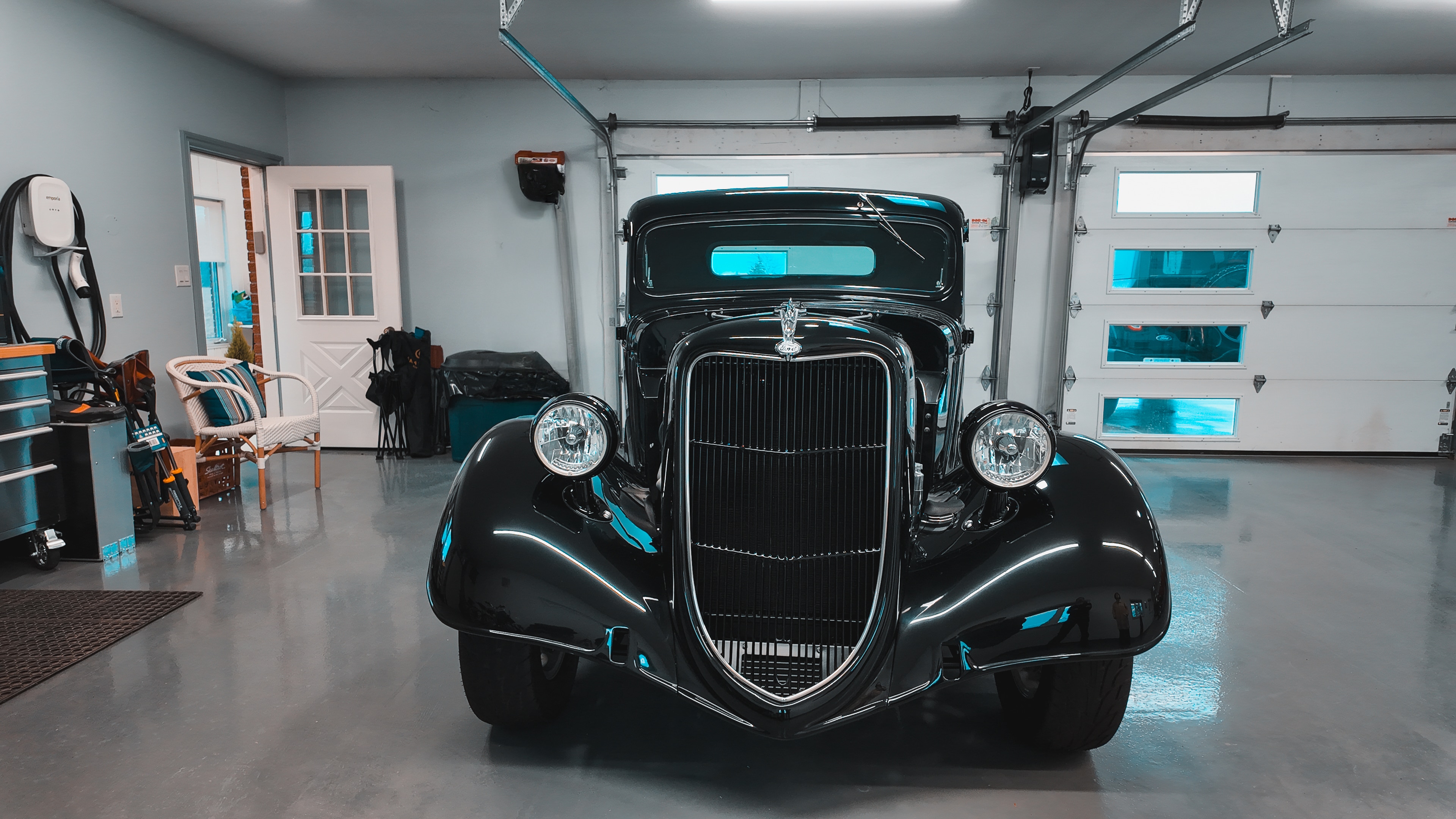
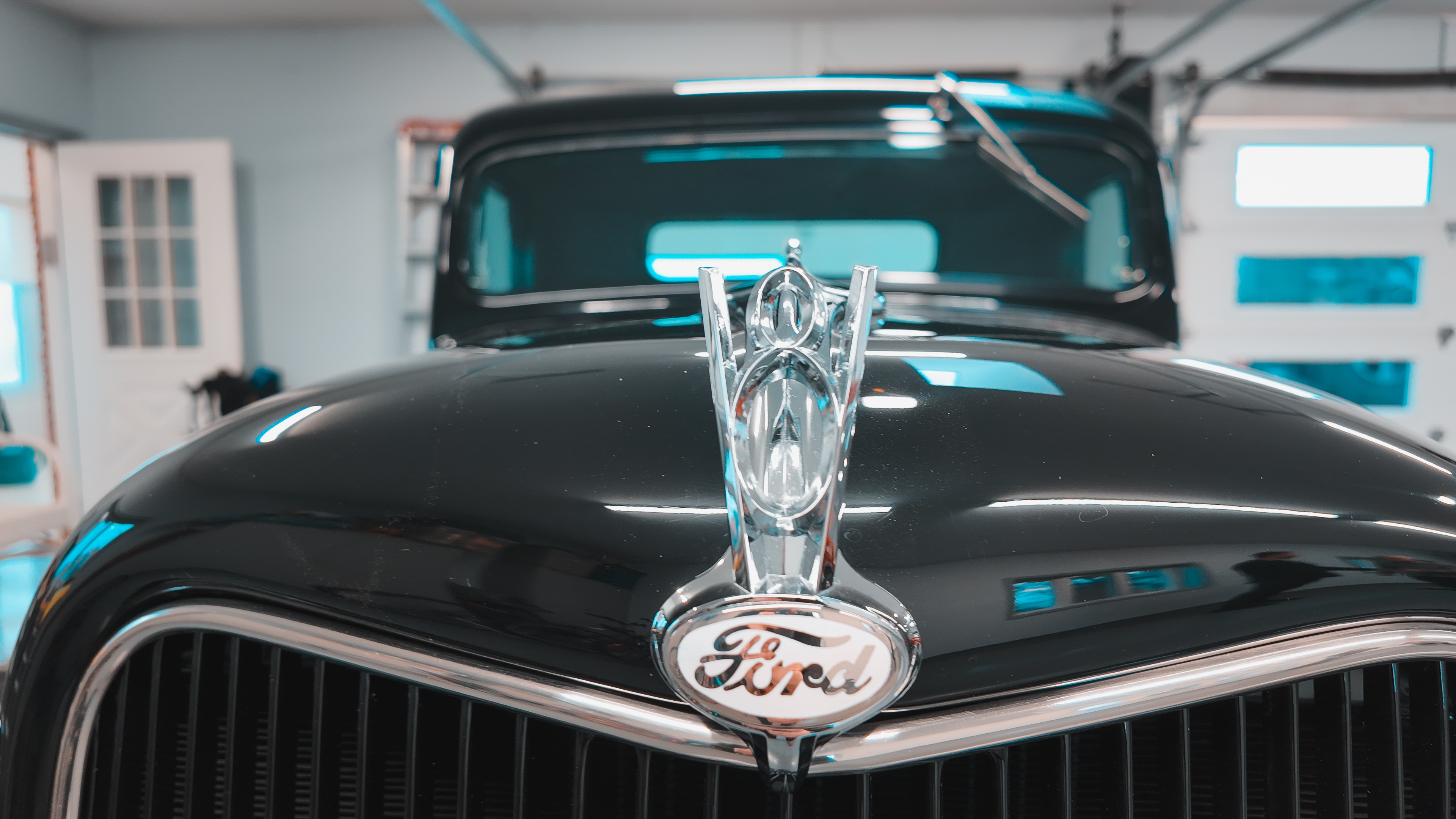
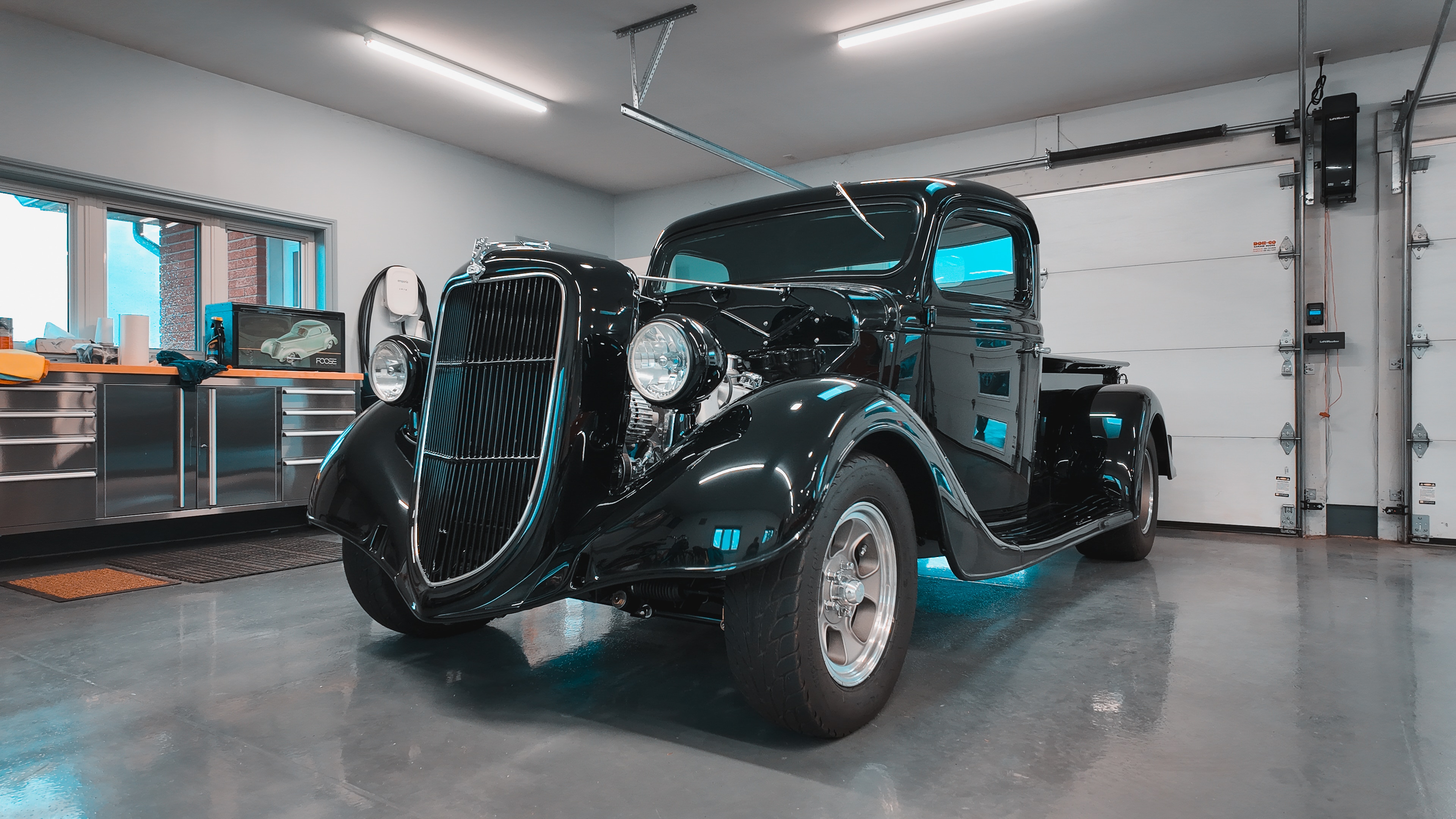
Bill Knapp himself had once owned a 1936 model of the pickup. But he lent it to a community parade and later told the organizers they could just keep the truck because he thought it might help them.
Twenty-five years passed and he never stopped missing it.
When friend and professional restorer Shawn Dixon tracked down another candidate, Knapp jumped at the chance despite its beat-up condition.
From the start, locating original parts proved the biggest hurdle. Many surviving ’36 pickups had been chopped into hot rods with aftermarket engines, lowered suspensions, and custom bodies. So the right fenders, trim pieces, and other parts simply didn’t exist on the open market.
“Getting each piece to fit correctly was the toughest part. If you guess wrong, you waste time and money having to redo it.”Bill Knapp
Knapp and Dixon spent countless hours calling junkyards across the country and eventually had to fabricate missing sections themselves — from the fenders to a custom-cut 1956 dashboard, running boards, and door panels. They even reupholstered the seats in leather.
“Getting each piece to fit correctly was the toughest part,” Knapp said. “If you guess wrong, you waste time and money having to redo it.”

Dixon said he and his now-retired partner, Dennis Standon, realized early on that they’d have to build most parts from scratch. They’d fabricate something, test-fit it, scrap it, and start over.
To make room for larger tires, they widened the fenders beyond factory specs, then painstakingly blended them into the custom running boards.
“The 1956 Ford dashboard alone … it’s 10 inches wider than the original,” said Dixon, whose company managed the project. “We spent a lot of hours making it all work and fit.”
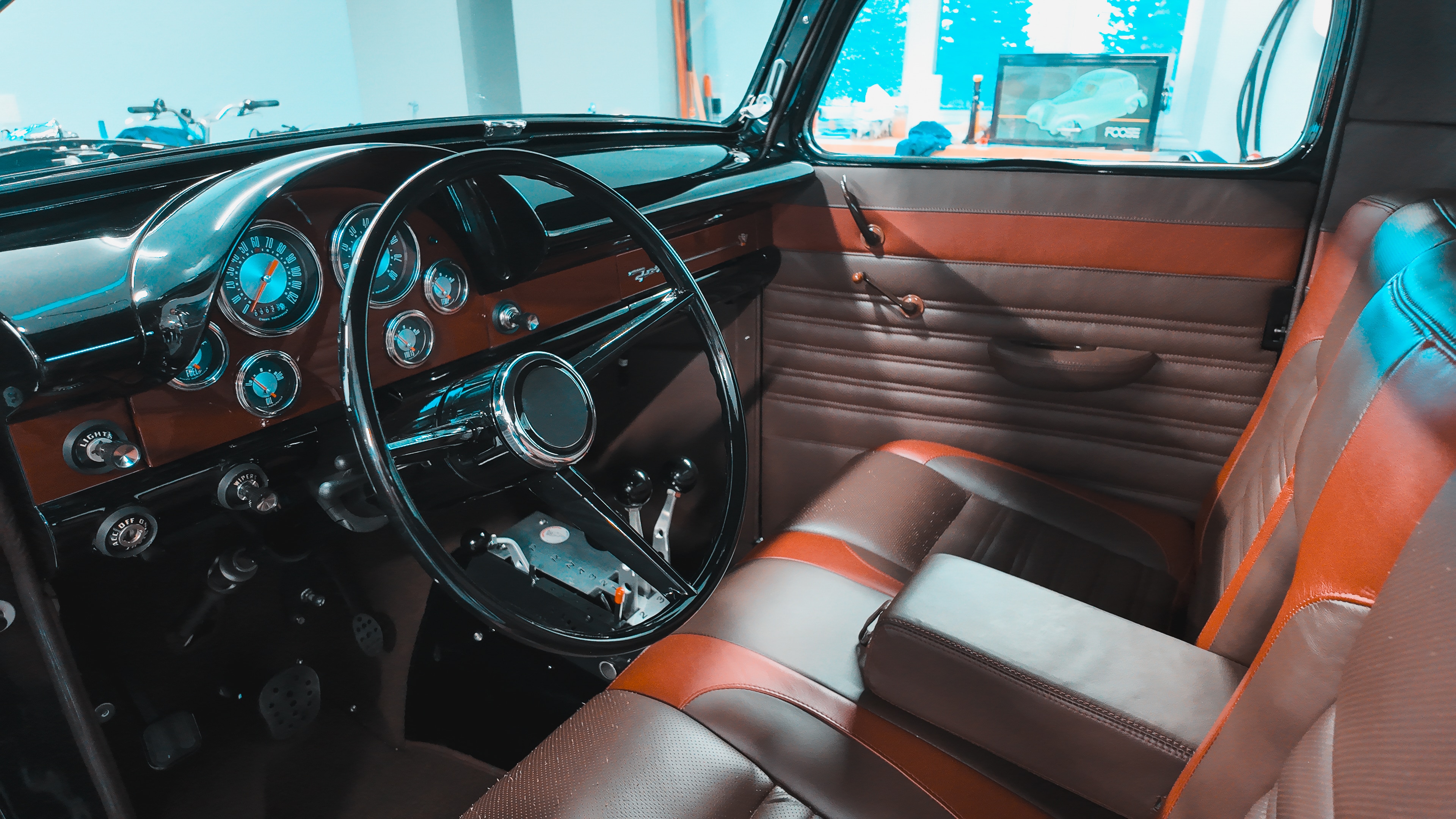
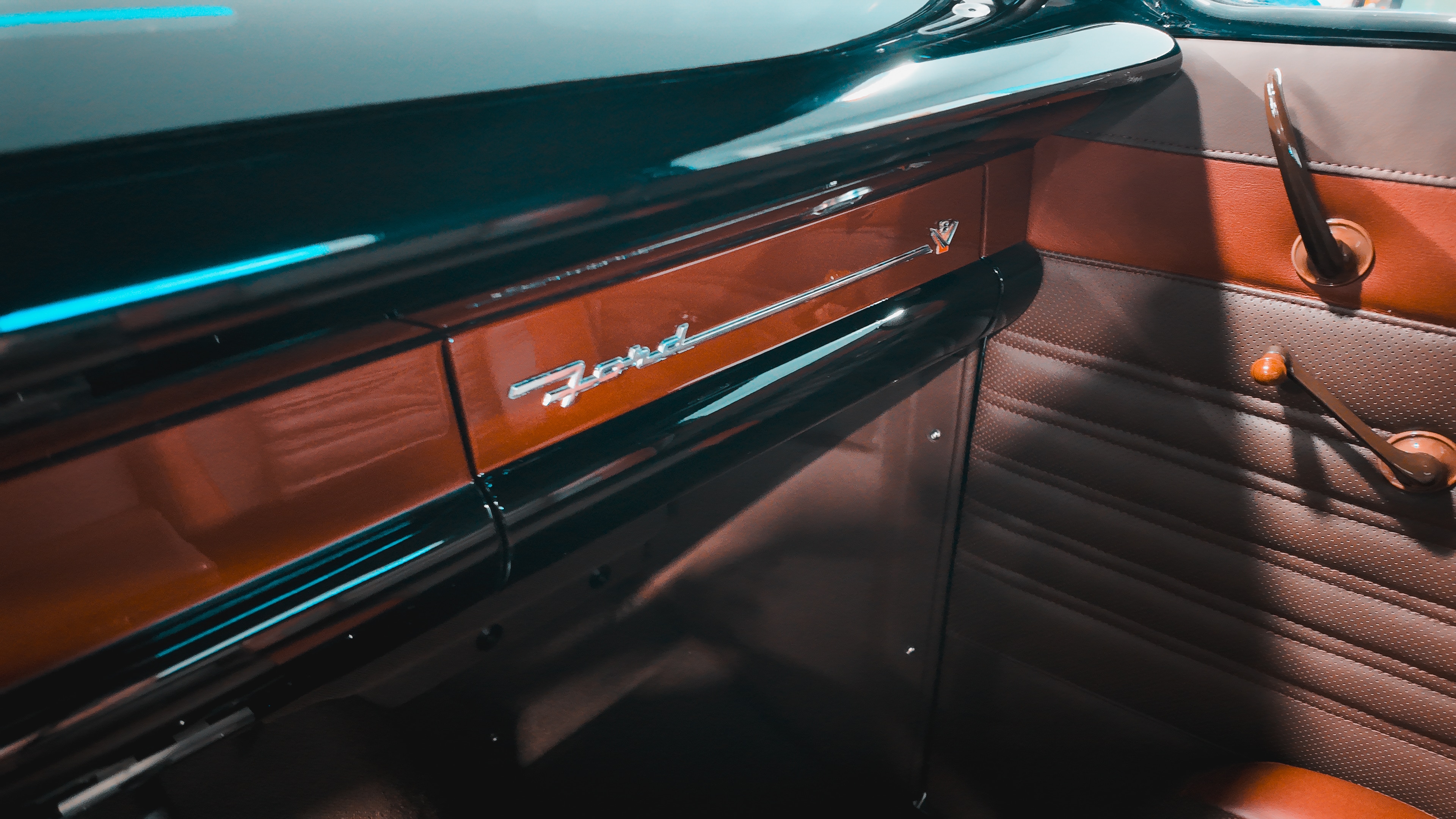


Under the hood, they didn’t stop at restoring the original flathead V-8. Instead, the truck now houses a bespoke, high-performance engine from a Georgia company. For a self-described “car crazy” guy like Knapp, that potent powerplant is the perfect finishing touch.
Seven years later, the finished pickup lives in pride of place at Knapp’s home. Bill invited his wife, Margaret, to be the first passenger on its maiden drive.
“I know where my bread is buttered,” he laughed.
For his sister, Mary, the truck is more than a restored vehicle. She called it “a piece of art,” evoking stories from the plant, the cars her father and brothers drove, and the family’s lifelong loyalty to Ford.
“Whenever I see this truck,” she said, “I’m right back at those family barbecues, listening to everyone reminisce about the Fords we’ve always loved.”
Mitch Weiss is a contributing writer based in Greenville, South Carolina