
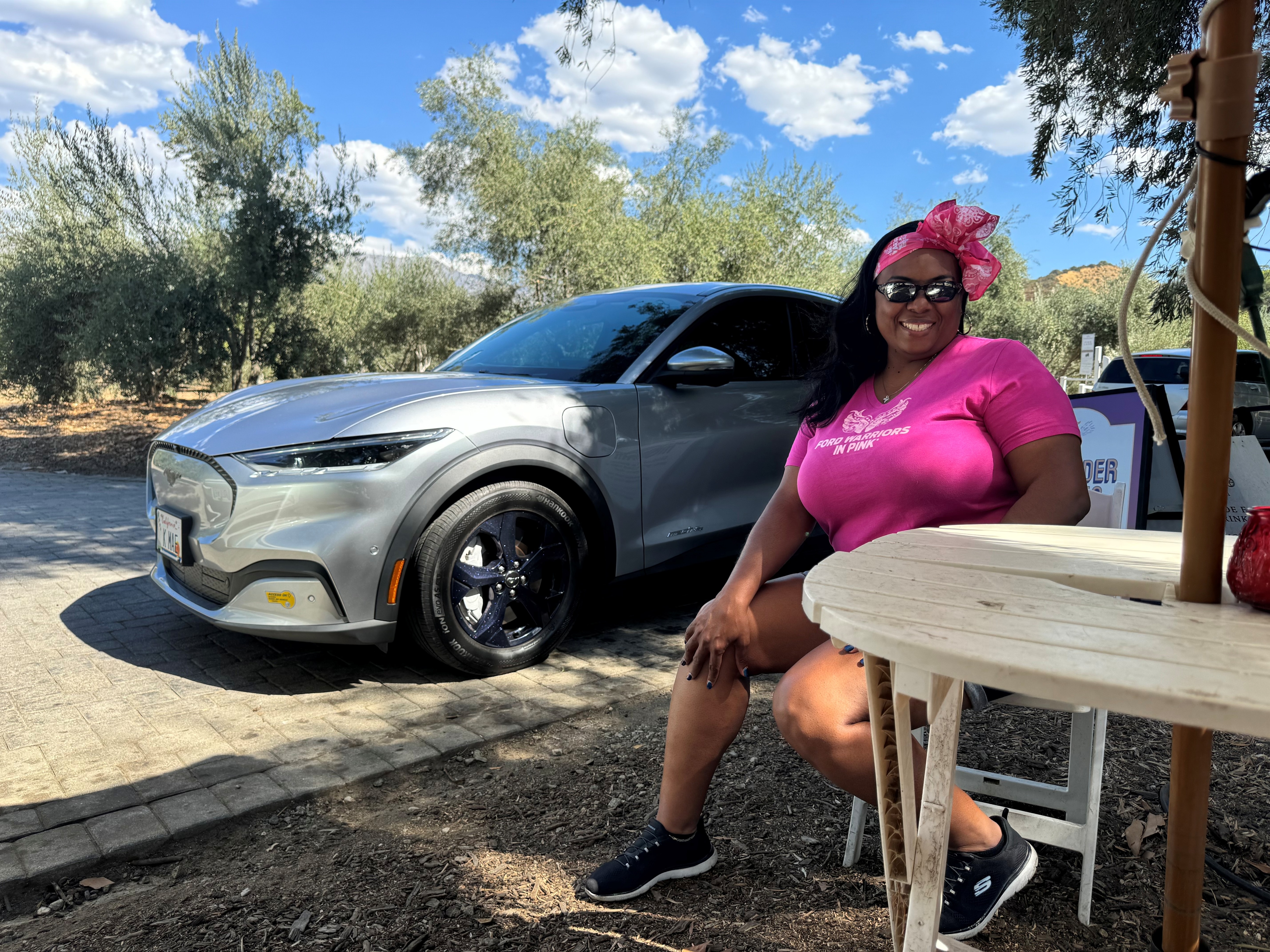

Five years ago, the first Mustang Mach-E customers began adding something important to the Ford electric vehicle battery validation work: real-world ownership at scale.
As part of our quality process, design and validation engineering starts long before a vehicle reaches a customer. We model battery performance, run physical tests, expose packs to heat, cold, and charging profiles, and build in margin for demanding real-world conditions.
These rigorous quality tests are designed to help us understand how battery systems perform across a wide range of climates, charging behaviors, and driving conditions before customers get behind the wheel.
Then David Blenkle drove past 400,000 miles on the original battery in his 2022 Mustang Mach-E. He gave us a real-world example of what is possible — and begged the question of whether he's an outlier or not.
His battery health has remained strong through unusually high-mileage use. His experience gave our team a chance to compare one exceptional ownership case with what we are seeing across the broader fleet.
The bigger question was if David’s experience reflected a broader pattern. So, we decided to look back at the Mustang Mach-E owners who started it all: The Class of 2021.

What 36,000 Vehicles Can Tell Us
Over five years ago, the first Mustang Mach-E vehicles — model year 2021 — reached customers. Those electric SUVs have been on the road, in customers’ hands, ever since.
We analyzed the battery state-of-health data for the entire fleet.
Here is what the Class of 2021 looks like at the five-year mark:
More than 36,000 vehicles. Two billion all-electric miles, across all 50 states and across Canada.
Our Class of 2021 has almost reached Neptune — not a practical comparison, but a useful way to understand the scale and distance.
Average battery health retained: 92%.
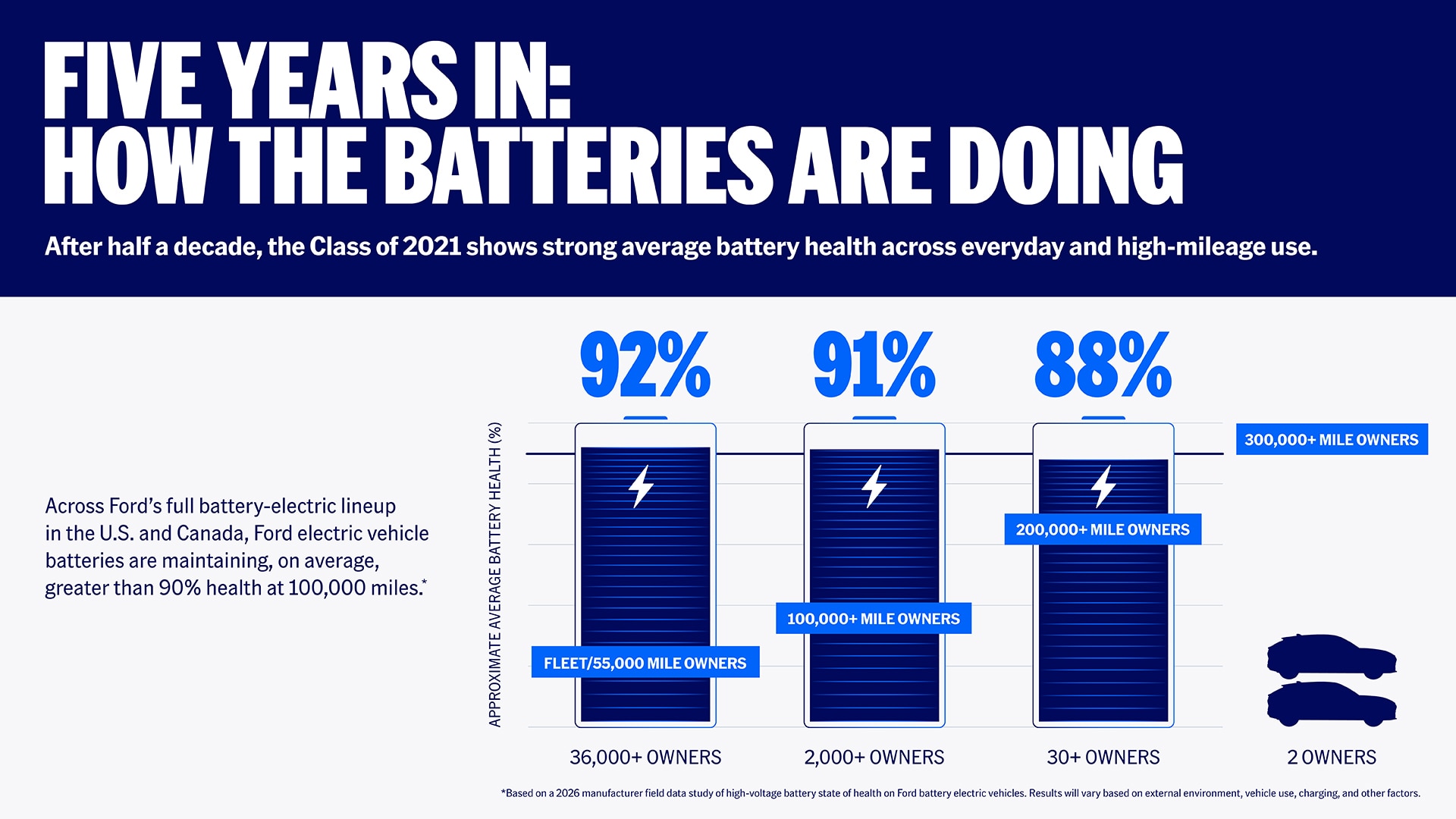
The number I look at closely is the spread. Ninety-five percent of those vehicles fall between 87% and 97% health. Averages can hide variation, so that range matters.
In some cases, David has driven 300,000 miles more than many in our 2021 cohort. Then there are also the people who are road-warriors, like David.
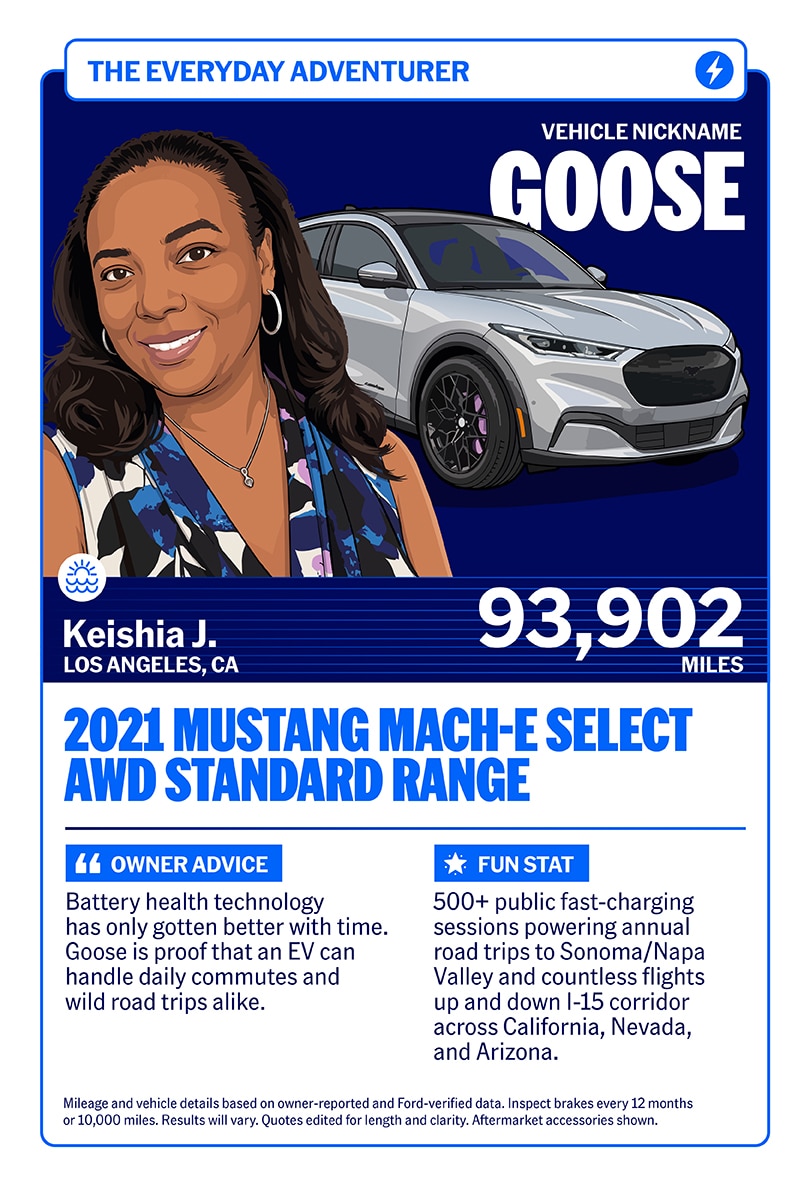
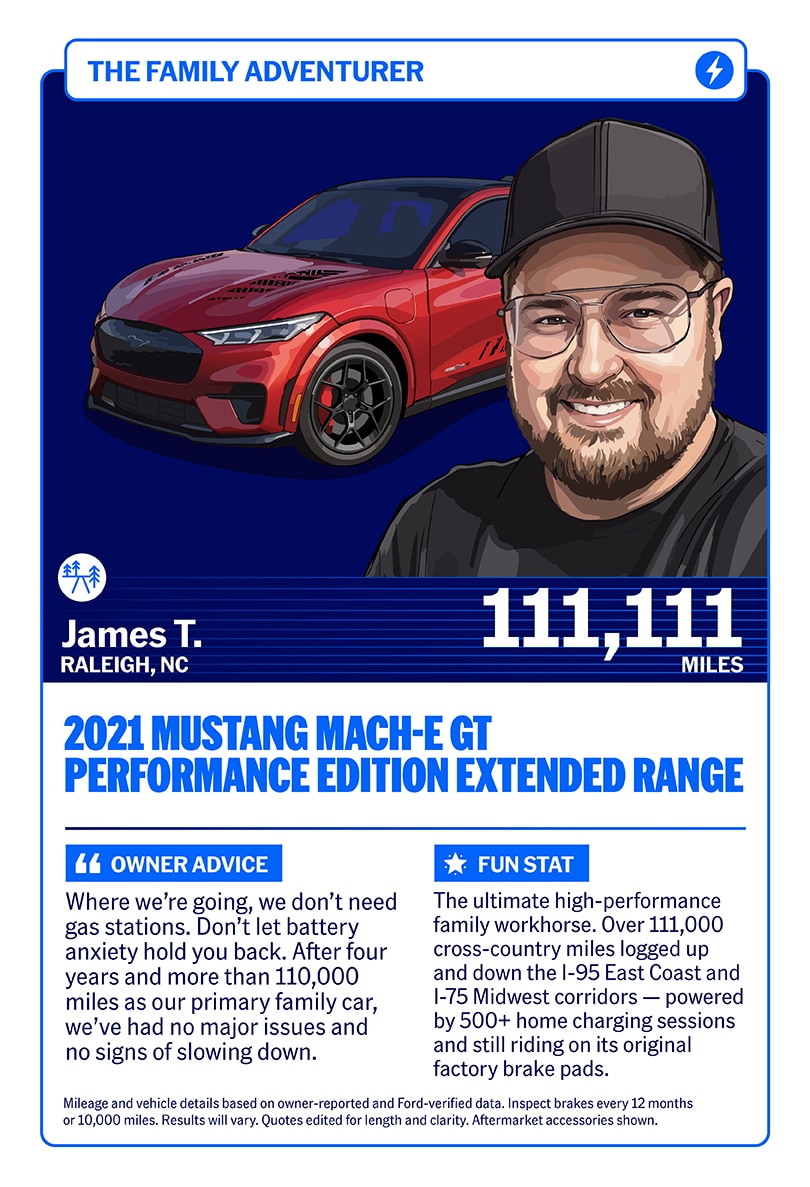
More than 2,000 Class of 2021 owners have crossed 100,000 miles on their original battery, averaging better than 91% battery health. A smaller group of high-mileage drivers — more than 30 drivers past 200,000 miles — is averaging 88%.1
David’s mileage remains exceptional, but the broader Class of 2021 data shows he is part of a larger pattern of strong battery health across real-world use.
Why This Real-World Data Matters
Long-term battery health remains one of the biggest questions for many people considering an electric vehicle, and real-world data like this helps make that conversation more concrete.
Two billion customer-driven miles is meaningful because it reflects how people use their vehicles — commuting, road-tripping, and running their everyday lives.
And it's not just the 2021 Mustang Mach-E.
Aggregated across the full battery-electric lineup released over the last five years in the U.S. and Canada, the pattern holds: our packs are designed to last at least 10 years, and in the wild they're maintaining, on average, greater than 90% health at 100,000 miles.2
The Class of 2021 is the cohort old enough, right now, to tell the most detailed version of that story.

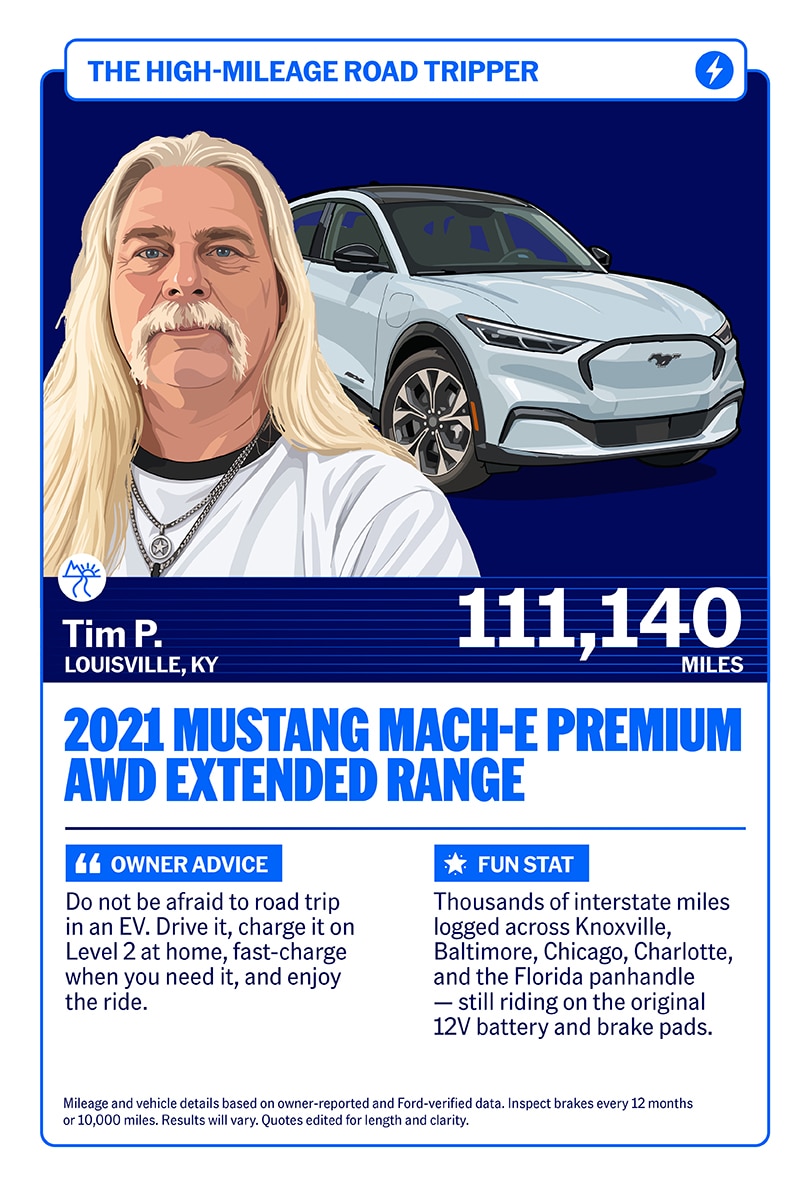
While this story focuses on the 2021 Mustang Mach-E, the learning doesn’t stop there.
Ford uses field data from vehicles on the road to inform current and future electric vehicle programs such as the Universal Electric Vehicle platform and Fathom. This includes how we think about battery management, charging guidance, and long-term ownership confidence.
Three Things That Matter
Battery chemistry is complicated, but a few simple everyday habits can help support long-term battery health:
- Charge on Level 2 at home for daily driving and save DC fast charging for the days you need it. Charging behavior is one of the factors that can influence battery health over time.
- Help manage temperature extremes when you can. Precondition while you're still plugged in and park in the shade in the summer if you have the option.
- Follow the charge-level recommendations in the Ford App for your specific vehicle. These recommendations are designed around the vehicle and battery system you drive.
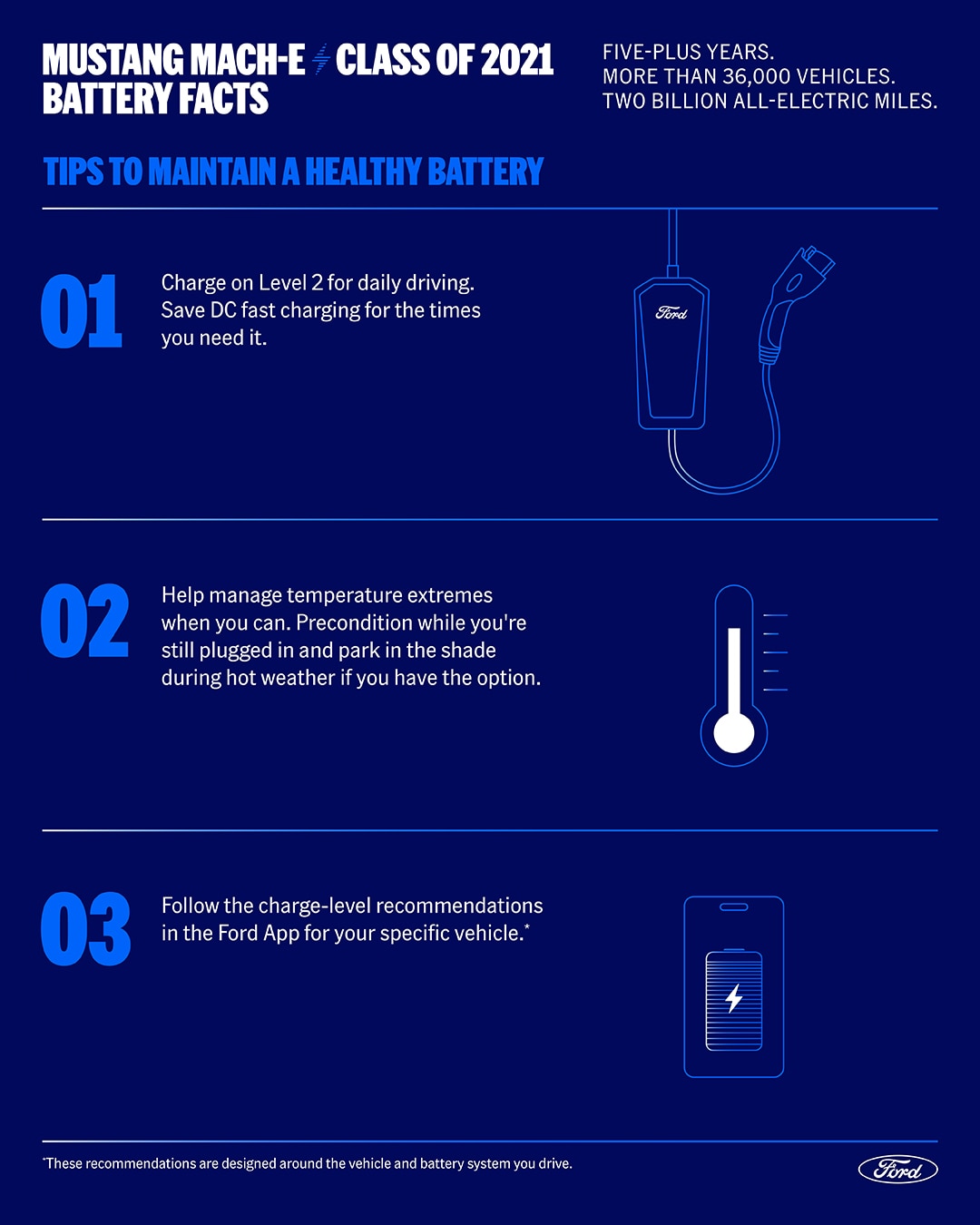
Owners should not have to become battery chemistry experts to take good care of their electric vehicles.
The 2021 Mustang Mach-E vehicles in this data set use NCM battery chemistry, where frequent full charges are generally not needed for daily use. Some newer Ford EV batteries use LFP chemistry, which benefits from an occasional charge to 100% to help the battery management system stay calibrated.
Ford over time has implemented new features, like guidance in the Ford App, to help owners look after their batteries, specific to the vehicle and battery system they drive.
What I Keep Coming Back To
I have spent my career on the battery side of this business — cell chemistry, pack design, thermal management, and the systems that help a battery perform over time.
For an owner, the battery is central to the EV experience. It shapes confidence in every commute, road trip, and charging stop.
This is one of the most valuable feedback loops we have had at this scale: more than 36,000 vehicles, five-plus years, and billions of real-world miles.
The data is encouraging, and the learnings continue to inform how Ford approaches battery systems, software guidance, and future electric vehicle programs.
The Class of 2021 has added a real-world chapter to what our validation work was designed to understand. And we have many more electric miles ahead of us.
Kevin Vander Laan is the Technical Leader of High-Voltage Battery Cells and Systems at Ford.
1. Battery state-of-health data is as of August 2026 for all 21MY Mustang Mach-E vehicles sold to U.S. and Canada retail and fleet customers, covering approximately 36,000 owners with an average ownership period of 5.2 years. Figures reflect usable battery capacity.
2. Based on a 2026 manufacturer field data study of high-voltage battery state of health on Ford battery electric vehicles.
What to Read Next






FAQs
Why is Class of 2021 focused on Mustang Mach-E specifically?
Mustang Mach-E is Ford’s first mass-produced modern electric vehicle. It is currently the only modern Ford EV cohort that has reached five full years of customer driving at a scale (over 36,000 vehicles and 2 billion miles) that yields statistically significant, fleet-scale insights.
Where does the data come from, and can we trust it?
The findings are drawn from Ford's own connected-vehicle fleet data verified through our standard, aggregated, and anonymized vehicle data processes.
What privacy protections are in place?
The Class of 2021 findings are reported at an aggregated fleet level. Ford is committed to being a trusted steward of the personal information customers choose to share and uses connected-vehicle data to improve vehicle quality, safety, and the ownership experience. Individual owners were contacted separately through social media posts and consented to participate.
