
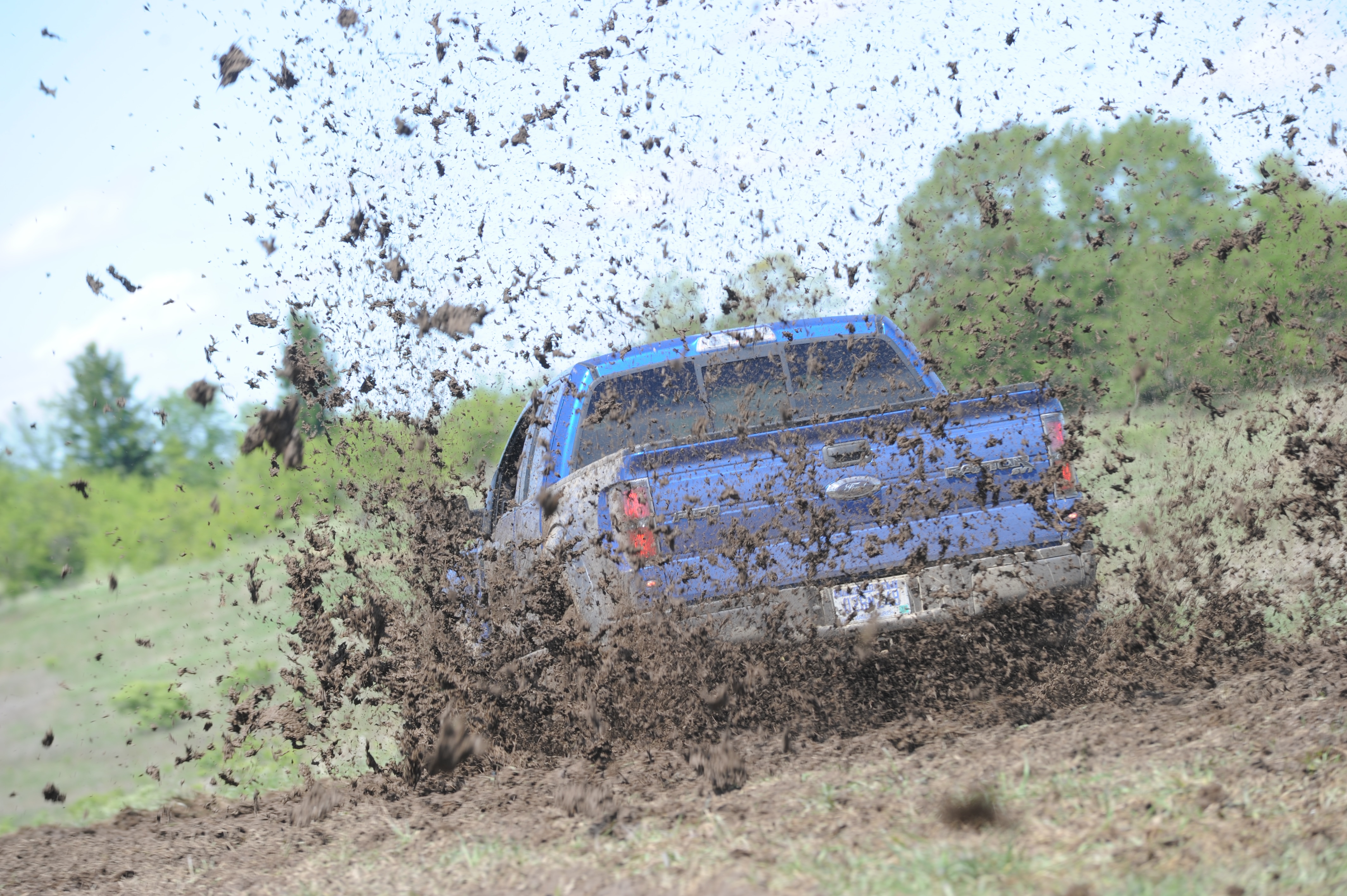

On the eve of the 2008 Baja 1000, Ford’s newest performance truck was motionless in a wash in the Mexican desert. Its engine wouldn’t run, and the race it had been built to endure was only hours away.
The plan had been simple: Take the truck into the desert, aim its auxiliary lights, run a few final checks, and return to the hotel for dinner and a good night’s sleep.
There was a 631-mile race to run the following day, after all.
Instead, the engine began to misfire.
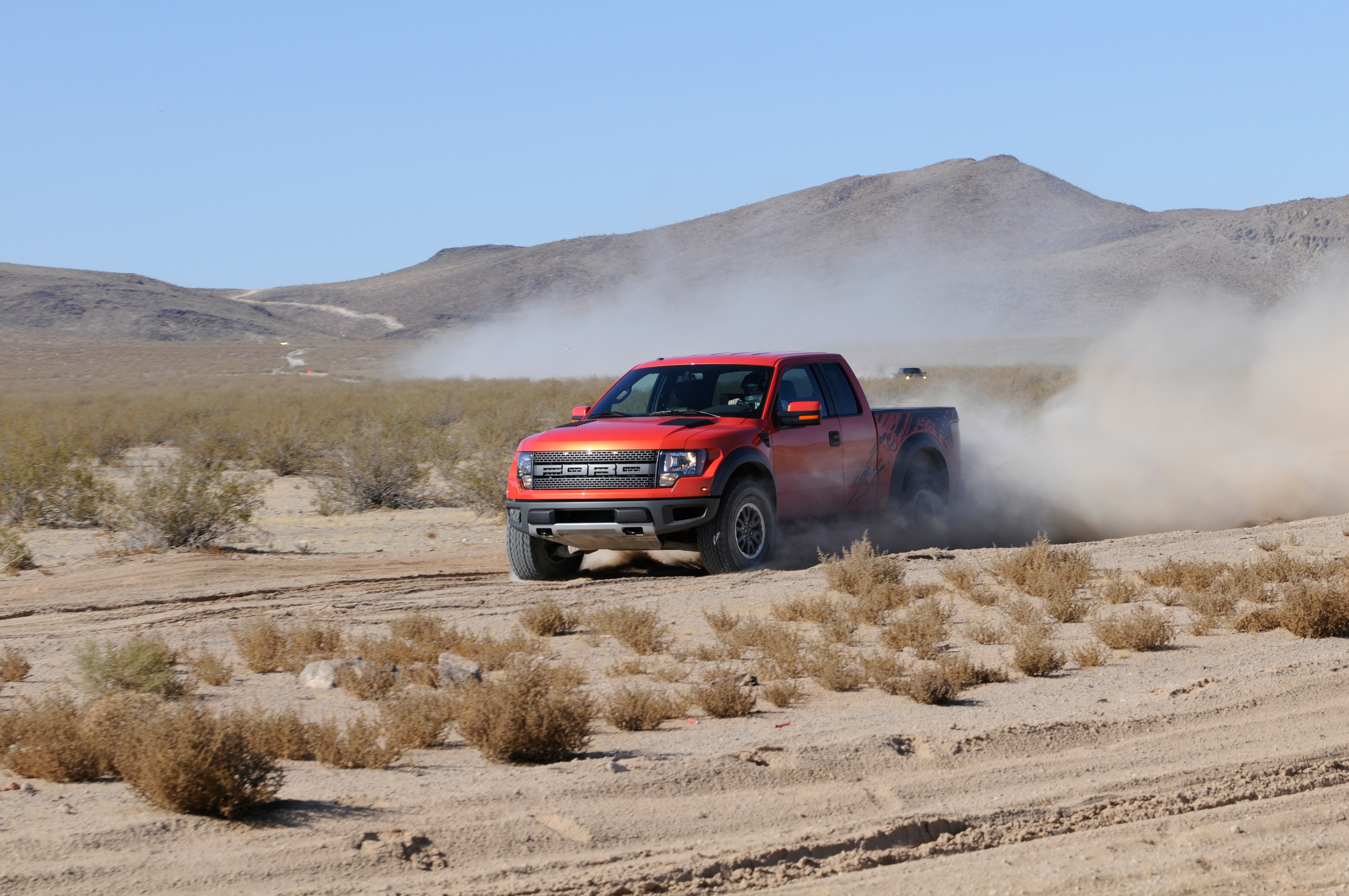
Engineers worked beneath the desert sky, swapping components and troubleshooting the engine as the hours slipped past. Local residents gathered to watch, eventually bringing firewood so the crew could keep warm.
Once back at the hotel, engineers worked through the night. At approximately 7 a.m., engine calibrator Dave Dilloway made one more attempt, replacing the engine wiring harness.
At 7:30 a.m., the engine fired.
Five hours later, the truck was at the starting line.
It was hardly the beginning Ford had imagined for the F-150® SVT Raptor-R truck. But in retrospect, it was perhaps the most appropriate introduction possible.
The engineers had not spent months to bring it into existence only to surrender before the race began.
"Nobody panics when something breaks,” said Tim Smith, Ford Racing vehicle architecture manager.
“Breaking is how you find out what you've got. The only question is how fast you can fix it."
And this beast, for all its troubles, had not yet had the opportunity to show what it could do.
“Breaking is how you find out what you've got. The only question is how fast you can fix it.”Tim Smith, Ford Racing vehicle architecture manager
A Different Kind of Performance
In the mid-2000s, the American performance vehicle was largely defined by what it could do on pavement. Horsepower, acceleration, handling, and lap times were the familiar measures of achievement.
Ford’s Special Vehicle Team, or SVT, had spent years developing vehicles that pushed those boundaries, from the Mustang® Cobra to the Ford GT.
But thousands of miles from Detroit, an entirely different interpretation of performance had taken shape.
In the deserts of the American Southwest and Mexico’s Baja California peninsula, purpose-built racing trucks traveled at extraordinary speeds. Their enormous suspension travel allowed them to absorb punishing impacts, maintain control through deep ruts, and cross landscapes that seemed barely navigable.
For enthusiasts, these machines represented something beyond conventional automotive performance. They offered the possibility of going almost anywhere — quickly.
There was, however, a barrier to entry.
The vehicles capable of delivering that experience were expensive, specialized, and far removed from anything a customer could purchase at a dealership.
A small group within Ford began to wonder whether that had to be the case. What if a customer could buy a truck engineered from the factory to perform like a desert prerunner? Not merely a traditional pickup with larger tires and aggressive styling, but a truck engineered for challenging off-road conditions.
“We weren't trying to build a faster street truck,” said Smith. “We saw a chance to build something that came from racing and that customers could drive."
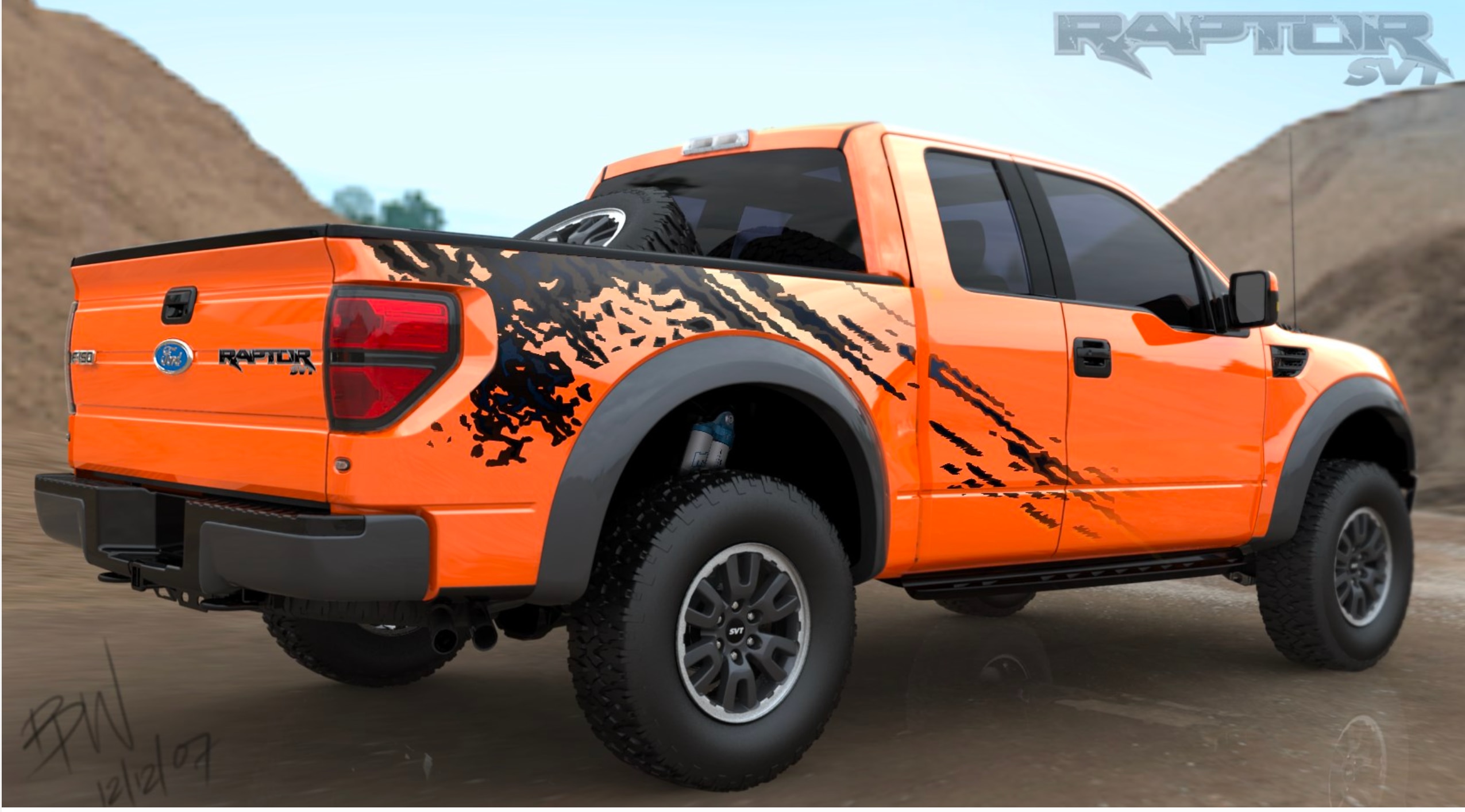
The project took shape within a small team of engineers, designers, and off-road enthusiasts who wouldn't take no for an answer.
The team called the project Raptor®1.
Originally a code name, it developed a following among enthusiasts as information about the truck began circulating. Ford eventually decided to keep it.
On paper, the Raptor promised to be something Ford had never built before. But a name, no matter how formidable, could only take it so far. The greater challenge was ensuring the machine could live up to it.
And for that, there was only one place to go: Baja.
The Ultimate Test
The decision to race the Raptor was actually an engineering call.
Traditionally, Ford’s SVT vehicles underwent demanding durability programs designed to expose weaknesses before customers encountered them. For Raptor, whose defining capability would be its performance over rough terrain, the engineers developed a different approach.
Near Borrego Springs, California, they established a 62-mile desert durability loop. A prototype powered by Ford’s developing 6.2-liter V8 completed approximately 1,300 miles of testing over the course.
The truck performed well, but controlled testing could only reveal so much. The Baja 1000 offered something fundamentally different: unpredictable terrain, extreme mechanical loads, limited opportunities for repair, and the accumulated punishment of racing continuously through the desert.
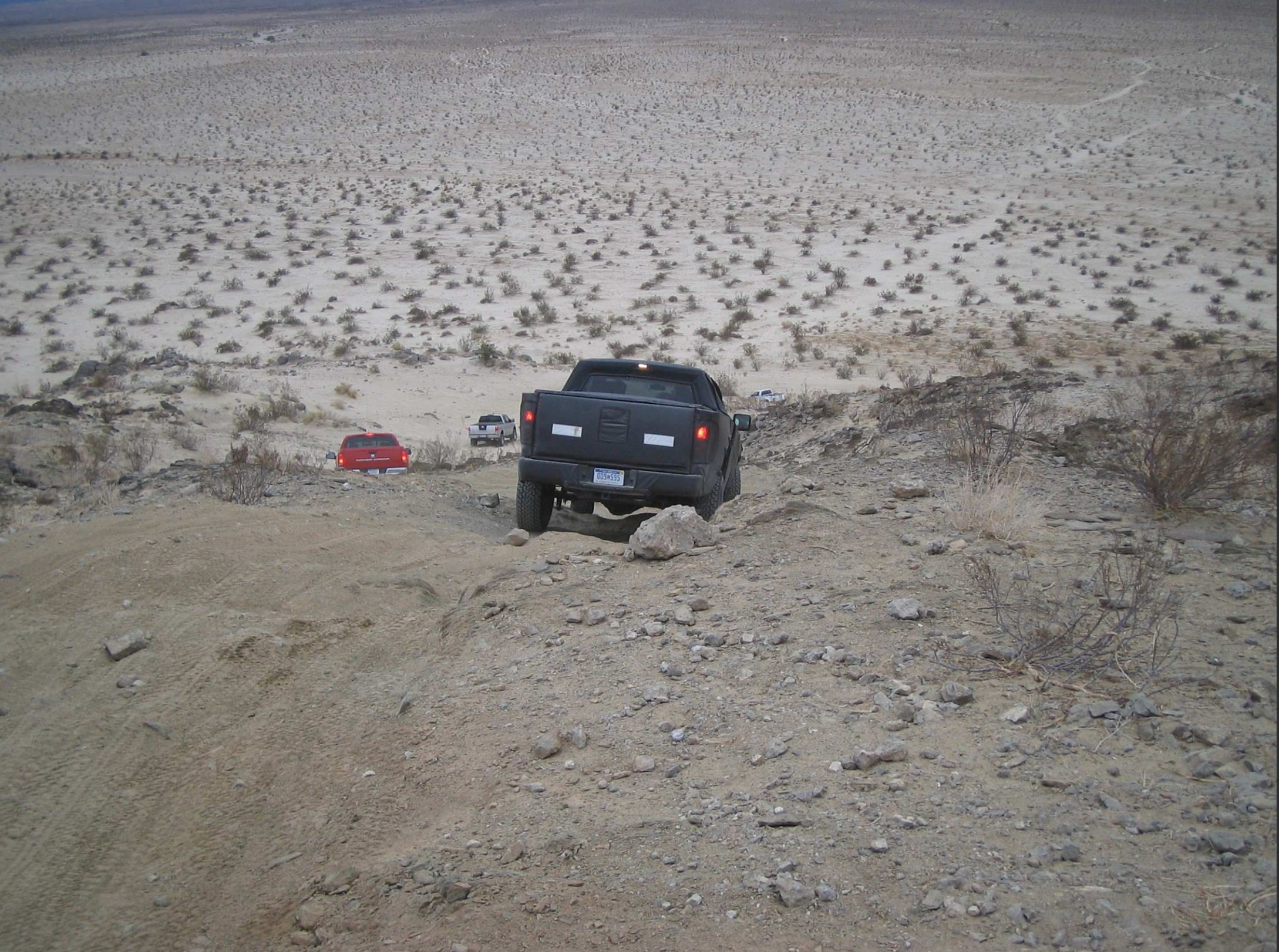
For Ford, that was the point.
If the Raptor was going to become the kind of truck its creators envisioned, it would have to earn that reputation. There would be no shortcuts, no carefully managed conditions, and no guarantees that the desert would be particularly interested in Ford’s ambitions.
“We collected road loads, played them back through a mass table, and worked through the issues we found,” said Brad Lammers, powertrain manager. “We kept raising the bar.”
But there was a complication: the decision to enter the Baja 1000 came late.
Very late.
Three Months to Build a Race Truck
Greg Foutz was no stranger to the desert.
An experienced off-road racer and builder, Foutz had established a reputation for preparing Ford trucks capable of surviving desert competition.
His operation, Foutz Motorsports, understood the particular combination of mechanical preparation, logistics, and improvisation that Baja required.
When Ford Racing’s Cliff Irey approached him about preparing the new Raptor for the 2008 Baja 1000, the assignment came with an extraordinary deadline: Approximately three months.
In that time, the team needed to build the race truck, develop and test it, and coordinate a support operation involving three racing organizations: Foutz Motorsports, Steve Olliges’ Team Ford operation, and Randy Merritt’s Mongo Racing.
Complicating matters further, the Raptor itself was not yet in production.
Many components were still undergoing development. Others existed in limited quantities. The team could not simply order replacement parts because, in many cases, those parts did not yet exist as production inventory.
Ford also planned to reveal the production Raptor and the race-ready Raptor-R at the 2008 SEMA Show in Las Vegas, just weeks before the Baja 1000.
The team had committed itself to a new vehicle, a compressed development schedule, and a complicated racing operation, all before the truck had completed its normal engineering validation.
The Raptor-R would undergo its first serious running only days before its public appearance at SEMA.
This preparation window was almost impossibly narrow. But the people building the Raptor-R embodied the machine they were creating: stubborn, resourceful, and never backing down from a challenge.
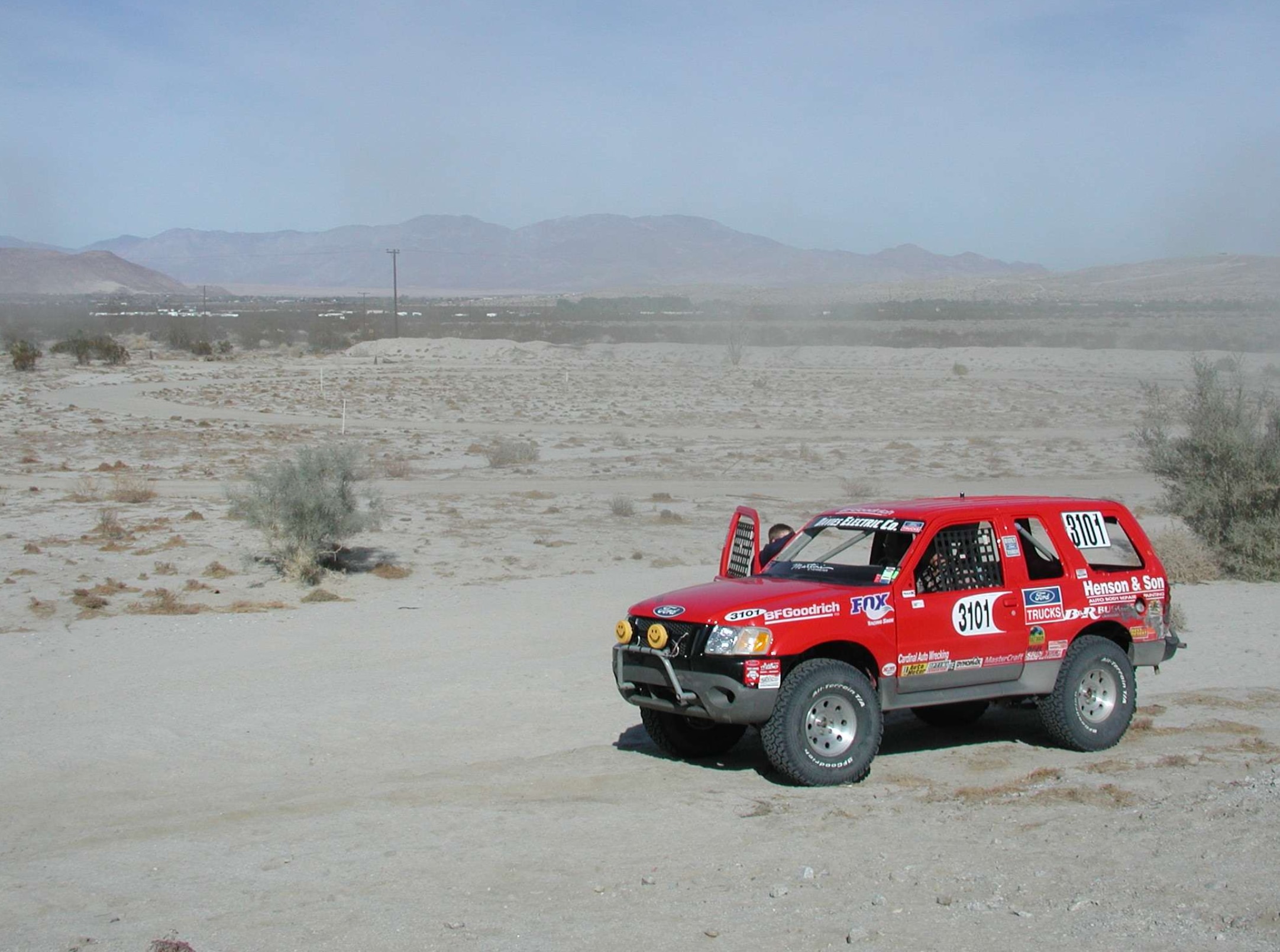
When a part wasn’t available, they found another solution. When the schedule tightened, they worked longer.
The objective remained the same, even as the obstacles multiplied.
“Fail fast, fix it, and go again,” said Lammers. “That's not a slogan. It's how the truck got built."
There was also the question of what kind of race truck Ford should build. A highly specialized Trophy Truck might have been faster, but it would have revealed relatively little about the production Raptor Ford intended to sell.
Instead, like the stock trucks Ford Racing campaigns today, the team preserved as much of the production vehicle’s architecture as possible.
The Raptor-R retained the F-150’s fully boxed frame, along with production-based drivetrain components, transmission, brakes, and axles.
Keeping the race truck close to the production F-150 meant the team could use the Baja challenge to learn about the kind of truck Ford intended customers to drive, not just prove what a purpose-built racer could do.
Its rear suspension continued to use leaf springs, and the suspension retained production mounting locations.
The race truck featured a specially calibrated 6.2-liter V8 producing approximately 500 horsepower, additional suspension capability, racing safety equipment, and specialized FOX dampers.
Because the Raptor had not yet entered production, the team could not compete in the Stock Full class. Instead, it entered Class 8, facing more extensively modified full-size trucks.2
The objective was to finish, and to learn everything possible along the way.
After making it through that night in the desert — the misfiring engine, the firewood, the wiring harness swap — they made it to the line.
Now the real lesson was about to begin. The engineers had fixed what they could. Baja would do the rest.
Kelsey Quartuccio writes for the Ford Performance Communications team.



1. © 2026 Ford Motor Company. Raptor® is a trademark of Ford or its affiliates.
2. Professional driver. Closed course. Do not attempt.
