


In the history of Ford performance vehicles, few development programs have faced a final examination quite like the one on November 21, 2008.
At the starting line of the 41st Baja 1000 in Ensenada, Mexico, a race where half of the competitors are lucky to finish, stood the F-150 SVT Raptor-R, built to challenge the conventional definition of a performance truck.1
Now, with 631 miles of unforgiving terrain ahead, it would have to prove it belonged.
The objective was straightforward: finish the race, learn everything possible, and bring those lessons back to the production truck. But Baja has a reputation for turning even the simplest plans into something far more complicated.
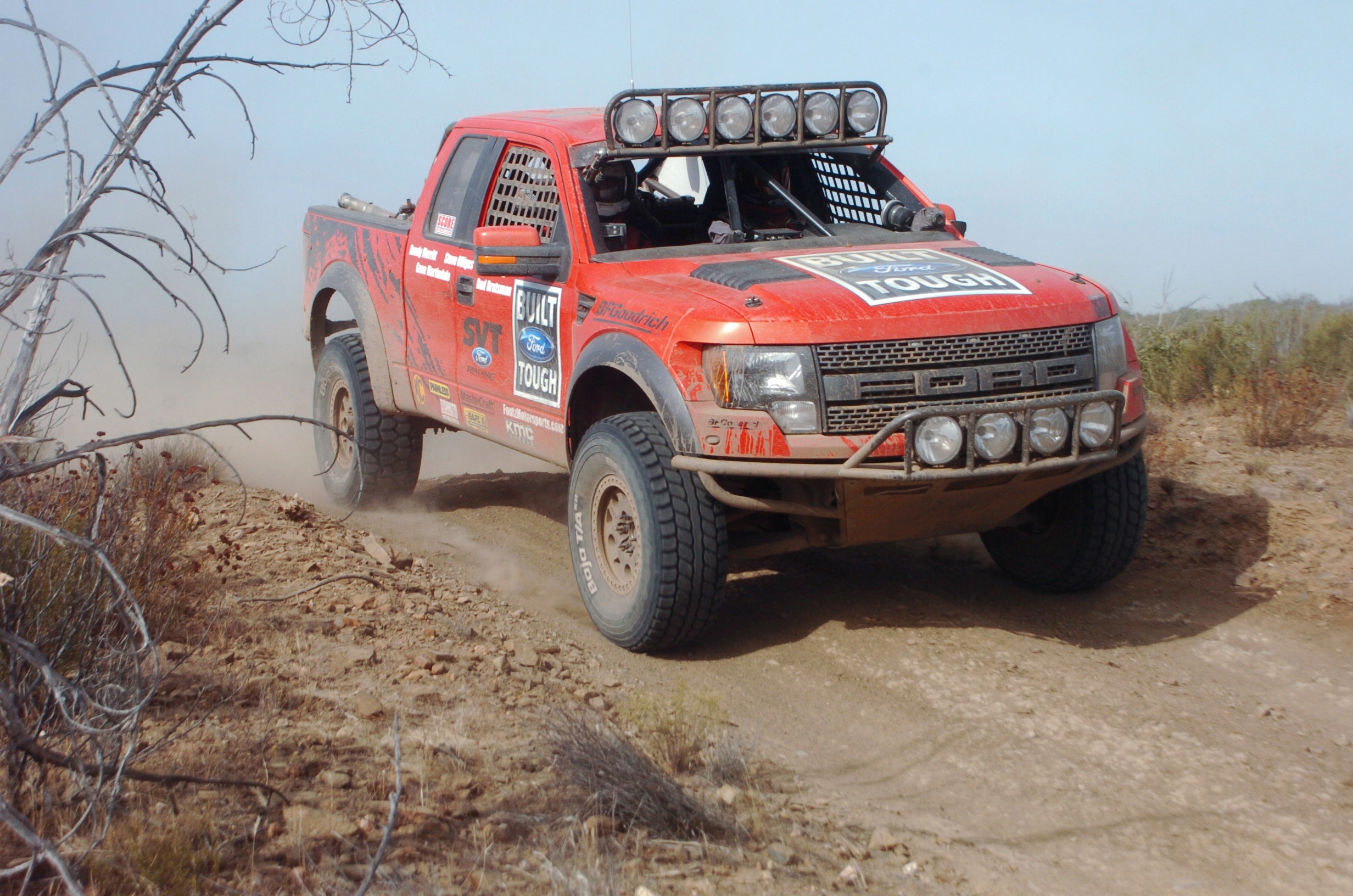
Steve Olliges, a Ford dealer and former member of the Ford Rough Riders off-road racing team in the 1990s, took the opening stint. The course immediately presented the familiar brutality of Baja: deep sand, rocky trails, silt beds, sharp descents, and sections where a momentary lapse in judgment could end a race.
Among its most intimidating features was the La Rumorosa Grade, a steep mountain descent with narrow passages, severe hairpin turns, and exposed drop-offs. The section had not appeared in the race for years, and its return presented a particular challenge for large racing trucks.
Olliges negotiated it successfully.
Elsewhere, the desert was less cooperative.
The Raptor became trapped in a deep sand pit alongside numerous competitors. Later, a skid-plate mounting bracket broke, requiring a welding repair during a pit stop.
The Raptor was battling Baja — and so was the crew. Each time something went wrong, the team found a way to send it back into the desert.
The driving duties passed through the team, including television producer Bud Brutsman, who was documenting the effort, and Ford SVT vehicle dynamics engineer Gene Martindale.
Greg Foutz eventually took over for a long nighttime stint, guiding the Raptor through the darkness as the team continued to manage the mechanical demands of the race.
By then, something unexpected was happening: the Raptor was running competitively.
What had begun as a durability exercise was becoming a race.
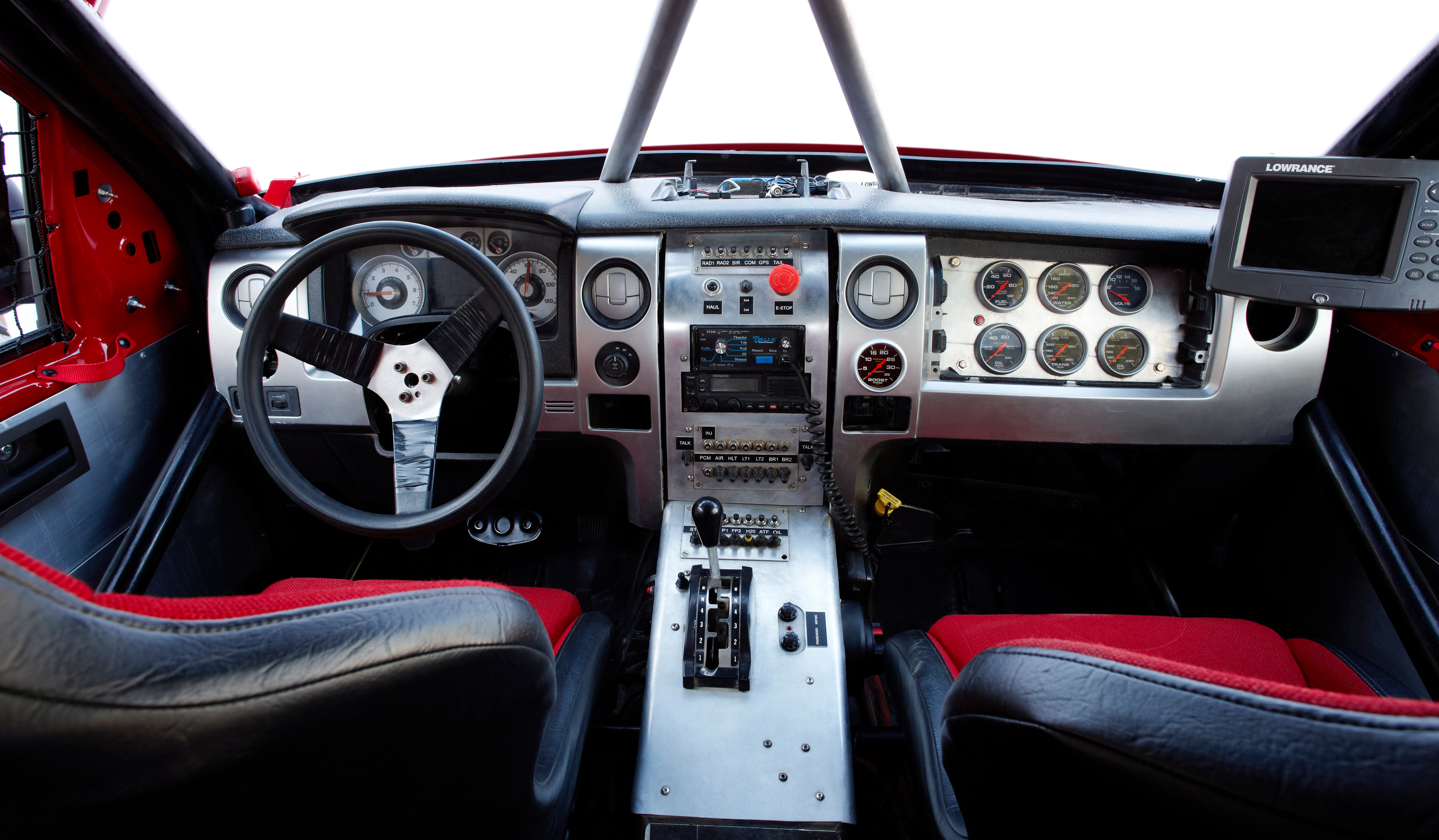
The Long Night
Somewhere in the latter stages of the race, the Raptor’s rear leaf springs suffered serious damage. One spring eyelet had broken. Another had fractured.
It was exactly the kind of information the engineers had come to Baja to discover.
The damage required hours of work. The team repaired what it could on the course, then replaced another damaged spring at a later pit stop.
Meanwhile, the competition continued.
By the time the Raptor reached its next pit, the second-place Class 8 competitor had passed through. The gap was approximately 30 minutes.
With roughly 130 miles remaining, Randy Merritt climbed into the Raptor for the final stint. The team reminded him of the original objective: finish the race.2
But there was now a competitor ahead, a gap that might be closed and a truck that had already survived far more than anyone had reasonably expected.
Cliff Irey captured the situation with a remark that would become part of Raptor lore:
“We came down to Baja to test the Raptor, and a race broke out.”
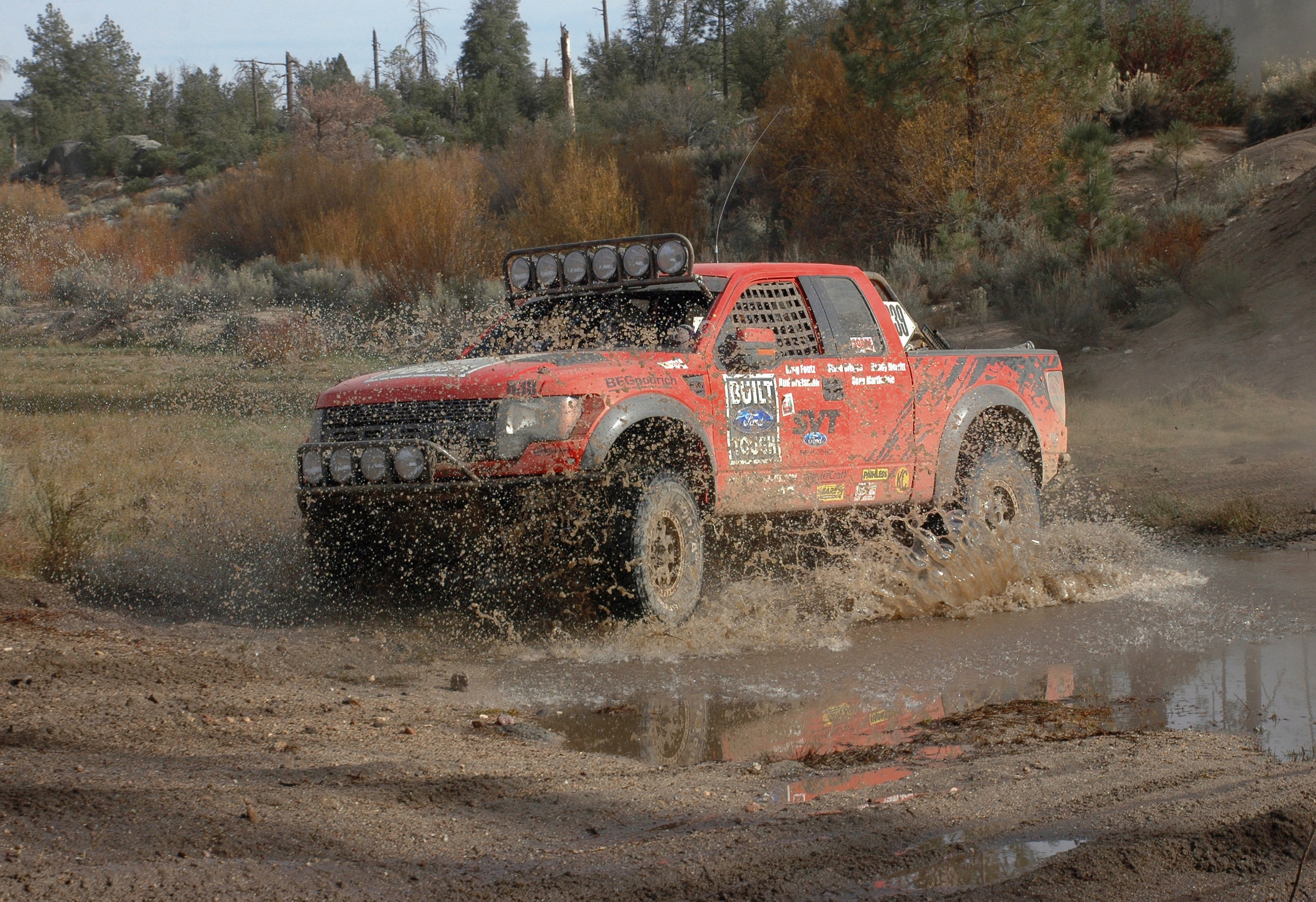
Merritt began closing the distance. At one point, according to the team’s account, the gap may have narrowed to as little as five to 10 minutes.
The Raptor had spent much of its short existence fighting to keep running. Now, battered but still relentless, it was chasing down another race truck.
Then, approximately 50 miles from the finish, an incident involving another competitor caused race officials to stop part of the field. The Raptor was delayed, but the truck it had been chasing was already clear.
The opportunity to fight for second place effectively disappeared, but the finish line remained. And, after 25 hours, 28 minutes, and 10 seconds, the Ford F-150 SVT Raptor-R crossed it.
Third in Class 8. A podium finish in its first race — the Baja 1000.
The truck survived one of the most punishing competitions in motorsport. And somewhere between the broken suspension, the sleepless nights, and the final miles through Baja, the Raptor had begun to become exactly what its creators hoped it would be.
What Baja Taught Ford
The importance of the 2008 Baja 1000 was about more than the Raptor finishing.
It was what the experience revealed about the relationship between racing and production engineering.
Broken leaf springs exposed areas requiring further development. The preceding night’s electrical failure was resolved for in production.
Every mile generated information that could be evaluated and applied.
The first production F-150 SVT Raptor arrived for the 2010 model year. Wide-bodied, purpose-built for high-speed off-road driving, and equipped with sophisticated suspension technology, transformed an enthusiast concept into a vehicle customers could purchase directly from a dealership.
More importantly, it challenged the conventional definition of performance.
A performance truck no longer needed to be judged primarily by how quickly it accelerated on pavement or how much horsepower it produced. It could be measured by the terrain it could conquer, the punishment it could endure, and the confidence it gave its driver beyond the pavement.
The desert had helped create an entirely new category of Ford performance vehicle.
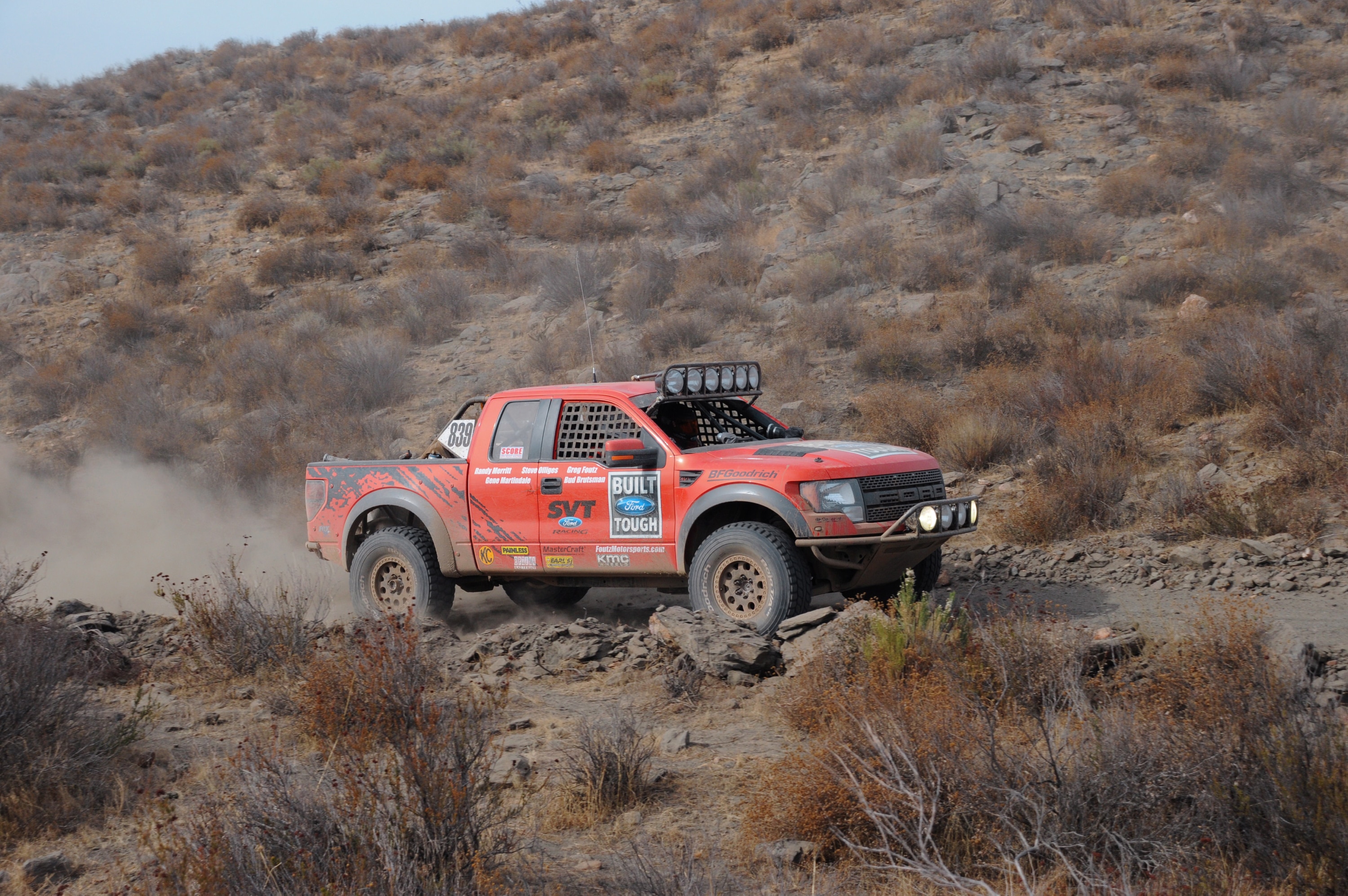
The Truck That Almost Wasn’t
There is a temptation, when looking back at the origins of an influential vehicle, to imagine that its success was inevitable.
That the engineers understood exactly what they were facing. That development proceeded according to plan. That the first race was simply another milestone on the way to a successful product launch.
The reality was considerably less orderly.
The Raptor was built under extraordinary time pressure, with limited access to production components, by a collection of engineers and racers attempting to prove an idea that had never before been realized at Ford.
It entered a racing class against more extensively modified vehicles. It broke. It got stuck. It survived.
In the years that followed, the Raptor name would become synonymous with a particular kind of freedom: the ability to leave the pavement behind, confront difficult terrain, and keep going.
But perhaps the most revealing thing about its origin is that the first Raptor nearly never got the chance to prove itself.
Before it could conquer the desert, a team had to fight for it all the way up to the point it appeared on the starting line.
They fixed what they could. Baja did the rest.
Kelsey Quartuccio writes for the Ford Performance Communications team.
What to Read Next





1. Professional drivers, closed course. Do not attempt.
2. Racing will void the vehicle's limited warranty.
