.jpg)
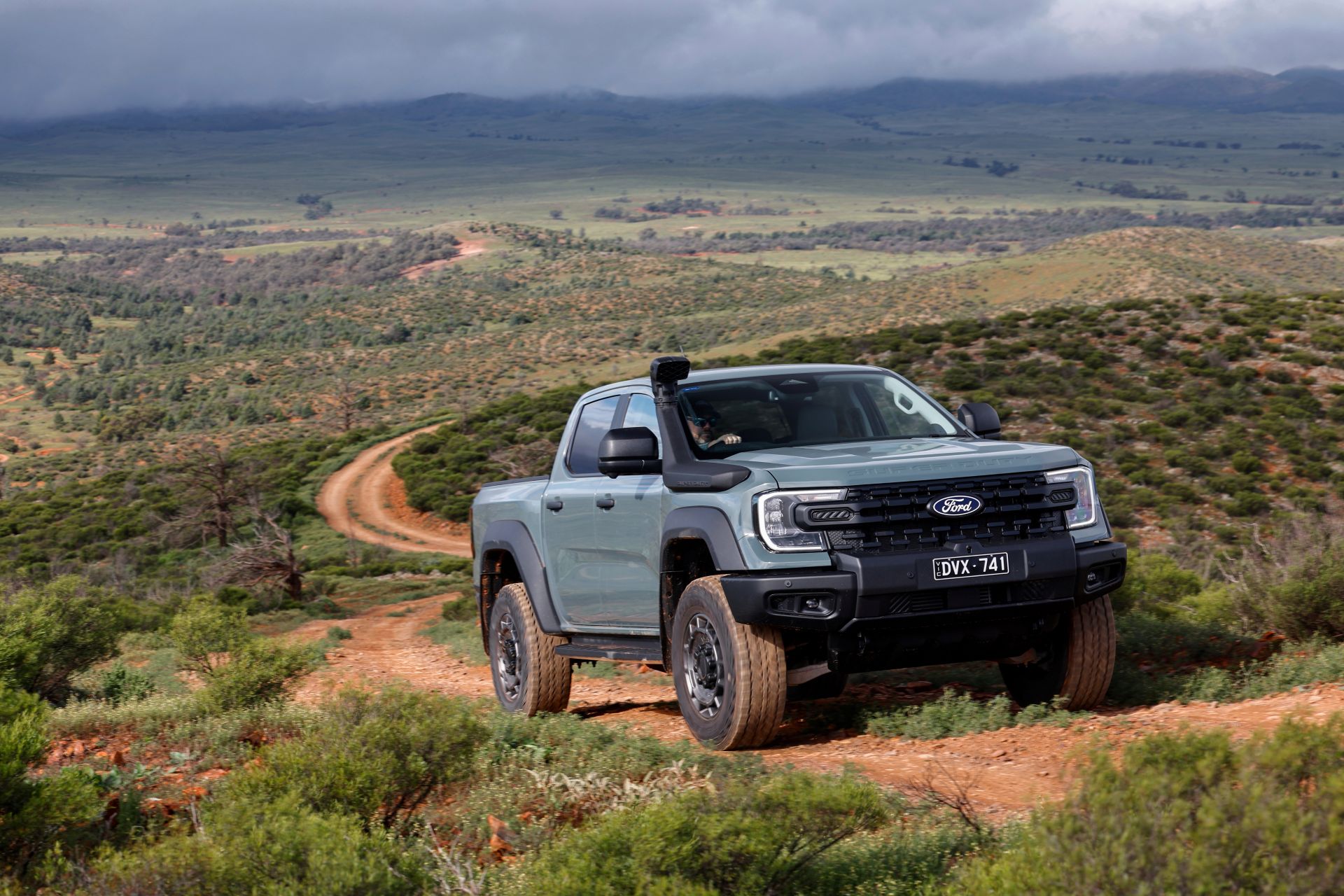
There is a moment, just before you shift into low range at the base of Pat's Peak, where the silence of South Australia’s Flinders Ranges feels heavy enough to hold you in place.
Behind you lies the unseasonably green grasses of Bendleby's low country. Ahead is a wall of jagged, loose slate and volcanic rock, rising at gradients steep enough to make your stomach drop just looking at them. Pat's Peak, named after 4x4 TV presenter Pat Callinan, is rated a 10 out of 10 in difficulty. It's a narrow, one-way mountain track through the Hungry Ranges that affords little margin for error.
This is where we presented the Ranger Super Duty XLT 1 pickup to the media and it’s a track that’s been on my bucket list for a while.
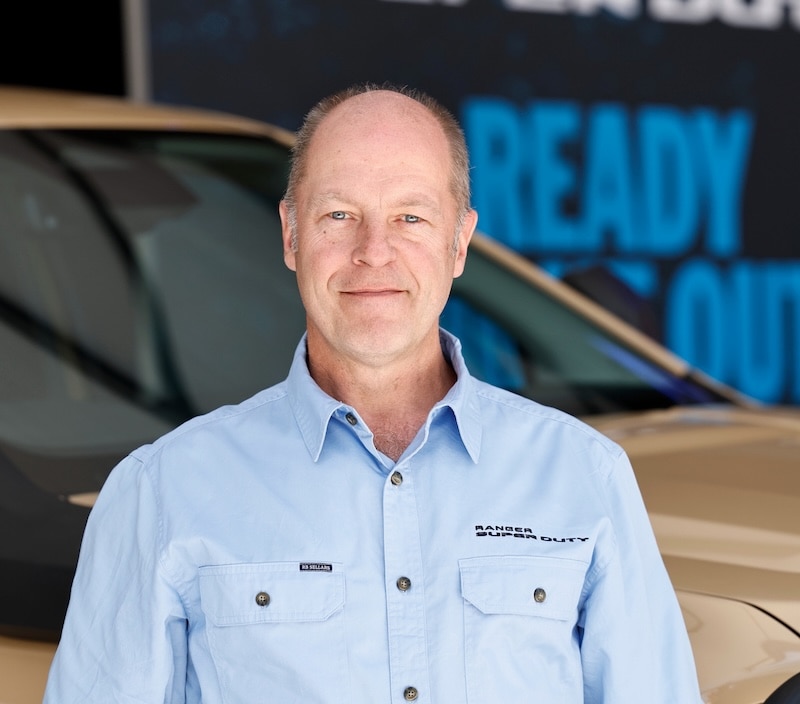
My name is Tim Postgate. I'm one of the engineers at Ford who’s been working on Ranger Super Duty for the last six years, and I've spent a significant part of my career developing Ford vehicles for Australia’s extreme conditions.
The descent from Pat's Peak is about as extreme as it gets, and both crawling and picking the correct line, using either a spotter, or checking the track yourself first, is key to descending safely thanks to some of the blind sections.
.jpg)
Respecting the physics
You don't just drive a track like Pat's Peak. You have to respect the physics of it.
The climb 2 begins on loose, shifting scree before transitioning into a series of steep, offset rock steps. This is terrain that often instantly lifts wheels into the air. On a standard vehicle, the moment a wheel loses contact with the ground, traction usually disappears and forward progress stops. Or worse, you slide backward.
.jpg)
The moment I start climbing, everything comes down to mechanical grip, clearance and the vehicle's structural integrity.
I engage the front and rear electronic locking differentials through the centre screen. By locking both axles, every wheel turns at the same speed regardless of whether it's planted on rock or hanging in the air. It completely takes the drama out of the climb. Instead of fighting for traction, the vehicle just works its way upward, wheel by wheel, ledge by ledge.
With up to 299mm of ground clearance and heavy-duty underbody bash plates, the Super Duty clears obstacles that would hang up a standard-height vehicle on the chassis rails. On a track this aggressive, those millimetres matter.
.jpg)
As the track gets steeper, the shattered slate of the Hungry Ranges starts doing what it does best: trying to shred rubber.
This is where the Super Duty's factory-fitted 33-inch General Grabber all-terrain tyres earn their place. I've aired them down to allow the tread to bag out and conform to the jagged rock face. 2 The aggressive shoulder lugs dig into the loose shale where a highway-biased tyre would simply skate across the surface.
Under the bonnet, the 3.0-litre V6 turbo diesel works in concert with the dual-range transfer case. In low-range first gear, the engine barely rises above idle. The torque does the work, crawling the vehicle up steep gradients with a calm, measured precision that belies the severity of what's happening outside the windscreen.
.jpg)
What we specifically wanted to avoid in this vehicle's engineering was momentum-based driving. If you have to rush at an obstacle with speed, you risk panel damage, tyre damage, or losing control entirely. The combination of the V6's low-end torque, the 33-inch tyres, the locked differentials and the forward-facing camera means you can crawl. Controlled. Safe. And, honestly, far more civilised than a climb and then descent like this has any right to feel.
What a track like this tells you
Testing vehicles on a computer simulation gives you data. Putting a truck on a proving ground gives you confidence in the engineering. But bringing it out here, to a track like Pat's Peak, and feeling how the chassis reacts to real-world stress under full articulation on unpredictable surfaces? That's when the engineering gets real.
.jpg)
But what Pat's Peak proves is that the engineering doesn't stop at the bitumen. When the trailer is unhitched and the track turns ugly, this vehicle has the clearance, the mechanical grip, the structural integrity and the composure to take you to spectacular places.
For me, as an engineer, that's the most satisfying test there is. Not the spec sheet. Not the simulation. The mountain. And the view from the top of it. Having wanted to drive Pat’s Peak for a while now, I can honestly say it didn’t disappoint. The 360-degree view of the Flinders Ranges from the top was as good as I’d read it would be.
.jpg)
Ranger Super Duty XLT Pickup in the Bendleby Ranges
Tim Postgate is a vehicle integration engineer for Ranger Super Duty.
1 Not all vehicle variants or features will be available in all countries. Actual specifications for each country will be published prior to launch in that country.
2 Always consult the Owner's Manual before off-road driving, know your terrain and trail difficulty, and use appropriate safety gear. If deflating tyres for off-road use, always re-inflate to recommended pressures before returning to sealed roads.