.JPG)

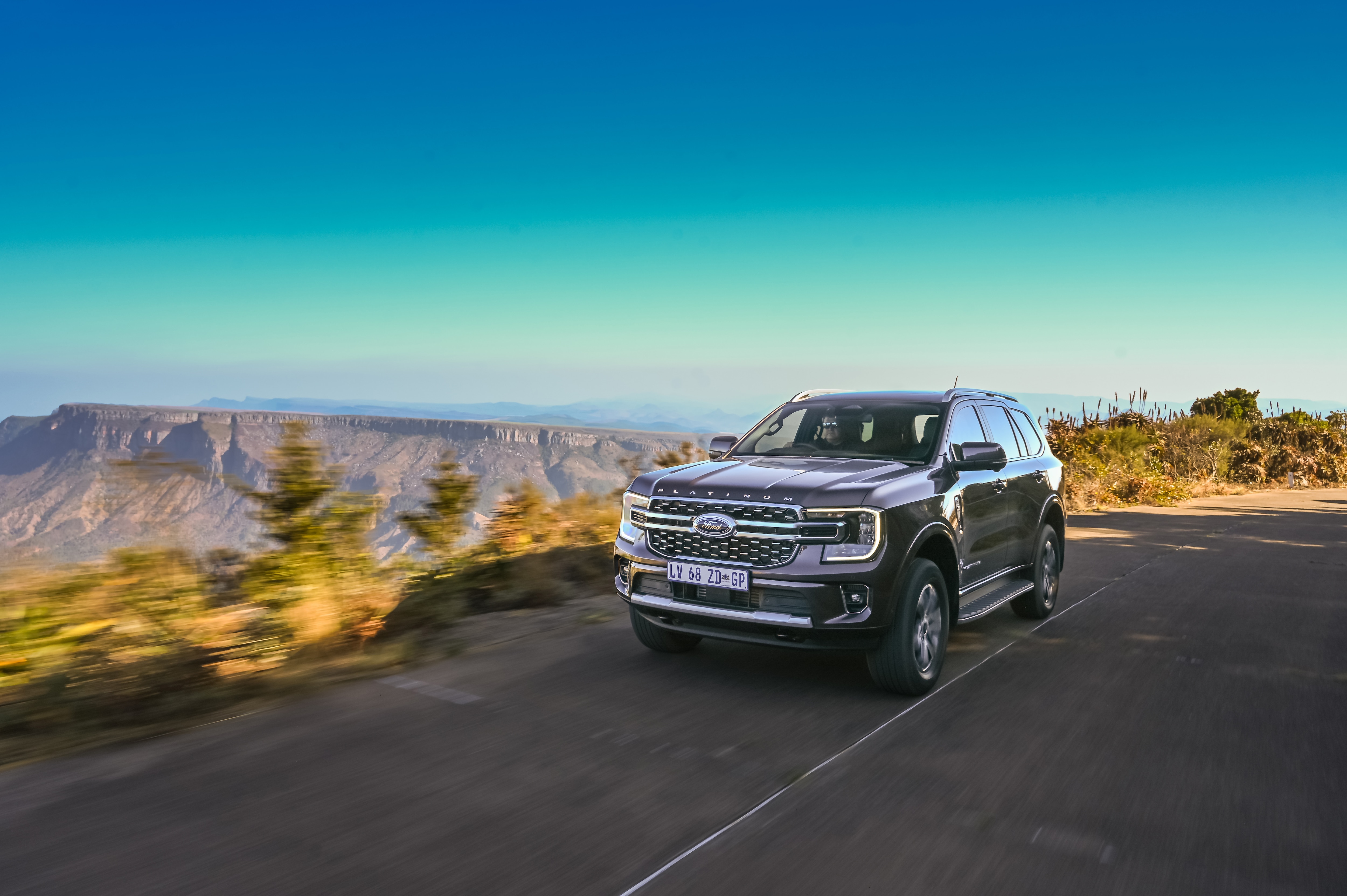
The updated 2026 Ford Everest Tremor 1 is the most off-road capable factory-built Everest ever, but it didn't get there with a cosmetic makeover. Developed through the same rigorous testing program as any new Ford vehicle, from environmental chambers to real-world trails across mountain passes and desert dunes, Tremor adds Bilstein® dampers, steel underbody protection, all-terrain tyres and a Rock Crawl drive mode exclusive to this variant.
Everest Tremor joins Ranger Tremor in Australia and will be joining the lineup in South Africa and the Middle East this year (Expedition Tremor is also available in the Middle East) giving customers access to factory-developed off-road capable vehicles whether they want a pickup or SUV body style. Below, we answer the most common questions about what it offers and how it performs.
The most off-road capable factory-built Everest ever
The Ford Everest Tremor takes everything people love about Everest, including space, comfort, towing muscle and adds off-road hardware developed through the same rigorous testing program as every vehicle that wears the Ford badge.
From Bilstein® position-sensitive dampers and a wider track to seven selectable drive modes including Rock Crawl, Everest Tremor is engineered for those who want to head further from the sealed road without sacrificing everyday refinement.
.JPG)
What makes Everest Tremor different from a standard Everest?
Everest Tremor is a ground-up off-road enhancement that goes through the same development and validation process as a new vehicle. That means computer-aided engineering, environmental chamber testing, shake-and-rattle rigs and thousands of kilometres in real-world conditions, from mountain passes to desert tracks and everything in between.
.JPG)
The hardware changes start underneath. Off-road suspension with Bilstein® position-sensitive dampers delivers a lifted ride height with 255mm of running ground clearance, while a wider 1,650 mm track improves stability on uneven terrain. The 17-inch alloy wheels wear General Grabber A/T tyres for grip across gravel, mud and rock, and a locking rear differential for when the terrain gets gnarly.
Up front, the signature Tremor grille incorporates factory-fitted auxiliary LED lights, and an asphalt black matte 'H Bar' front bumper sets the tone. Steel underbody protection and a front steel bash plate shield critical components, while two front recovery hooks mean you're prepared if things get properly stuck. Seven selectable drive modes (Normal, Eco, Tow/Haul, Slippery, Mud/Ruts, Sand and Rock Crawl) adjust the traction control, throttle response and steering feel.
.JPG)
How was the Everest Tremor developed?
Engineers tested and tuned stability control systems in baking hot locations and freezing, snow-covered mountains, as well as extensive testing at Ford's You Yangs Proving Ground in Australia.
Real-world testing focused on the kind of environments owners drive – highland passes, desert dunes, rocky trails and long-distance highway touring. The result is a vehicle that handles a boulder-strewn track and a motorway cruise without asking you to choose between the two.
How Ford Engineered Everest to Delivery Capability and Comfort
What engine powers the Everest Tremor?
The Everest Tremor is available with two powertrains depending on the market.
In Australia, New Zealand and South Africa, Tremor runs Ford's 3.0L V6 turbodiesel, producing 184kW at 3,250 rpm and 600Nm of torque between 1,750 and 2,250 rpm.
In the Middle East, Everest Tremor is powered by a 2.7L V6 EcoBoost petrol engine, delivering 231kW and 542Nm of torque – tuned for smooth power delivery across city driving, highway cruising and extreme desert conditions.
Both powertrains are matched with a 10-speed automatic transmission and full-time four-wheel drive.
.JPG)
What is the towing capacity of the Ford Everest Tremor?
The updated Ford Everest Tremor retains a maximum braked towing capacity of 3,500kg using a Genuine Ford tow pack (depending on the market, this might be optional as part of a pack at additional cost). Gross combined mass sits at 6,350kg with a gross vehicle mass of 3,240kg, leaving 760kg of payload capacity (seven-seat variants). Tow/Haul drive mode comes standard, optimising shift points and throttle mapping for loaded driving whether you're hauling a boat, a camper trailer or a boot full of gear.
Can Everest Tremor handle serious off-road terrain?
With 255 mm of ground clearance, an 800 mm wading depth (at a steady 7 km/h), a 32-degree approach angle and 26.8-degree departure angle, Everest Tremor is equipped to tackle river crossings, rocky trails, dune descents and steep climbs. The ramp breakover angle of 23.9 degrees means you're less likely to touch down on crests and ridgelines.
The Rock Crawl drive mode – exclusive to Tremor in the Everest range – softens throttle response to prevent your foot bouncing and optimises traction control for slow-speed technical terrain. Combined with the locking rear differential and Bilstein® dampers that firm up progressively as the suspension compresses through its ride zones, Tremor was developed to maintain composure whether you're picking a line through boulders, powering across soft sand, or on the school run.
Heavy-duty composite side steps provide protection for the lower body when navigating tight lines between rocks or ruts. For those heading into particularly remote or challenging country, the optional Rough Terrain Pack adds Under Vehicle Armour (UVA), a Rough Terrain Bar and an auxiliary switch bank – letting you wire in aftermarket accessories like spotlights or a compressor.
What's the Everest Tremor like inside?
The cabin is designed to handle dusty boots and long drives equally well. In Australia, New Zealand and South Africa, seven seats come standard, although customers in Australia can delete the third-row seats as a no-cost option for enhanced storage options.
.JPG)
The signature interior touch is the bespoke ebony leather-accented seats embossed with the Tremor logo, paired with all-weather floor mats and a vinyl-wrapped steering wheel – practical details for dusty hands and muddy gear. The driver gets a 10-way power-adjustable seat with memory setting, the front passenger gets 8-way power adjustment, and both front seats are heated and ventilated.
.JPG)
Technology centres on a 12-inch portrait touchscreen running SYNC® with wireless Apple CarPlay™ and Android Auto™, an embedded modem, a wireless charging pad and an 8-inch digital instrument cluster. Dual-zone climate control keeps all rows comfortable regardless of conditions outside. A 360-degree camera helps with manoeuvring in tight spots, whether that's a city car park or a narrow trail between trees.
There's also Pro Power Onboard™ delivering 400W (230V) through an inverter at the rear of the console which is useful for charging devices at camp or running small appliances away from mains power.
.JPG)
What colours are available for the Everest Tremor?
The updated 2026 Ford Everest Tremor is available in five colours: Command Grey, Arctic White, Meteor Grey, Aluminium and Shadow Black. Each is selected to complement the Tremor's rugged exterior – from the black wheel arch flares to the asphalt black grille treatment – whether you're on city streets or covered in trail dust.
What safety and driver-assist features are standard?
Everest Tremor comes comprehensively equipped with nine airbags and a full suite of active driver-assist features 2. Intelligent Adaptive Cruise Control includes Stop & Go, Traffic Sign Recognition and Lane Centring, while Pre-Collision Assist pairs Autonomous Emergency Braking with Intersection Assist to help mitigate collisions.
Blind Spot Monitoring with Cross Traffic Alert covers your flanks in traffic and car parks, and Intelligent Speed Assist helps you stay within posted limits. Front and rear parking sensors work alongside the standard 360-degree camera to help give you visibility in every direction. Smart Keyless Entry with Push Button Start rounds out the everyday convenience.
.JPG)
Updated 2026 Ford Everest Tremor
1 Not all vehicle variants or features will be available in all countries. Actual specifications for each country will be published prior to launch in that country.
2 Driver-assist features are supplemental and do not replace the driver’s attention, judgment and need to control the vehicle. May not operate at certain speeds, or in certain driving, road or weather conditions. See Owner’s Manual for details and limitations.
.jpg)