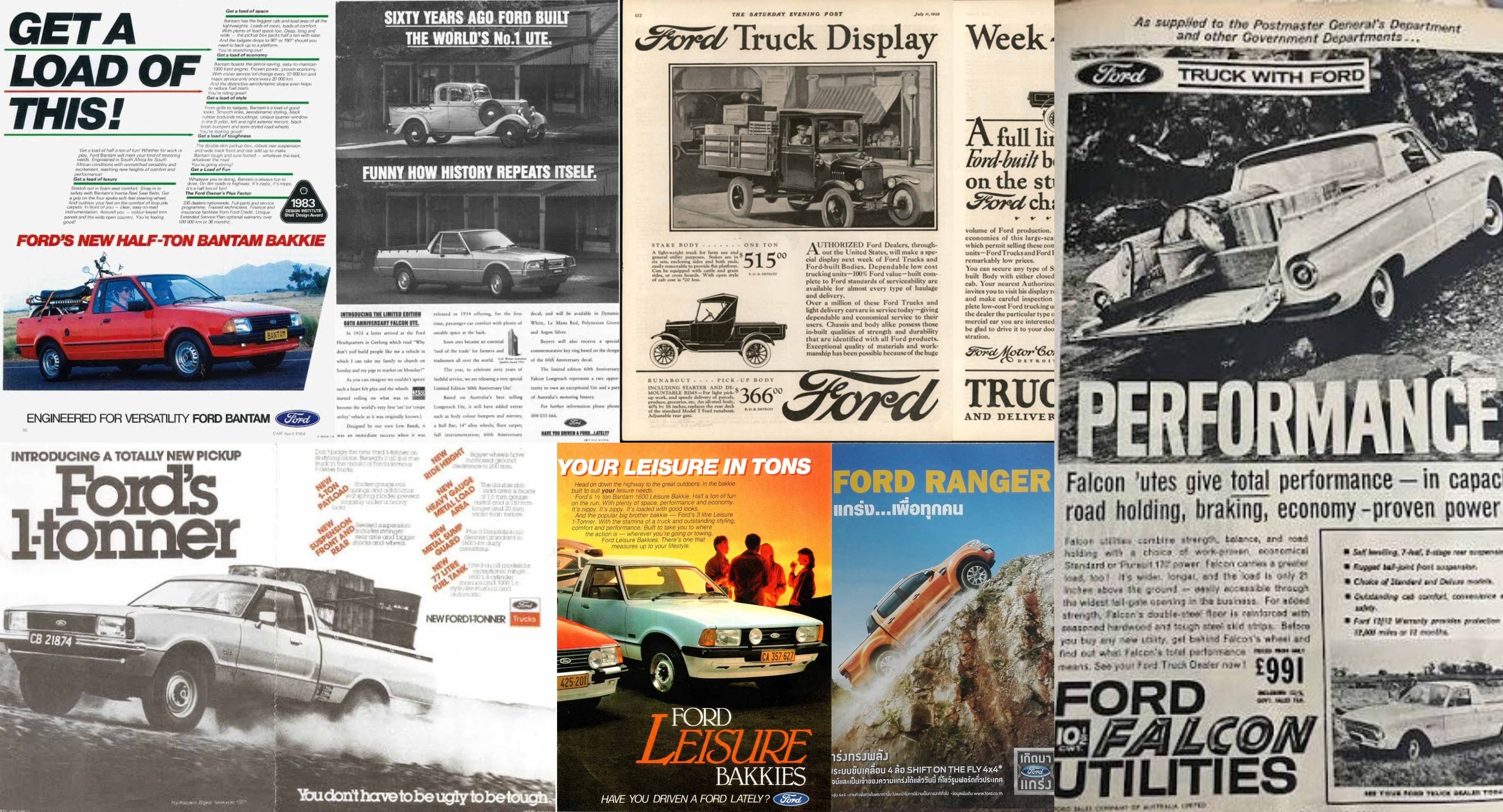

There comes a time when the laptop screen darkens, and the mind wanders to dirt roads, ocean swell, and campfires. Australians and New Zealanders have been chasing this exact feeling for decades, and Ford has always offered the keys to get them there.
With the announcement that the electrified Bronco Basecamp is officially heading to Australia and New Zealand in mid-2027, much of the conversation has naturally focused on its super-hybrid powertrain, which are also known as extended range electric vehicles (EREV) .
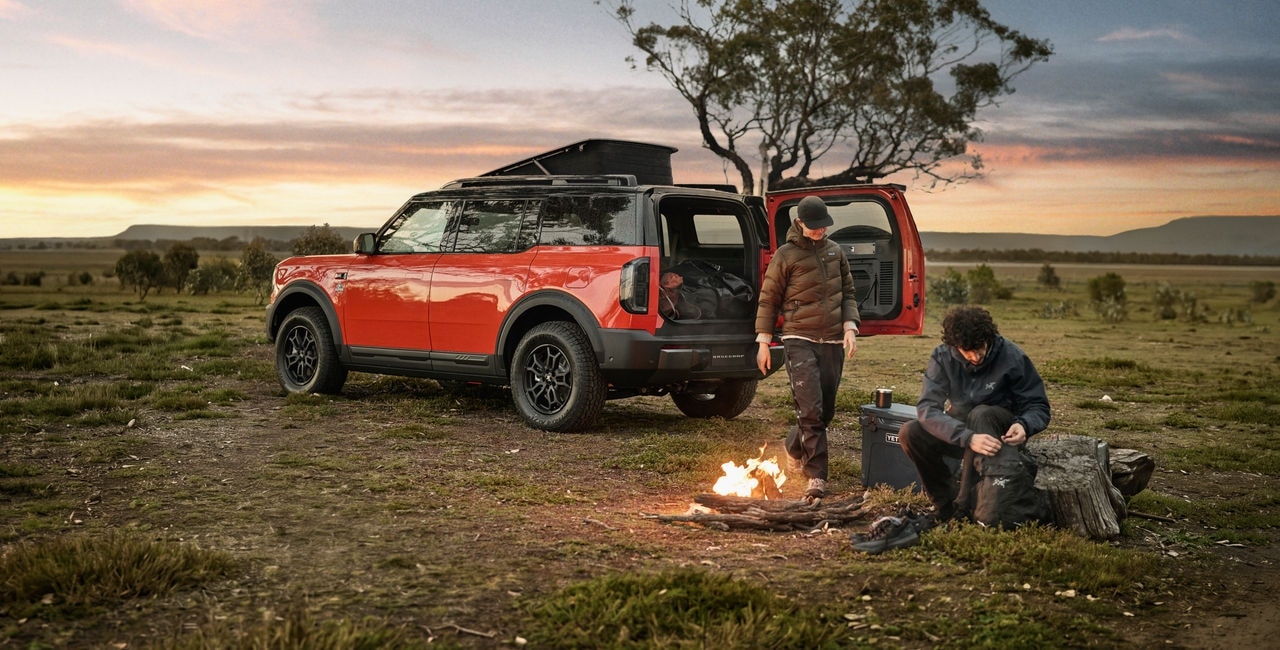
But if you look closely at the soul of this vehicle, it belongs to a proud, sun-drenched Australian heritage of freedom, spontaneous weekend escapes, and clever local engineering.

At a Glance: Ford's Australian Leisure Vehicle Lineage
Modern Vehicle: Ford Bronco Basecamp (Arriving Australia/NZ mid-2027)
Historical Predecessors: 1975 Transit Sightseer, 1975 Escort Outback, late-1970s Escort Sunstar, Falcon Sundowner, Surferoo, Surfsider and Overniter
Design Evolution:
- 1970s Manual Pop-Top Roof vs 2027 Automatic Rain-Sensing Pop-Up Lift Roof (On Outer Banks model only)
- 1970s Gas Primus Cookettes and 12V Fridges vs 2027 6.6 kW Pro Power Onboard2 and 7.5L Warm/Cool storage1.
- 1970s Denim Cushion Beds vs 2027 Flat-Folding Interior & Custom Inflatable Mattress
Historical Archive: Free high-resolution brochures available from the Ford Heritage Vault
Long before “overlanding” became a global trend, Ford Australia was pioneering the concept of the factory-built “leisure vehicle,” introducing innovations you can explore yourself in the digital aisles of the Ford Heritage Vault.
The upcoming Bronco Basecamp doesn't just share a badge with Ford’s past; it inherits a rich design philosophy. Here is how the new kid on the block connects to some of Ford Australia's most iconic leisure legends.
How do the Transit Sightseer and Escort Outback pop-top roofs compare to the Bronco Basecamp?
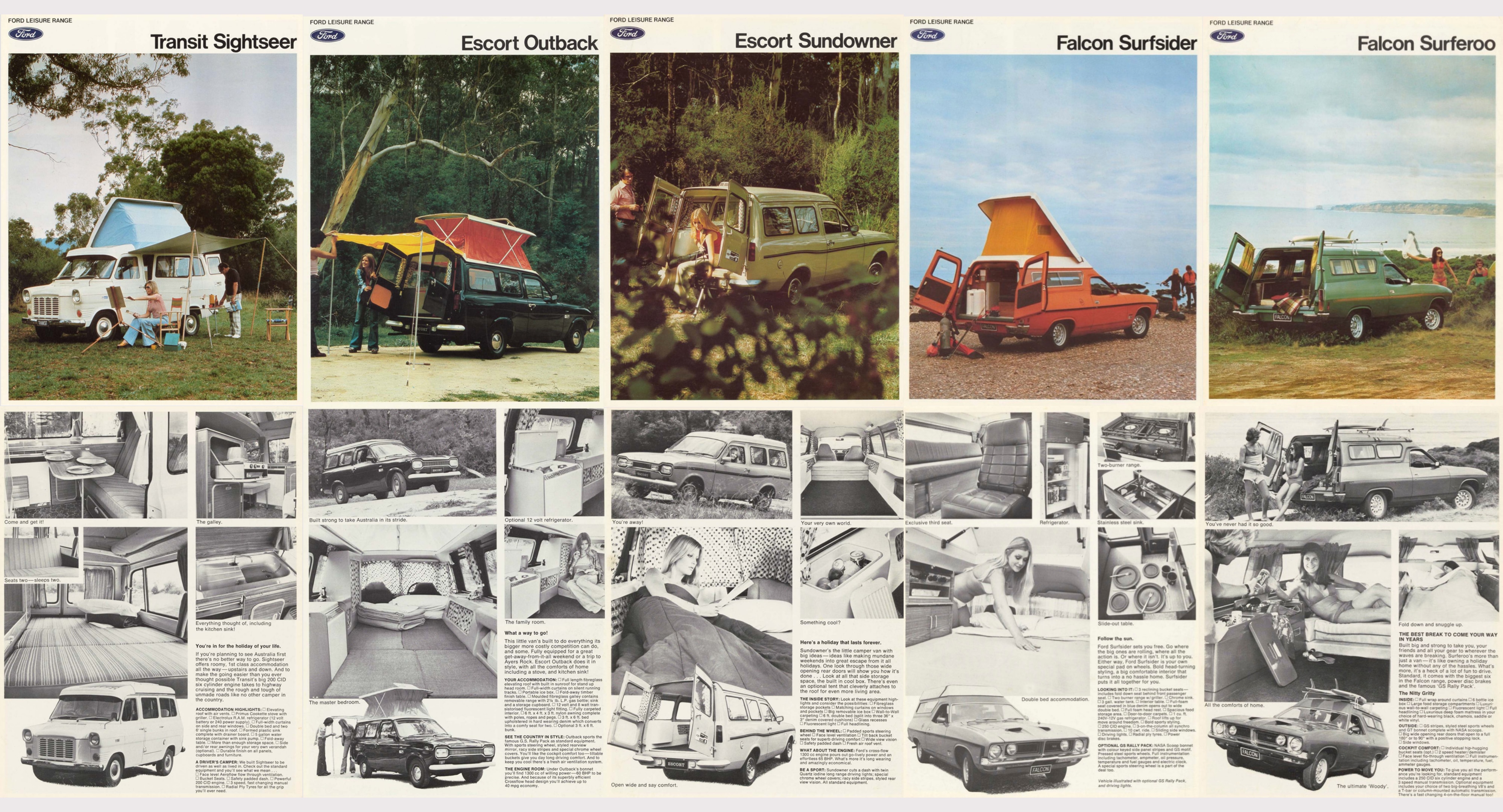
In 1975, the brochure for the Ford Transit Sightseer proudly declared: “You’re in for the holiday of your life. If you’re planning to see Australia first, there’s no better way to go.”
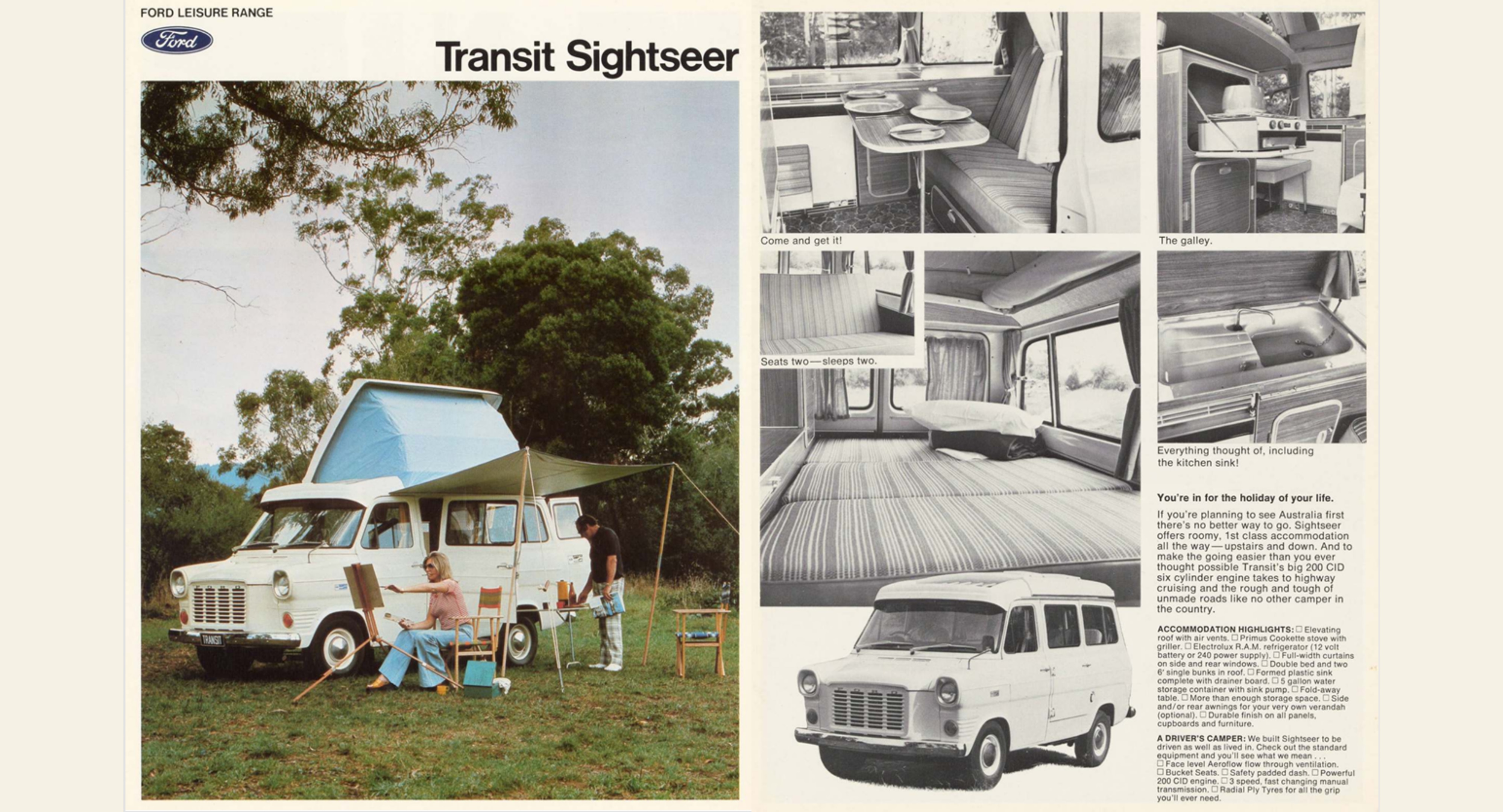
In the mid-1970s, Ford Australia realised that travellers wanted to explore the country without being weighed down by heavy canvas tents or towed caravans. The solution was the Ford Leisure Range, led by purpose-built, factory-backed campers like the Transit Sightseer and the Escort Outback.
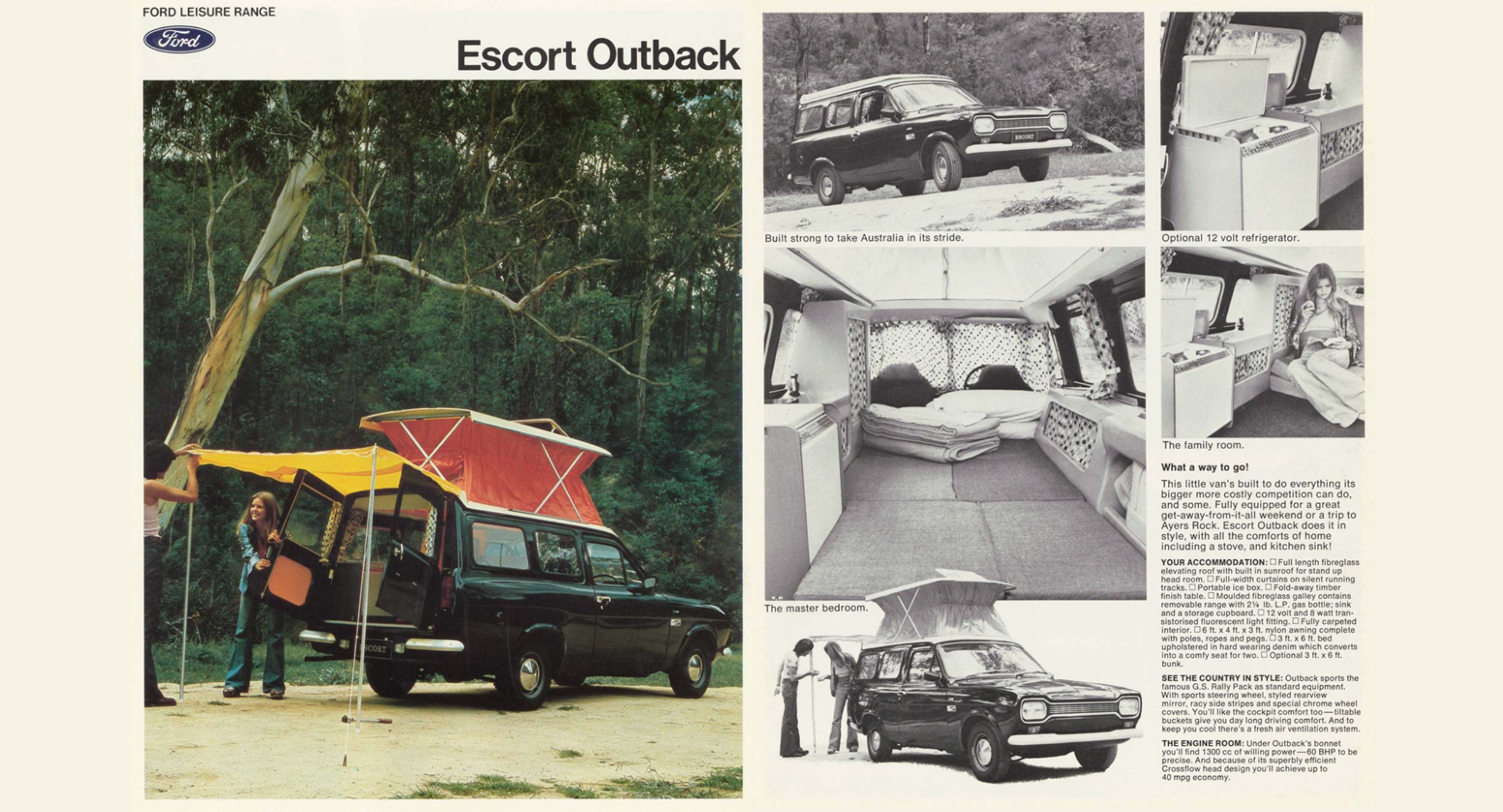
The centrepiece of these legendary vehicles was their elevating roof. On the Transit Sightseer, as well as the 1975 Escort Outback (which featured a full-length fibreglass elevating roof with a built-in sunroof), pushing the roof up at the campsite instantly transformed a compact vehicle into a roomy, standing-height living area complete with fresh-air vents.
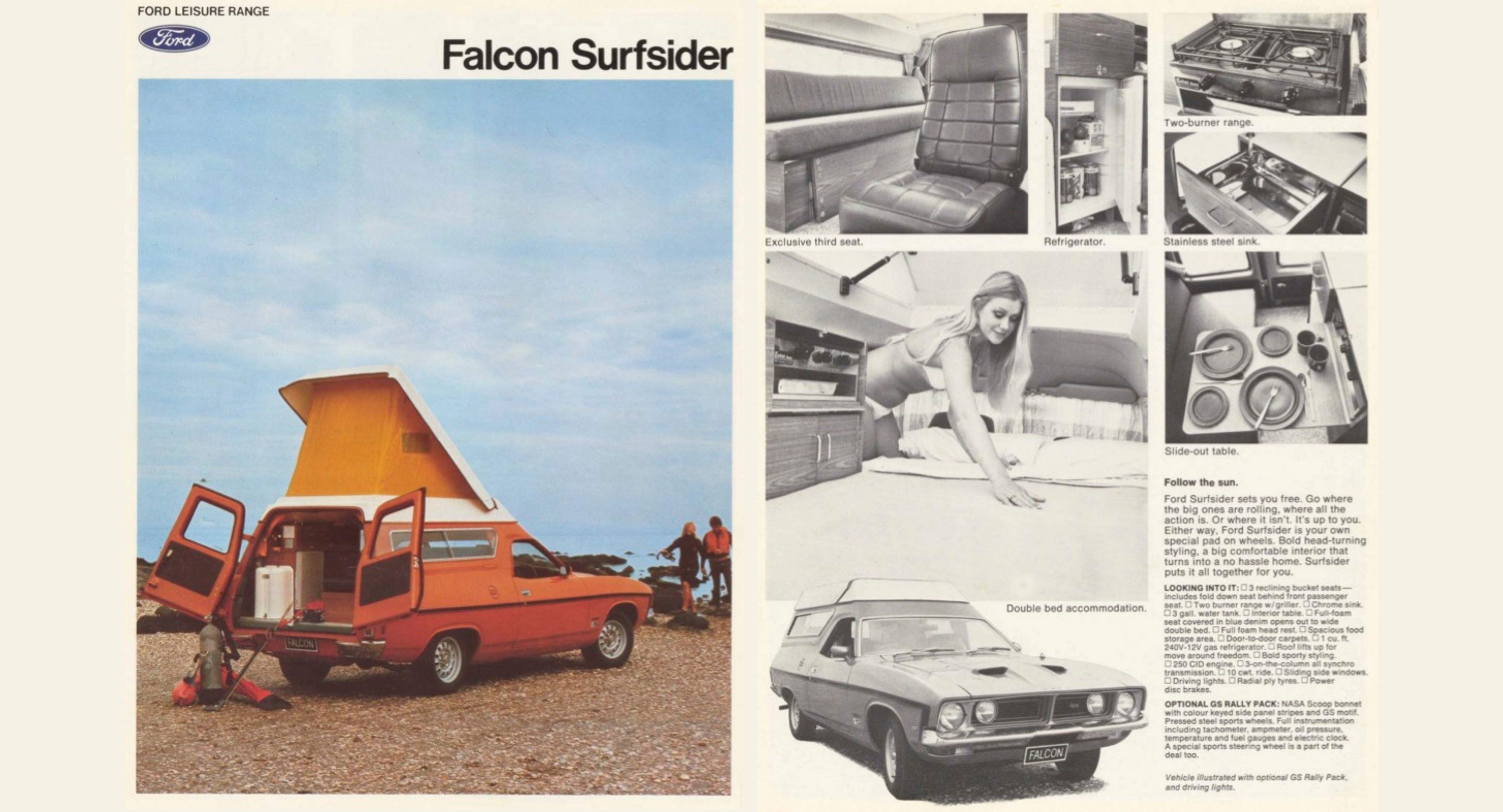
The Falcon took the same thinking to the coast. The Surfsider was a factory-backed conversion of the XB Falcon panel van, and its defining feature was a hinged fibreglass roof you raised by hand once you'd picked your spot for the night. Up it went, and a van became a room: sleeping space for two adults in the back and a kid tucked up under the lifted roof.
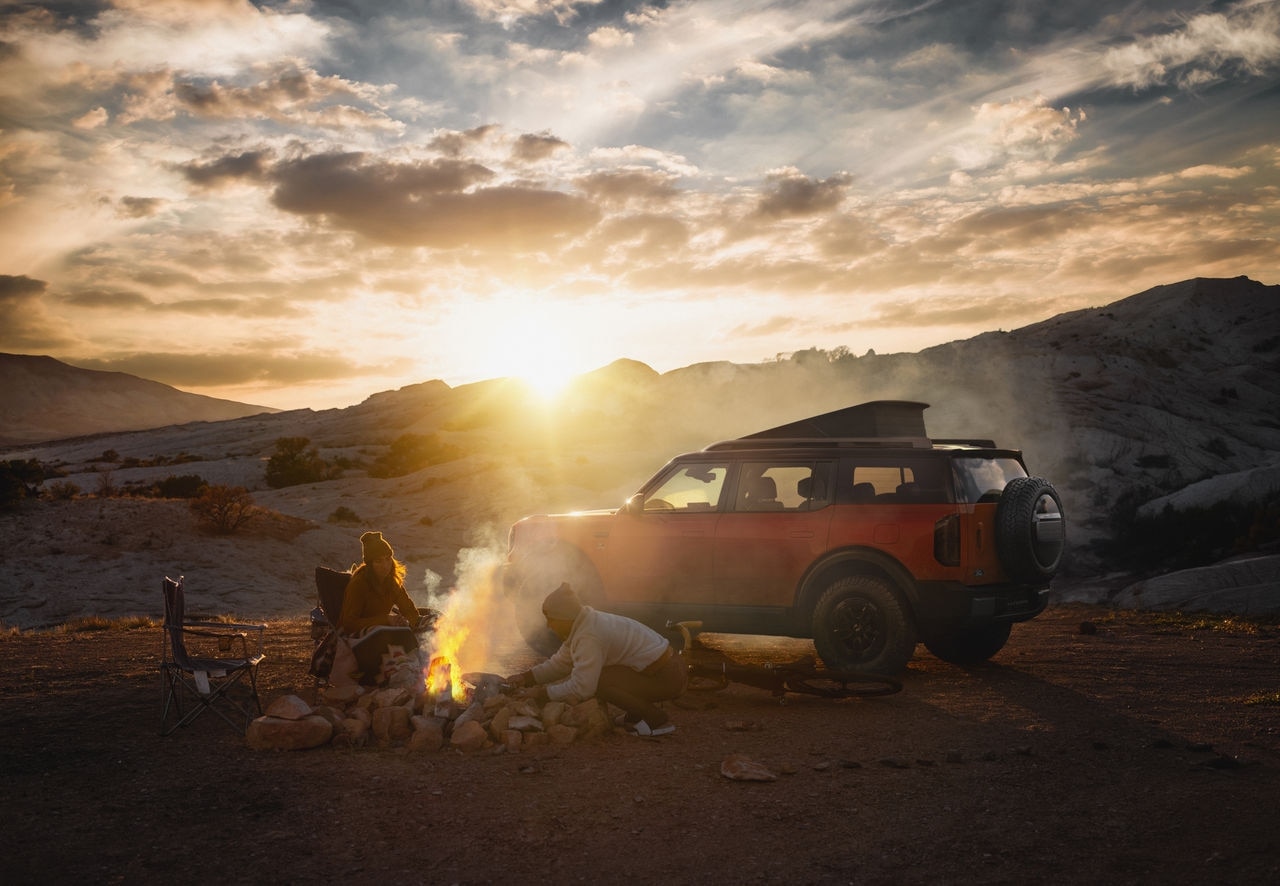
Fast-forward fifty years. On Outer Banks series when you press the single button in the Bronco Basecamp to raise its electric, rain-sensing Pop-Up Lift Roof, you are experiencing the modern evolution of those 1970s pop-tops. It serves the exact same goal: increasing interior space and connecting you directly to the outdoors, reimagined with 21st-century automation.
Before the Sundowner, there was the Surferoo
“You've never had it so good.”
That was the Surferoo's opening line, printed beneath a photograph of a Falcon panel van parked up on a headland, boards strapped to the roof, swell working across the bay behind it. The brochure didn't bother with restraint: “Built big and strong to take you, your friends and all your gear to wherever the waves are breaking. Surferoo's more than just a van: it's like owning a holiday home without any of the hassles.”
The Surferoo was the Sundowner's older sibling, and arguably the more thoughtful of the two. Where the Sundowner would later win the street-machine argument on stripes and attitude, the Surferoo won it on the inside. Full wrap-around curtains. A six-bottle ice box. Food storage compartments, wall-to-wall carpeting, a fluorescent light, and a deep foam mattress you could order in black, chamois, saddle or white vinyl. Outside: GS stripes, styled steel sports wheels, a GT bonnet with NASA scoops, and rear doors that swung to a full 180 degrees with a positive stopping lock, because you load a van from the beach, not from a loading dock. Standard power was a 250-cubic-inch six with a three-speed manual, with V8s and a four-on-the-floor on the options list.
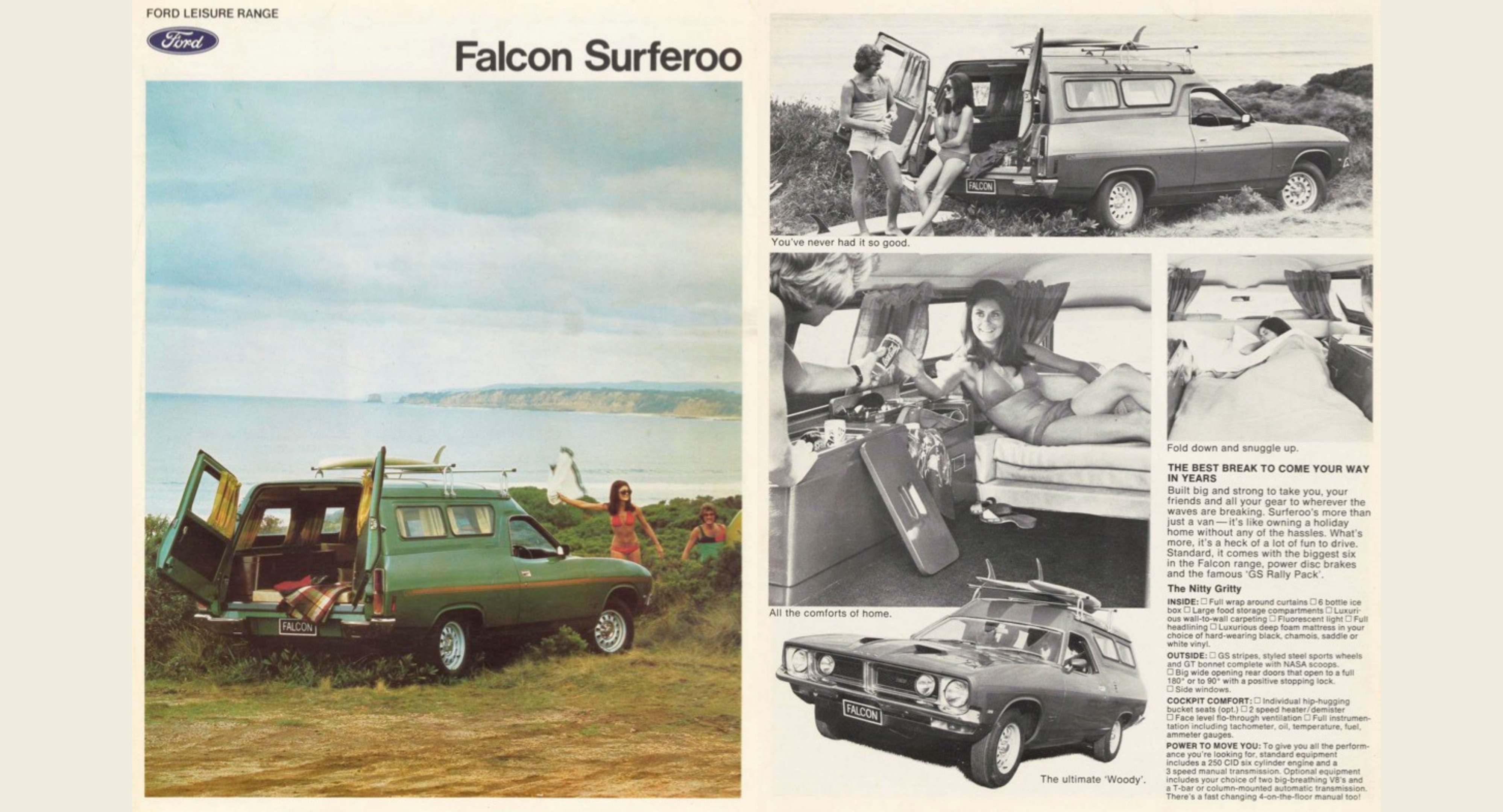
“The ultimate ‘Woody’,” the brochure called it, reaching across the Pacific to the timber-sided wagons of American surf culture and planting the flag firmly on an Australian beach.
When the XC Falcon arrived in 1977, the Surferoo name was retired and the Sundowner took over. The fitted-out interior gave way to the louder exterior. But the brief never really changed: get your mates, your boards and your gear to the water, and sleep where you land.
What is the "Sundowner Spirit"?
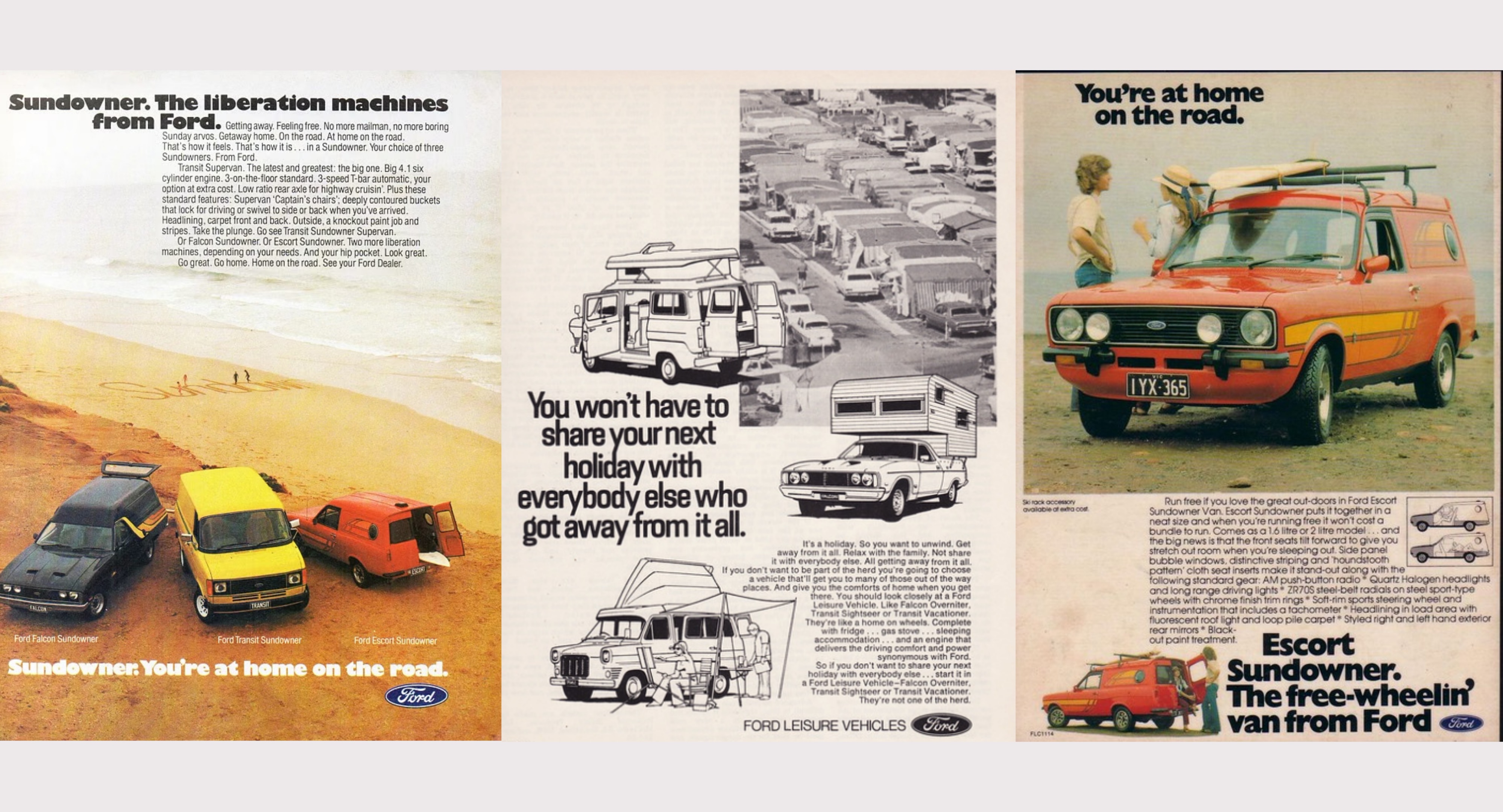
The late-1970s Ford panel vans and leisure conversions defined an era of coastal freedom. The Falcon Sundowner brochure captured the mood perfectly:
“You clear the bush, and there she is. That long, blue wave working across the bay... Sundowner! You're home. And you're laughing!”
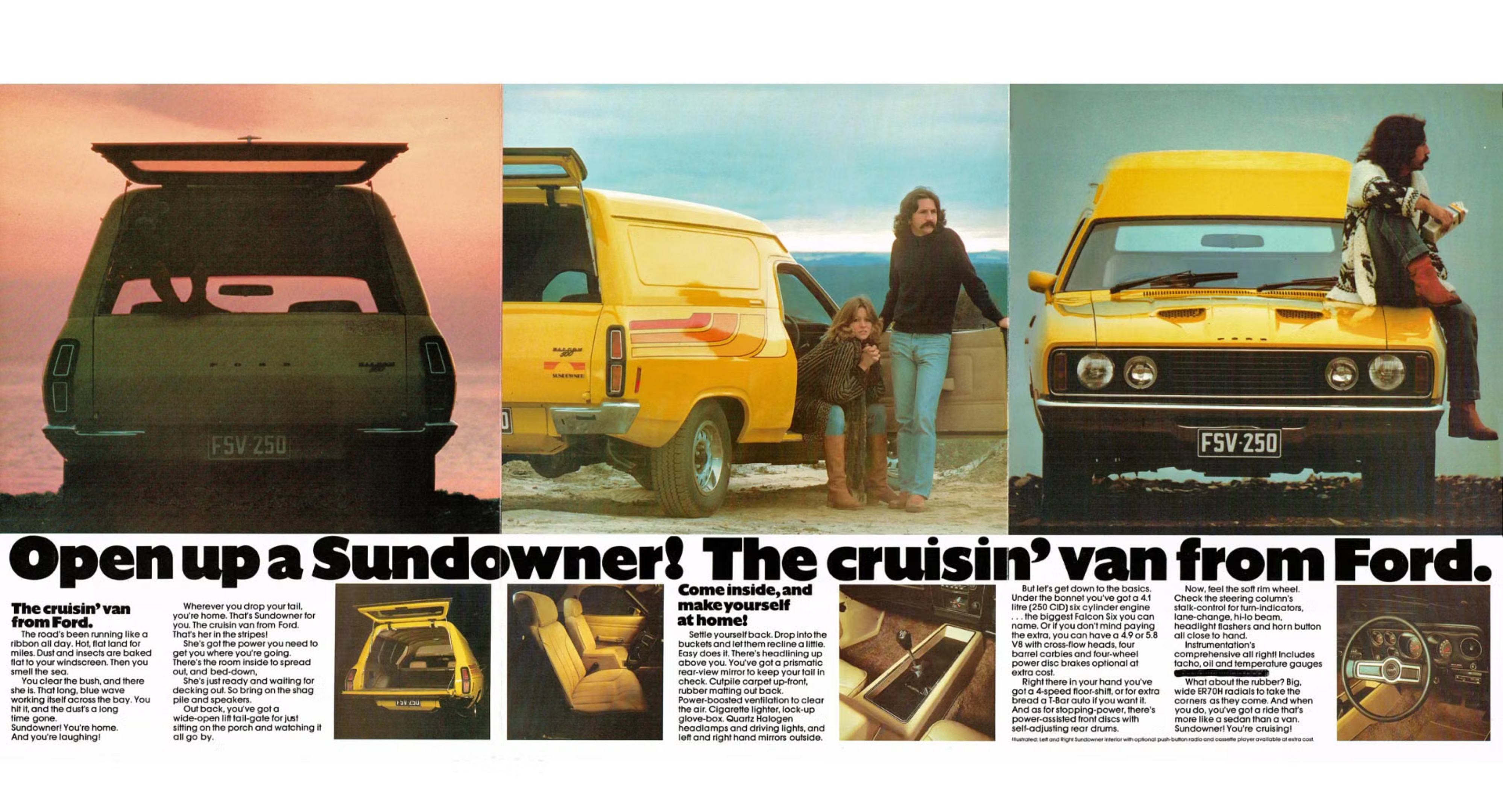
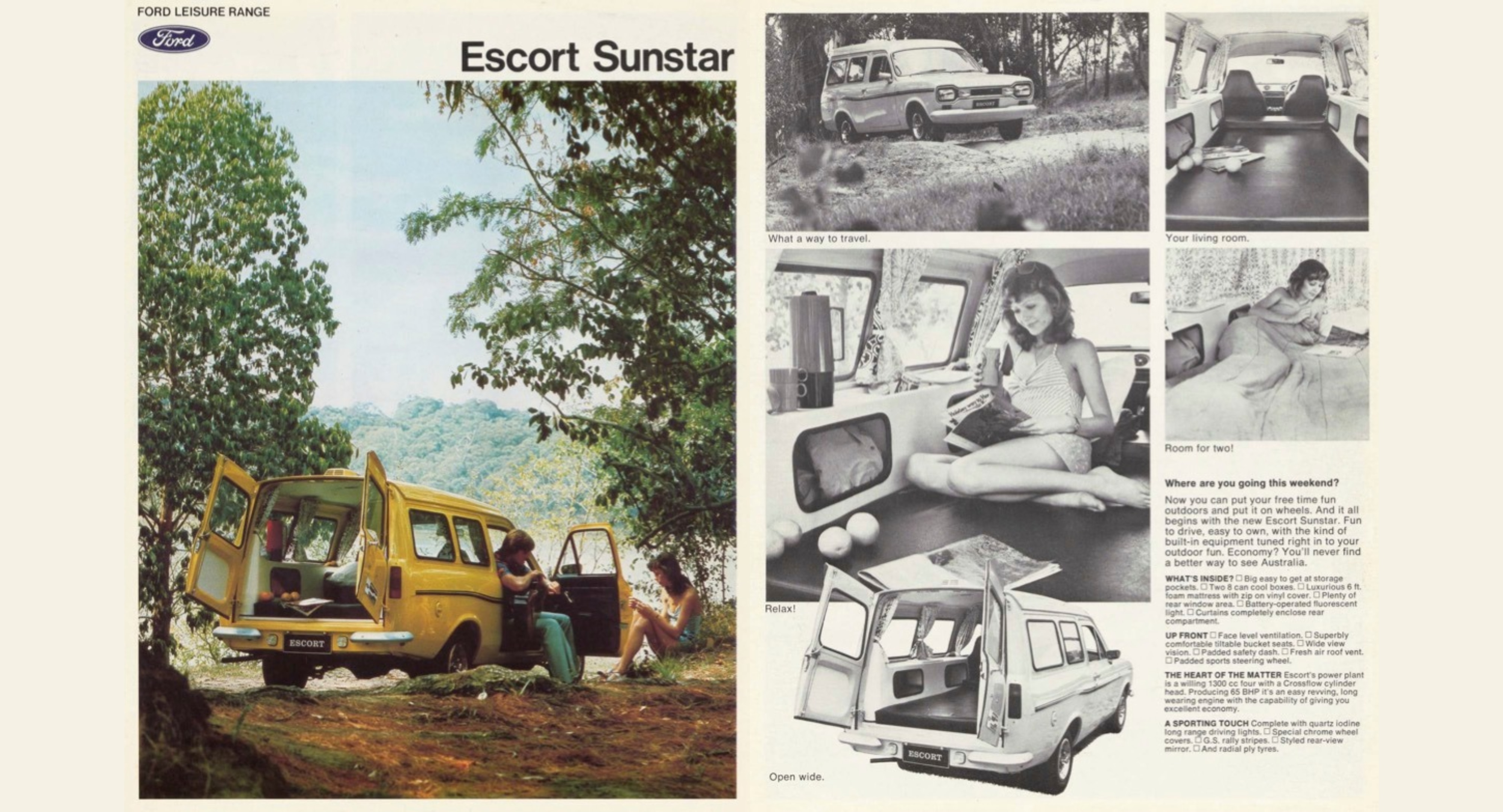
Whether in Escort or Falcon form, the Sundowner and its siblings (like the Escort Sunstar) were the ultimate “cruisin' vans,” built for young Australians chasing waves, campfires, and long weekends. Their magic lay in their simplicity and clever packaging:
- The Escort Sunstar and Escort Sundowner featured a 6-foot double bed (split into three 36-inch x 3-inch denim-covered cushions), built-in cool boxes, wall-to-wall carpeting, racy side stripes, and twin Quartz iodine long-range driving lights.
- The Falcon Sundowner boasted a wide-open lift tailgate designed explicitly for “just sitting on the porch and watching it all go by.”
- The commercial Escort Van range coined the famous line, "Good to work with, great to get away in!", summarising a vehicle that could handle the weekday hustle and transform into a weekend escape machine (“Seats two... sleeps two!”).
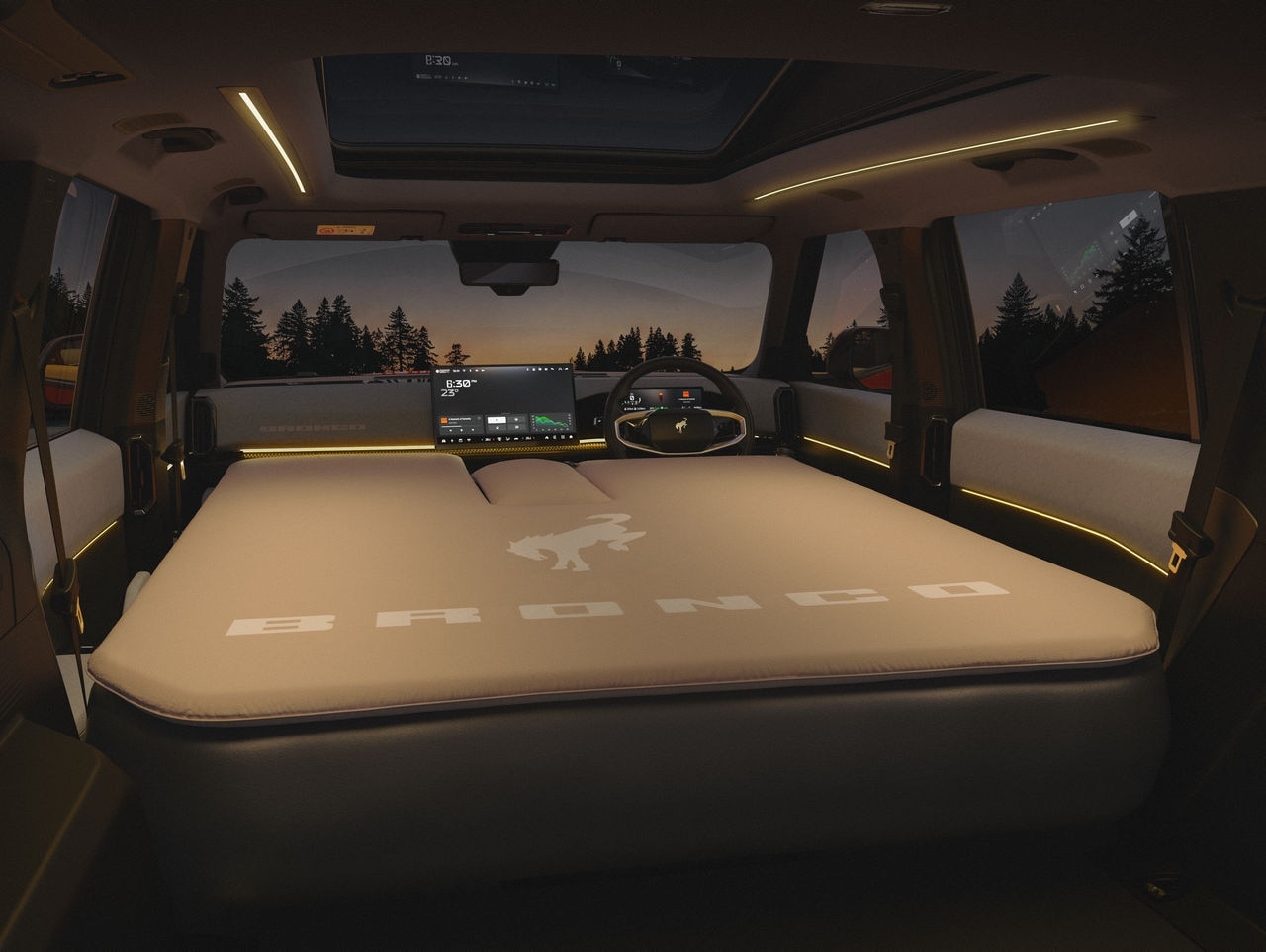
Bronco Basecamp takes that exact “Sundowner spirit” and updates it for a new generation of hikers, surfers, and wild swimmers:
- From seats to bed: Basecamp features a folding interior space designed to accommodate a custom inflatable mattress (additional cost accessory).
- Standard on Outer Banks grade and available as an optional extra at additional cost on other models, from cool box to thermal bin: Instead of a removable ice box, Basecamp integrates a 7.5-litre Warm/Cool storage space for day-trip drinks and food.1
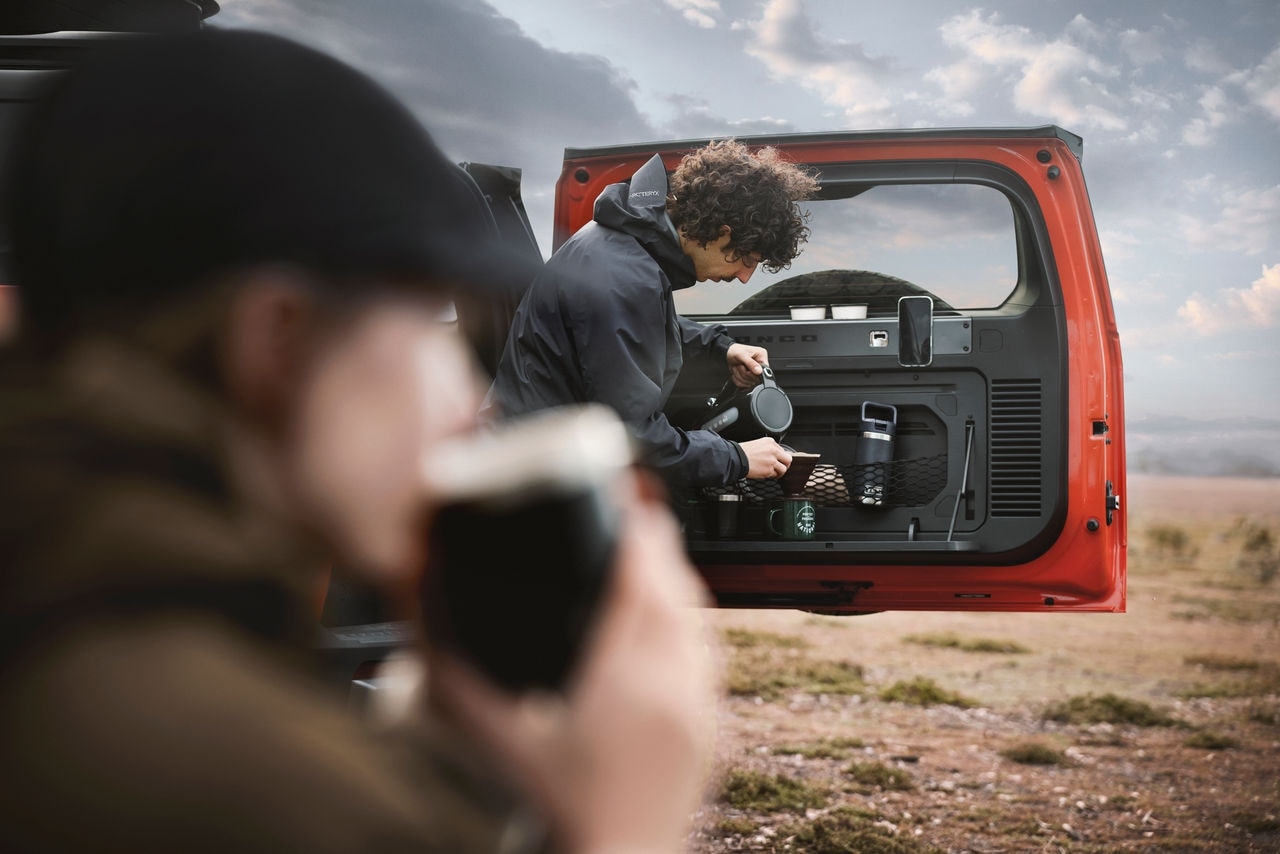
- From tailgate porch to Wild Kitchen: Basecamp’s rear tailgate deploys into a built-in utility table for meal prep, complete with an off-grid power interface.
How does Pro Power OnboardTM 2 replace 1970s campsite gas stoves?
The 1970s campers featured clever internal “galleys” fitted with gas stoves, manual sink pumps, formed plastic sinks, and 12V/240V refrigerators. They were marvels of packaging for their time, but they still relied on gas bottles, fuel containers, and physical plumbing.
The Falcon camper ran the same playbook in a smaller footprint: a twin-burner range, a refrigerator, a sink and a fold-out table, all packed into the side of a panel van. Clever, genuinely clever. It also meant travelling with a gas bottle between your sleeping bag and your breakfast.
Bronco Basecamp replaces the gas bottles of the 1970s with Pro Power OnboardTM 2. Running off its 49-kWh usable battery system, it allows you to bring all the comforts of home to the edge of the wilderness. You can power a clean, flameless induction cooktop, run an espresso machine, or charge camera gear quietly under the stars. It is the ultimate expression of the self-contained campsite.
Where can you research Ford Australia’s leisure vehicle archives?
The connection between Bronco Basecamp and vehicles like the Transit Sightseer, Escort Outback, Escort Sunstar, and Falcon Sundowner isn't coincidental. It is a direct line of design thinking that prioritizes how a vehicle makes you feel when the engine is turned off.
If you want to dive deeper into the golden era of Australian road-tripping, we encourage you to spend an hour (or a whole day) wandering through the digital aisles of the Ford Heritage Vault.
Packed with thousands of high-resolution brochures, historic photos, and rare design documents available for free download, it is a time machine back to an era of G.S. rally packs, racy side stripes, quartz halogen driving lights, and the simple, enduring promise of the great weekend getaway.
And when Bronco Basecamp arrives on local roads in mid-2027, it will carry that very same promise into the electric age.
Because some things, like the urge to pack a bag and head where the road ends, never change.
Ted Ryan is the heritage brand manager and archivist at the Ford Heritage Vault.
1 Standard on Outer Banks and available as an option on other select models only at additional cost. Integrated warm/cool console storage only operates when vehicle is running.
2 Pro Power Onboard (TM) has two power outlets - one interior and one exterior outlet. The interior outlet provides up to 2.3kW. The exterior outlet requires a compatible Vehicle-to-Load (V2L) adaptor. A V2L adaptor will be available to purchase separately as a Ford Licenced Accessory (FLA Adaptor). The FLA Adaptor specifications and functionality are subject to change. While the exterior outlet is capable of producing up to 6.6kW when the interior outlet is not in use (or 4.3kW when the interior outlet is in use), use of the FLA Adaptor may reduce/limit the amount of usable power available to connected equipment. Ford does not guarantee the availability of a V2L adaptor capable of enabling maximum usable power of 6.6kW to connected equipment. Pro Power Onboard (TM) may not sufficiently power all equipment, and its use will decrease battery charge. Speak to your Ford Dealer for more information.
.jpg)

.jpg)