
Henry Ford was not a racer by profession. Regardless, he saw an opportunity. The Grosse Pointe, Michigan Sweepstakes race on October 10, 1901, was a high-profile event that would pay off in ways even a visionary like Ford could not imagine. And when Henry Ford, dressed in a three-piece suit sitting atop the racer he named “Sweepstakes” in honor of the event, passed favorite Alexander Winton for the win, it ignited a celebration that is still going strong in 2026.
It isn’t easy to pull the top moments from a timeline that stretches a century and a quarter, but we have put a spotlight on many of the groundbreaking victories that define Ford Racing as America’s Race Team.
Early 1900s
Two years after Sweepstakes, soon after its formal founding, Ford Motor Company continued to enter racing events with an eye toward developing its reputation and its product.
Drivers competing in high-profile races including the Vanderbilt Cup and the American Transcontinental Clash raced Fords.

In 1903, Barney Oldfield drove a Ford 999 on the one-mile dirt track at the Indiana Fairgrounds at 60 mph, the fastest closed course laps ever recorded to that point. Three years later, in 1909, a Ford Model T won the New York to Seattle transcontinental race and the Guggenheim Trophy. Proving Ford’s engineering and durability.
By 1914, Ford’s Model T could be seen running up Pikes Peak in the early years of the International Hill Climb — an event that Ford won overall earlier this year. Ford would win in 1922 and, in 1934, set longstanding speed records in ’34 Ford Coupes equipped with factory Flathead V8s.

1950s
While Ford continued to race and the Ford Motor Company continued to grow through the Great Depression and two world wars, the 1950s began to see a new motorsports explosion… NASCAR.
Ford was perfectly placed to take advantage of the tech transfer that can come from racing a stock car. In 1949, Jim Roper won the first ever NASCAR-sanctioned race (driving a Lincoln) in Charlotte, North Carolina. "Shirtless" Jimmy Florian won Ford’s first race in the NASCAR Grand National Series using the Ford Flathead V8 at Dayton Speedway.
1960s
The decade Ford made its racing intentions clear. The Blue Oval would race around the world. In 1963, Tiny Lund took the Daytona 500 with the Wood Brothers. Then in 1964, in the Tour de France Rallye, the Ford Mustang secured a 1-2 finish in the touring class marking the Pony’s earliest victory.

With F1 World Champion Jim Clark behind the wheel, along with the help of the Wood Brothers in pit lane, Ford won the Indianapolis 500 in 1965.
Wood Brothers Racing Co-Owner Eddie Wood said in 2025: “That particular event is probably one of the proudest moments in my dad Glen Wood and my uncle's [Leonard] history.

That car and how the Lotus factory team and the Ford factory team that did the engine welcomed them up there. They were afraid they were coming from a different world.” The experience proved that even coming from different backgrounds, a united team with the same goal can emerge triumphant. A hallmark of Ford Racing’s America’s Race Team mentality.
In 1966, Ford solidified itself as a premier manufacturer. Carroll Shelby was enlisted to spearhead the development of the now famous Ford GT40 for the 24 Hours of Le Mans. The car proved to be an incredible achievement, demolishing the competition, most notably the Ferrari fleet inspiring the 2019 film “Ford v. Ferrari."

Continuing the expansion into international racing, Ford began designing engines for Formula 1. As a manufacturer, Ford has won 10 Constructors Championships, which included a seven-year stretch of consecutive titles and multiple seasons only Ford-powered cars won a Grand Prix. Ford Racing returned to F1 this year in partnership with Red Bull Ford Powertrains.


1980s
After success in the 1970s, the next evolution of Ford Racing came in 1981. Headlined that season by the “Miller Mustang,” which won two IMSA GT events that year.

In 1983, the Ford Thunderbird revolutionized NASCAR. In 1987, the all-time NASCAR speed record was broken by Bill Elliott at Talladega Superspeedway, running a lap of 212.809 mph in a Thunderbird. By 1988, Elliott secured two Daytona 500s and the NASCAR championship driving a Ford. Outside NASCAR, Ford was winning championships in IMSA GT, DTM and NHRA.

1990s
Open wheel success was highlighted by a F1 Drivers Championship with Micheal Schumacher in 1994 as well as Indy 500 victories with Jacques Villeneuve (‘95) and Buddy Lazier (’96). Ford joined F1 as a team with Stewart-Ford F1 in 1999. Three straight Trans-Am championships (1995-1997) with Tommy Kendall highlighted sports cars.

While NASCAR’s popularity soared, so did Ford’s NASCAR program. More wins, championships and Daytona 500s were earned, with Greg Biffle scoring the company’s 1,000th win across NASCAR’s three National Series in 2013 at Ford’s home track - Michigan International Speedway.

2000s
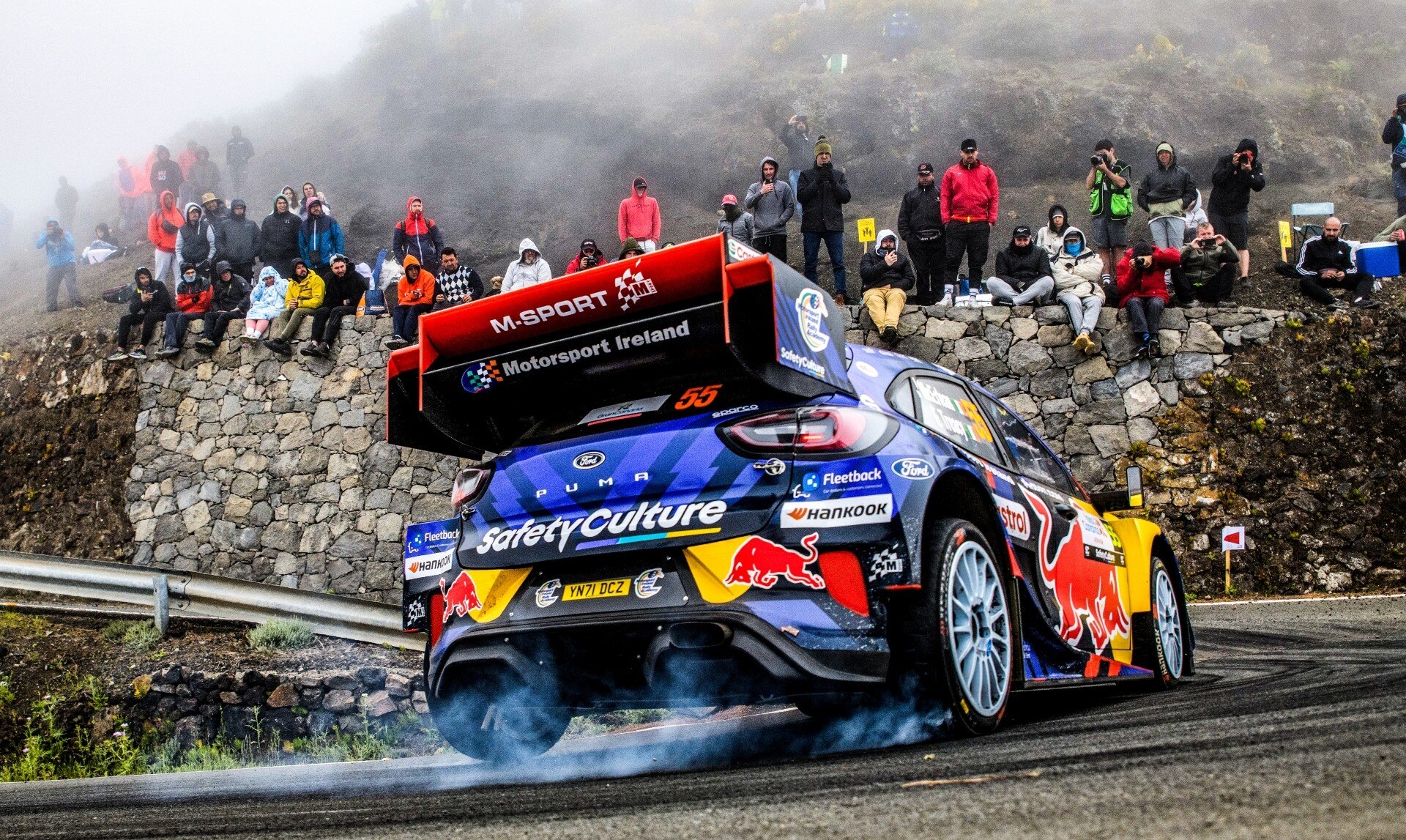
In 2016, 50 years to the day after the 1966 Le Mans win, Ford returned to victory lane at the French classic. Claiming the LMGTE Pro Class, the Ford GT showcased a new era in sports car racing. Meanwhile, Ford expanded its worldwide motorsports presence winning multiple championships in WRC, Australian Supercars, Baja 1000, and NASCAR leading up to the current decade.

As Ford Racing celebrates the milestone of 125 years, it competes in 36 major championships globally. What started as a one-time opportunity by Henry Ford, has turned into one of the most widespread and well-known racing programs in the world. All bringing technology and trophies back to Dearborn as America’s Race Team.

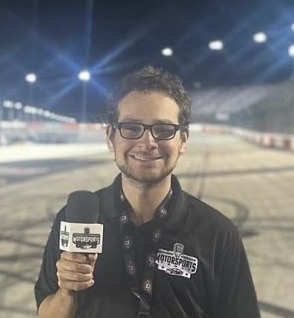
Adam Tropper is this year’s winner of the Rod Campbell Award and is serving as an intern working on the Ford Racing program this summer.
_ORBR_Race_4.jpg)

_ORBR_Race_1.jpg)