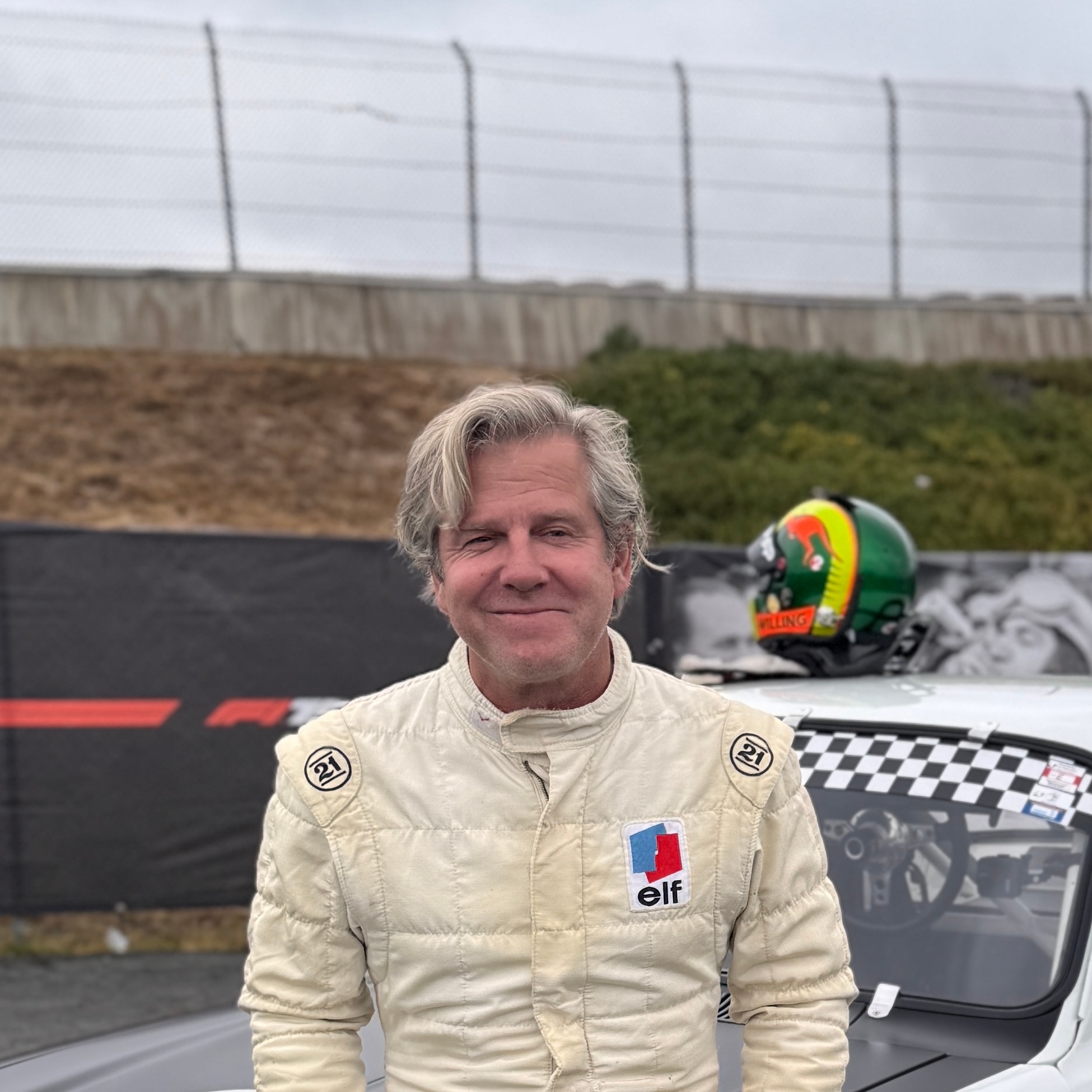
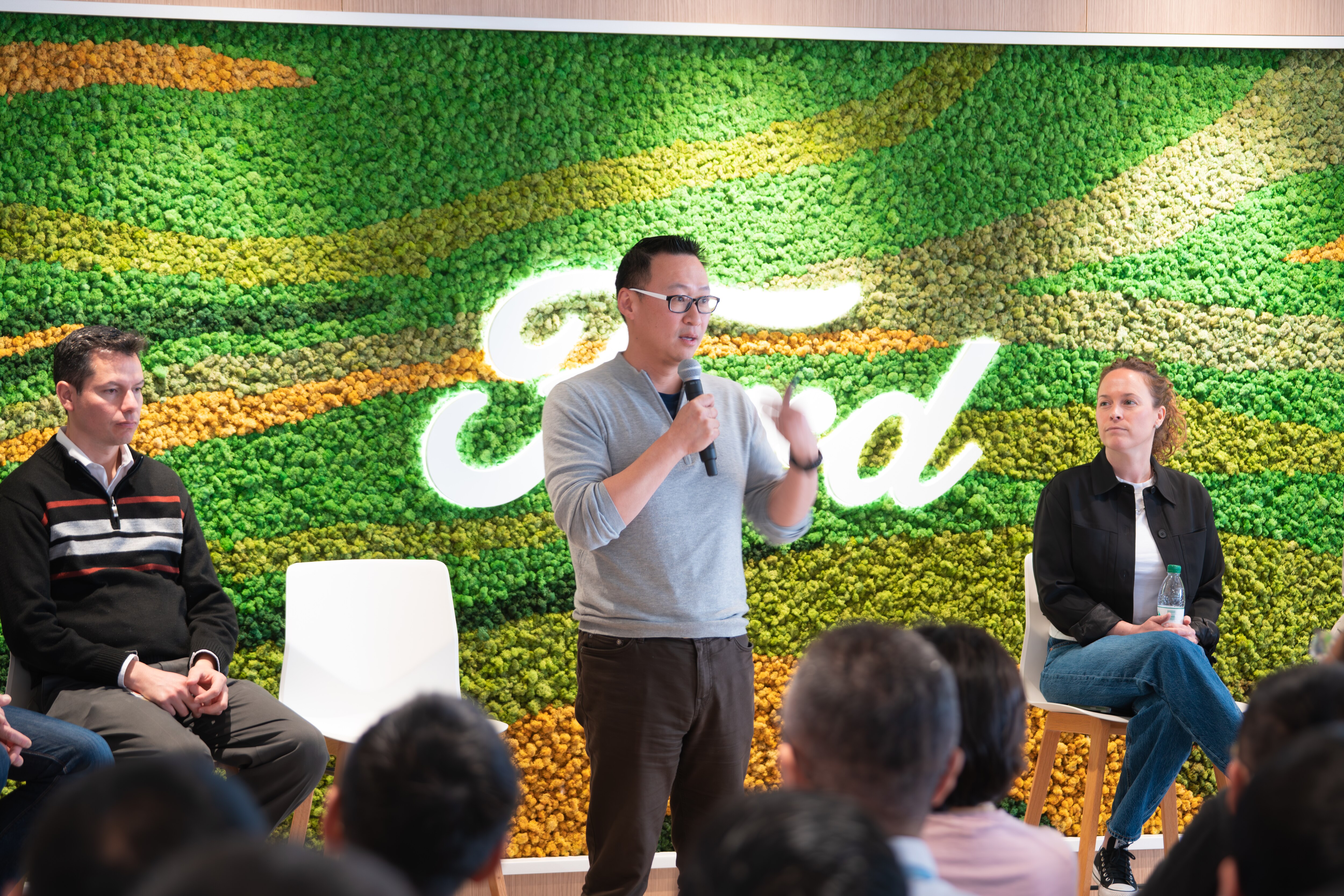

Charles Poon is responsible for the hardware that Ford customers touch and feel every day in all Ford vehicles around the world. He talks with us here about powertrains, how AI can see issues that humans can’t, and his central focus: quality.
We’ve been hearing about a shift in the way you test powertrains. What does that mean?
Powertrain reliability is how our customers perceive quality because the powertrain is core to the primary function of any vehicle. It is the element that actually moves you from point A to point B — which is the main reason you buy a vehicle in the first place. When our customers turn the key or push the start button, we want them to reach their destination with no drama.
Our aim is to design our powertrains to meet a minimum of 15 years or 225,000 miles, with a consistent and reliable operation of that powertrain through that entire period.
“Quality is not just marketing or a flavor of the week. Quality is doing the right thing, even when no one is watching.”Charles Poon, VP of Vehicle Hardware Engineering

Our goal is that nearly every major powertrain in our lineup will eventually meet this demanding reliability target. To get there, we don't just test our engines and transmissions; we abuse them.

We take them directly from our production lines and put them through extremes — heat testing, relentless start-and-stop cycles, and wide-open throttle runs — that go well beyond what any normal driver would do. We abuse the system in our facilities with the aim to minimize the experience of a defect on the road.
How did you arrive at that benchmark?
It starts with the customer. We listen to our customers to learn how they’re really using their vehicles, and we do internal testing to see how we can create a more dependable experience for them. We use insights from connected vehicle data to ensure unique usage cases, such as long idle periods, are in included.
Then we synthesize what our customers tell us and what we see in our internal testing, and that led us to make the shift in our goals from 10 years to 15 years, and from 150,000 miles to 225,000.
We wanted to mathematically prove that the testing we do represents how customers are really using their vehicles.

The Ford Essex Engine plant performs daily engine tear downs. Why are you doing that?
A great way to stay ahead of warranty issues is to prevent them from happening in the first place. And a good way to do that is to constantly test the product that you're making. If you only test an engine every three months, a lot of engines go by.
With more frequent sampling, the quality of what you’re building is more stable. And you can show that through the actual tear-down analysis. If you do find an issue, the shipment is held until we can address that issue.
Instead of customers finding these issues, we’re finding them ourselves, so we can work to prevent those issues from ever being delivered into our customers’ hands.

What is the Fingerprint Test, and how does it allow Ford to identify potential engine issues that aren't visible to the naked eye?
When we disassemble these tested engines, we don't just inspect the physical hardware; we also perform rigorous oil sample testing.
Think of it like a fingerprint test at a crime scene. We are analyzing the oil for trace materials that shouldn't be there. If we find microscopic metal shavings or specific chemical markers, it tells us that a particular bearing, gear, or valve is wearing faster than it should.
Even if the engine sounds fine and runs perfectly on the test stand, that chemical fingerprint reveals the hidden truth. It allows us to analyze component wear, pinpoint potential long-term issues, and redesign those components before they ever enter the real world.
How has AI been part of your process?
We are using AI to supercharge our engineers — from assisting in engineering to helping us spot quality issues.
For example, we’re using AI during vehicle testing from daily inspections and to spot anomalies. AI can do a really efficient job defining what is normal. And when something deviates from that, even slightly, it can indicate there’s something there we may need to correct.
We use AI and a proprietary tool that Ford has developed to look at the functional output of our physical tests. When you collect a lot of this data each day, you have hundreds of these very complicated traces.

For a human, it’s really hard to look at hundreds of traces and distinguish if one is a little bit different from the other. AI can do a really good and efficient job to identify these anomalies.
It’s going beyond the normal human expert capability to analyze: how does this compare to all of the thousands or hundreds of thousands of other cases we’ve looked at?
So we can find minor defects, and the engine and transmission teams can make corrections in their manufacturing process.
And finding these anomalies may not only prevent failures from happening when a customer gets their vehicle, but it could also prevent an issue three, five, even 10 years down the line.
What drives you and your team to create these powertrains?
It’s personal. We’re customers ourselves. We love the products we engineer and we take personal pride in how they perform on day one and day 5,475 and beyond.
We want our customers to love our F-150, Bronco, Mustangs and others just as much as we do. We want to be proud of the Ford sitting in our neighbor’s driveway and what they will say about it to their family and friends. This motivates us.

Quality is not just marketing or a flavor of the week. Quality is doing the right thing, even when no one is watching.
Our quality history reminds us to be humble, to constantly learn and improve our designs, our testing, our manufacturing processes, and — most importantly — ourselves.
Quality is the number one element that we think about each and every day to meet our customer expectations as we work toward our goal of building the most reliable vehicles on the road.
There is really no other priority for me and our team. Quality comes first for us.
Sharyn Ghacham is communications manager for quality and safety at Ford Motor Company.
What to Read Next