Growing up in North Devon I knew a lot of good surfers. Some went on to have the careers that I had always dreamed about, travelling around the world on the pro tour circuits. By the time I was 25 years old I figured that ship had sailed for me, so I started retraining as a plumber to get a steady career.
But somewhere along the way I’d accidentally discovered big wave surfing. It wasn’t because I was thinking of it as a career, I just enjoyed it. I gravitated towards it. I was spending a lot of time surfing in Ireland when, in 2010, I got asked to help out in Portugal by Garrett McNamara, who was going to attempt surfing the biggest waves anyone had ever attempted at Nazaré. In 2011, I towed him out on a jet ski as he caught a then record 78-foot wave.
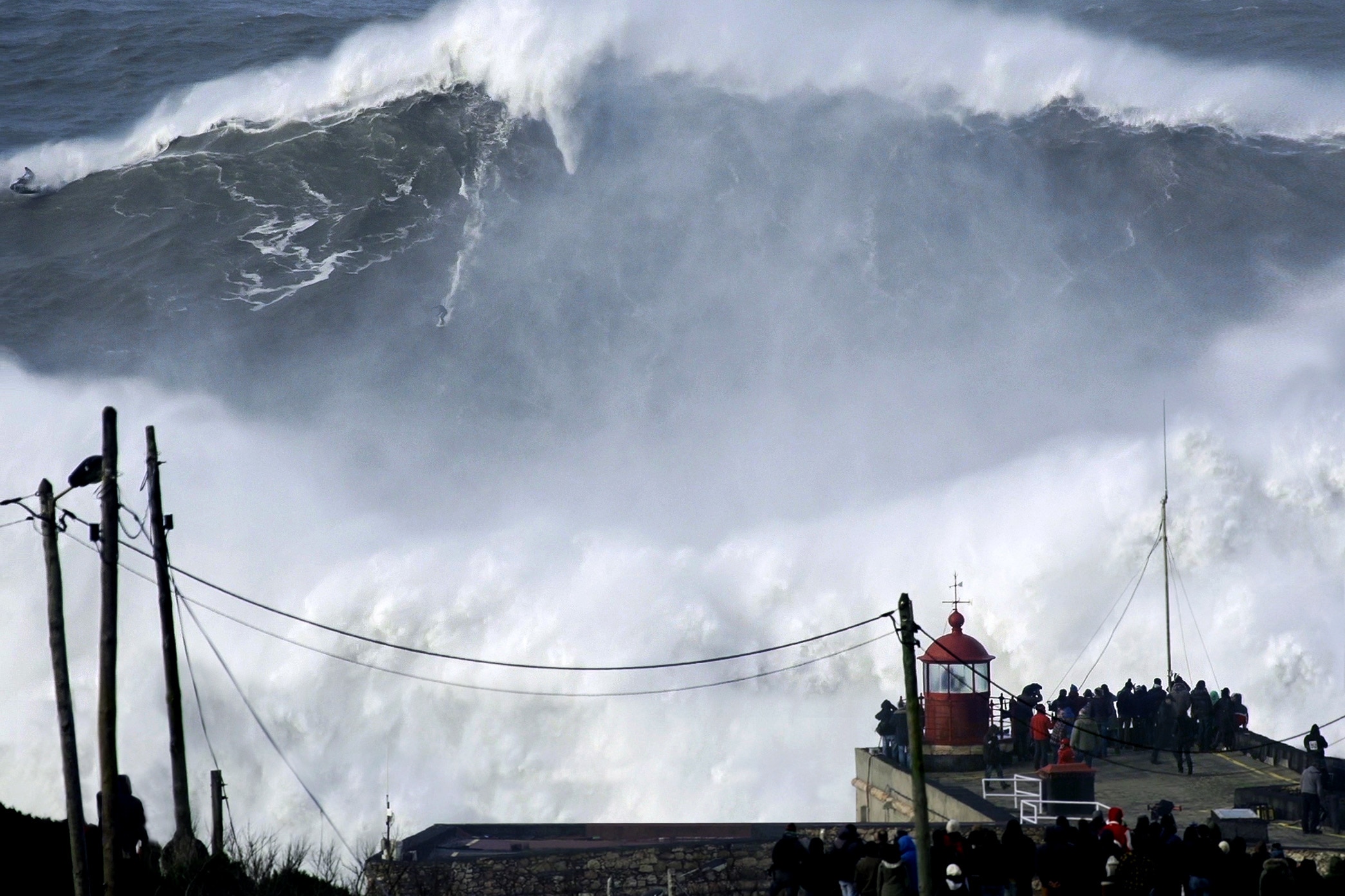
In 2014, Garrett returned the favour and towed me into a wave at Nazaré that was widely described as the biggest wave surfed at the time. The attention that brought me globally effectively launched my professional career at 34 years old. Many of those I’d grown up with — who’d had the professional surfing careers I’d kind of been jealous of — were thinking about getting ‘proper jobs’ at this point. My pro surfing career was just starting.
People think big wave surfers are reckless, but I have a huge amount of fear and respect for the ocean. I’ve surfed since I was eight years old and had been a lifeguard for the previous seven years. I understand the ocean and I know how dangerous it can be. But I also have a huge passion and a belief that it’s healthy to challenge fear.
Even as a kid I was always trying to push those personal boundaries; surf a two-foot wave, then a four-foot one, then a six-foot one. And I guess I’ve always had this feeling of not liking to be told that something can’t be done, that it’s impossible. That’s probably part of the reason I’m drawn to big waves.
You can feel very insignificant in the ocean, but also very present. Any wave makes you feel really in the moment. In that way surfing is a very individual thing as it’s just you and the water. But big wave surfing adds something extra to that, because you need a team. At its core you need a strong jet ski driver for towing and rescues, and people with good ocean knowledge and experience in big surf. Ideally, they also have lifeguarding or water safety experience, because things can go wrong quickly.
It’s also about finding like-minded people with similar goals and trust. I was fortunate early on to fall into a team with Garrett, who had a huge amount of experience and shared a lot of knowledge with me, which really fast-tracked my understanding of Nazaré and big wave surfing.As the waves have become bigger the people you surround yourself with becomes more important.
The other thing people don’t realise is you become obsessed with weather maps. If you haven’t got someone from the weather office on speed dial you’ve got a problem. You have to be in the right place at the right time, where the swells are. We’re always predicting forecasts and even looking at old data to know where to go. It’s like a game of chess.
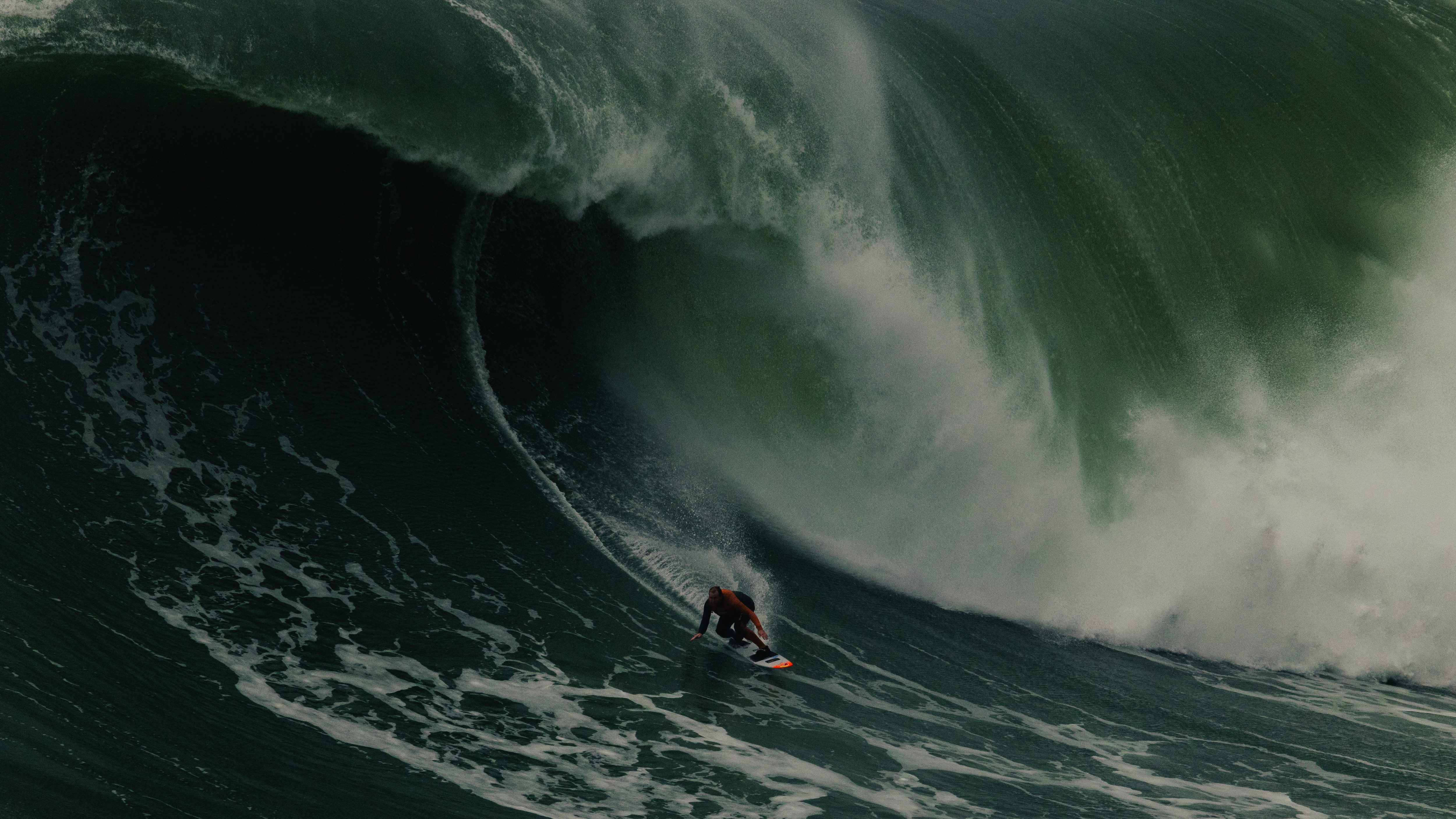
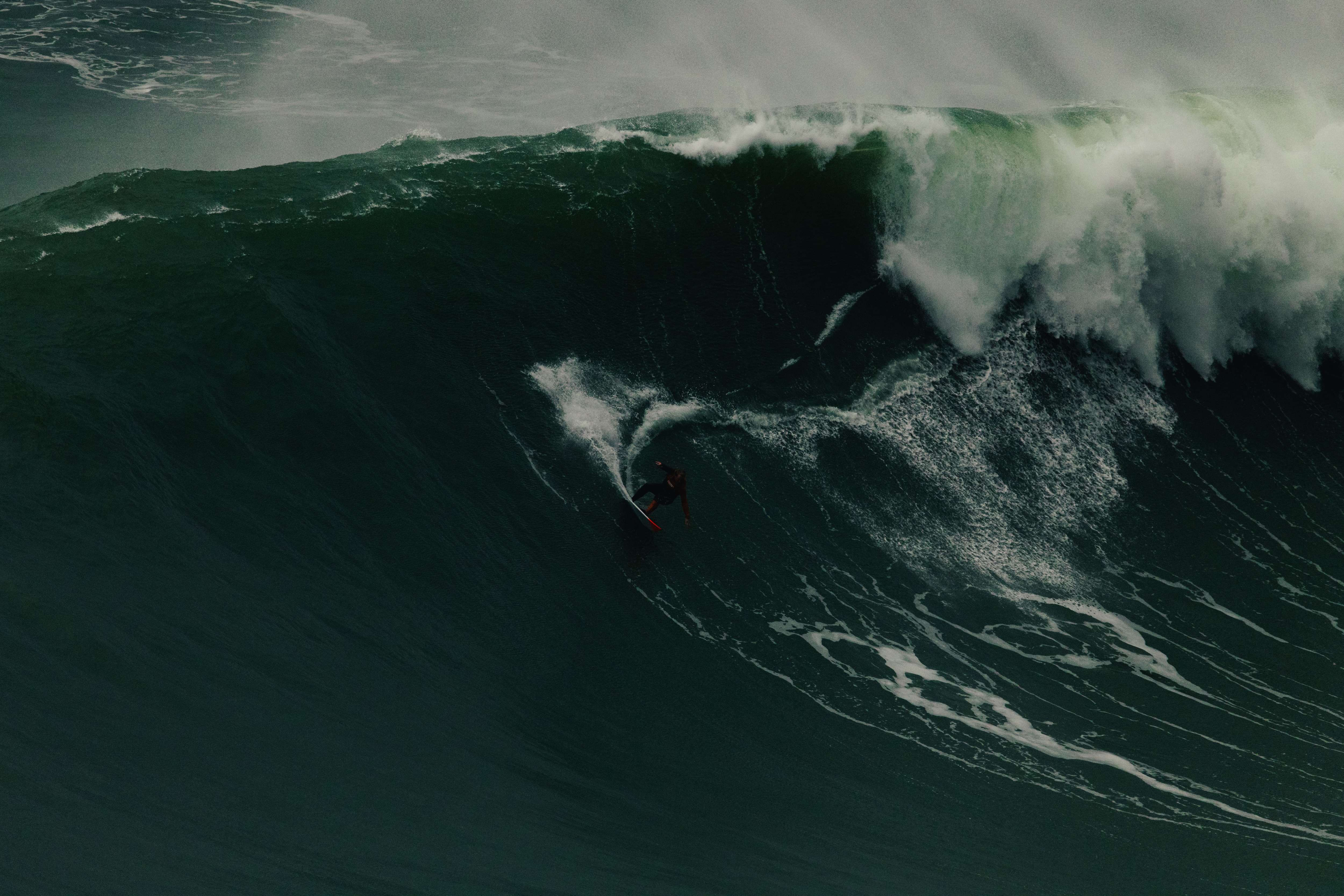
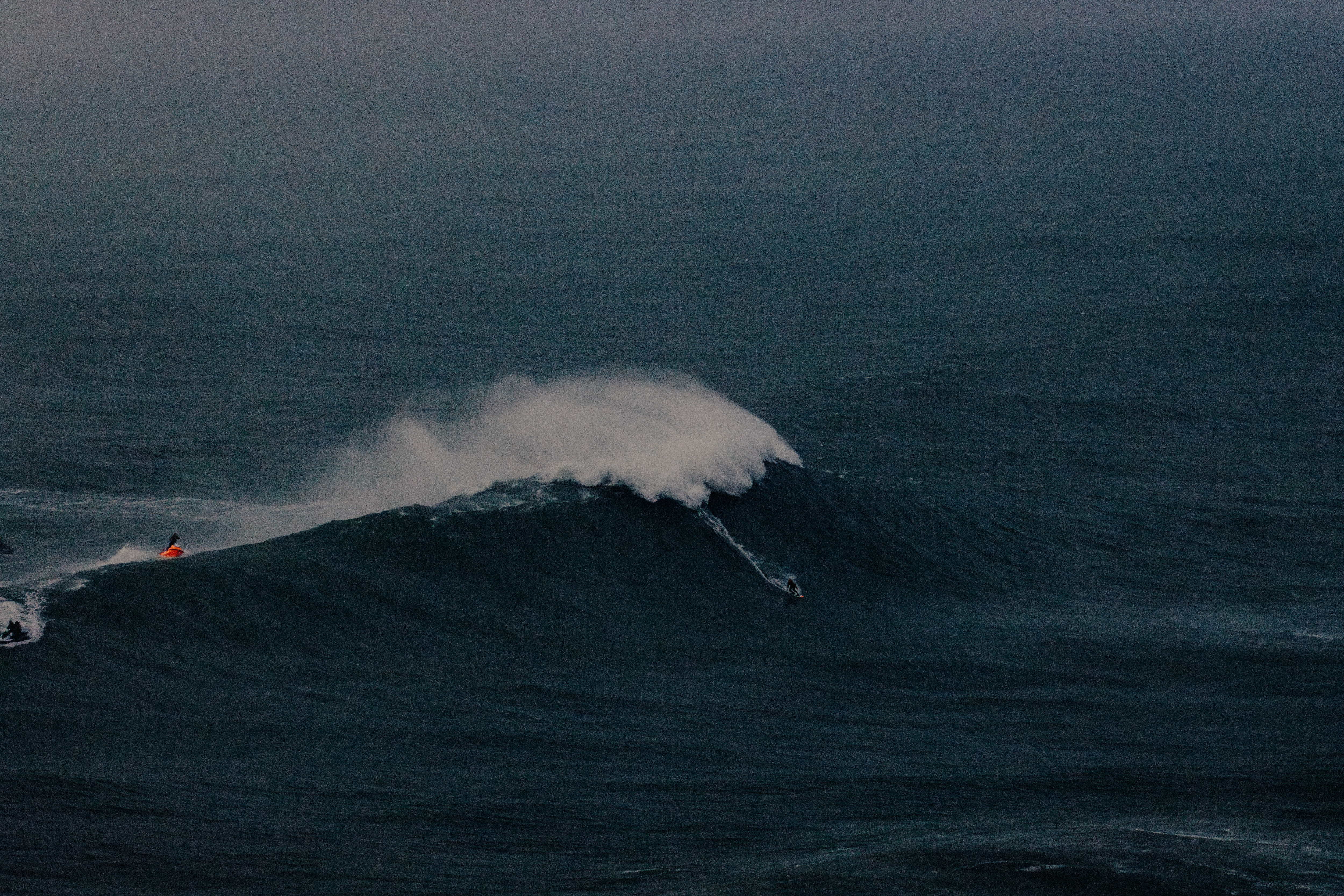
You go through all of that, all the years of training physically, from gym and pool work to breath holding classes, all the months of planning and it can all be for three seconds on a wave. Aside from the actual surfing though that’s one of the great attractions for me; the discovery and adventure. I’ve never been into crowded line-ups, I’ve always wanted to see what else is around the corner.
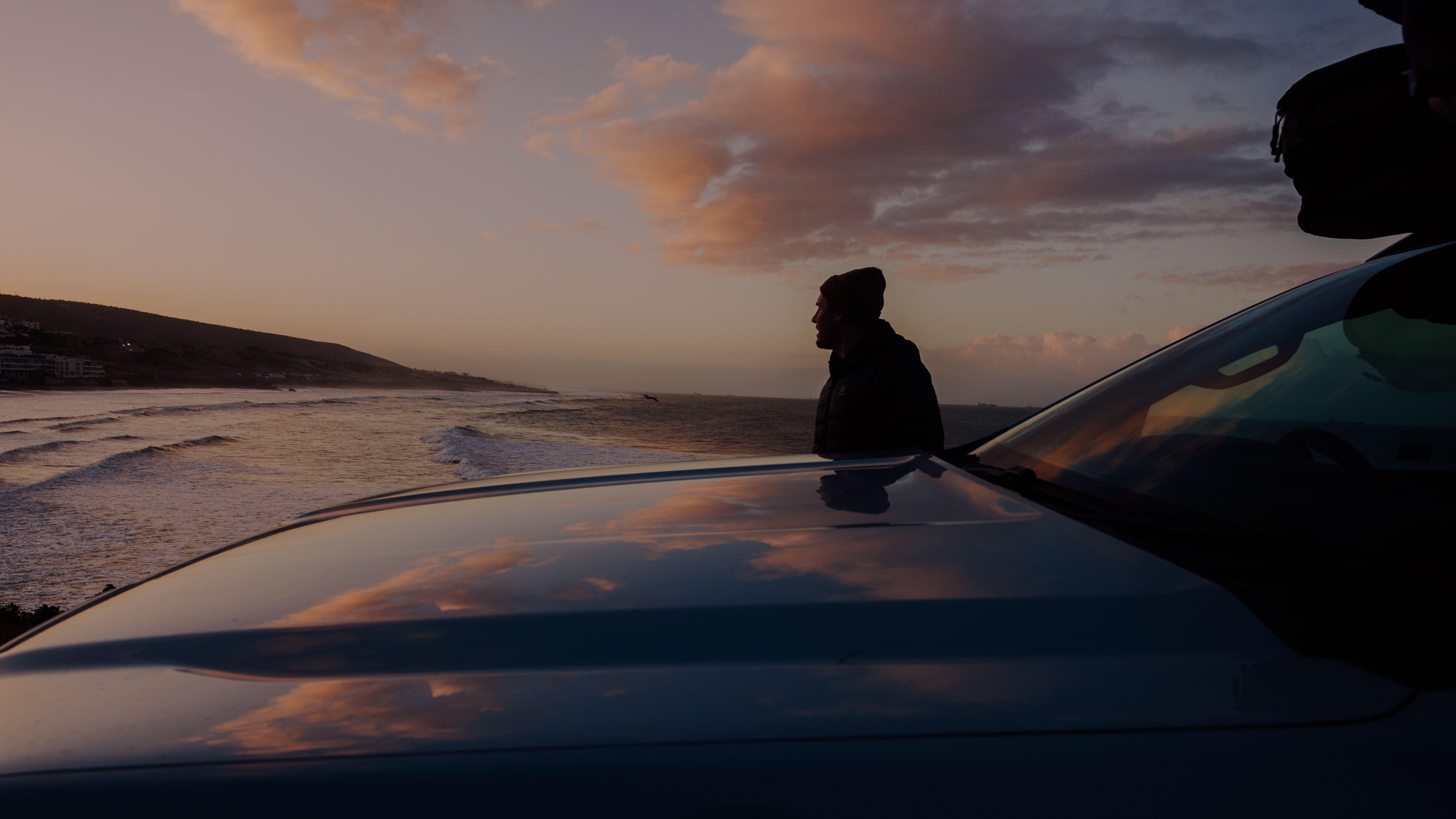
That constant search means you travel a lot. This winter we went all over but were drawn to Morocco where I’d been watching a left (the direction the wave breaks) for years. I took a smashing. I hadn’t been beaten up by a wave like that for a long time, but I learned so much from it about how much I could push myself, how far I can keep going even when I think I’m done.
“ I hadn’t been beaten up by a wave like that for a long time, but I learned so much from it about how much I could push myself, how far I can keep going even when I think I’m done.”Andrew 'Cotty' Cotton, big wave surfer
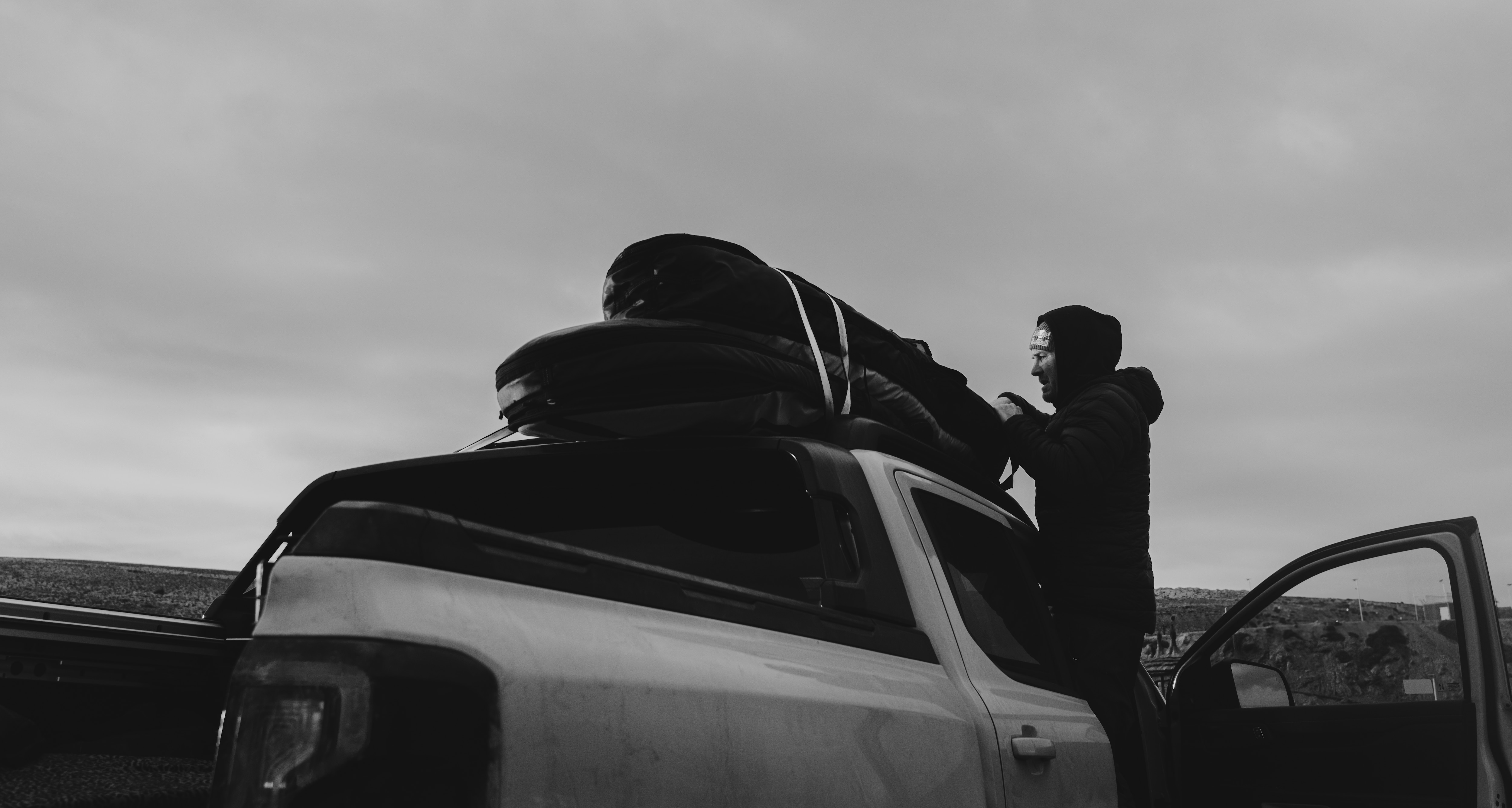
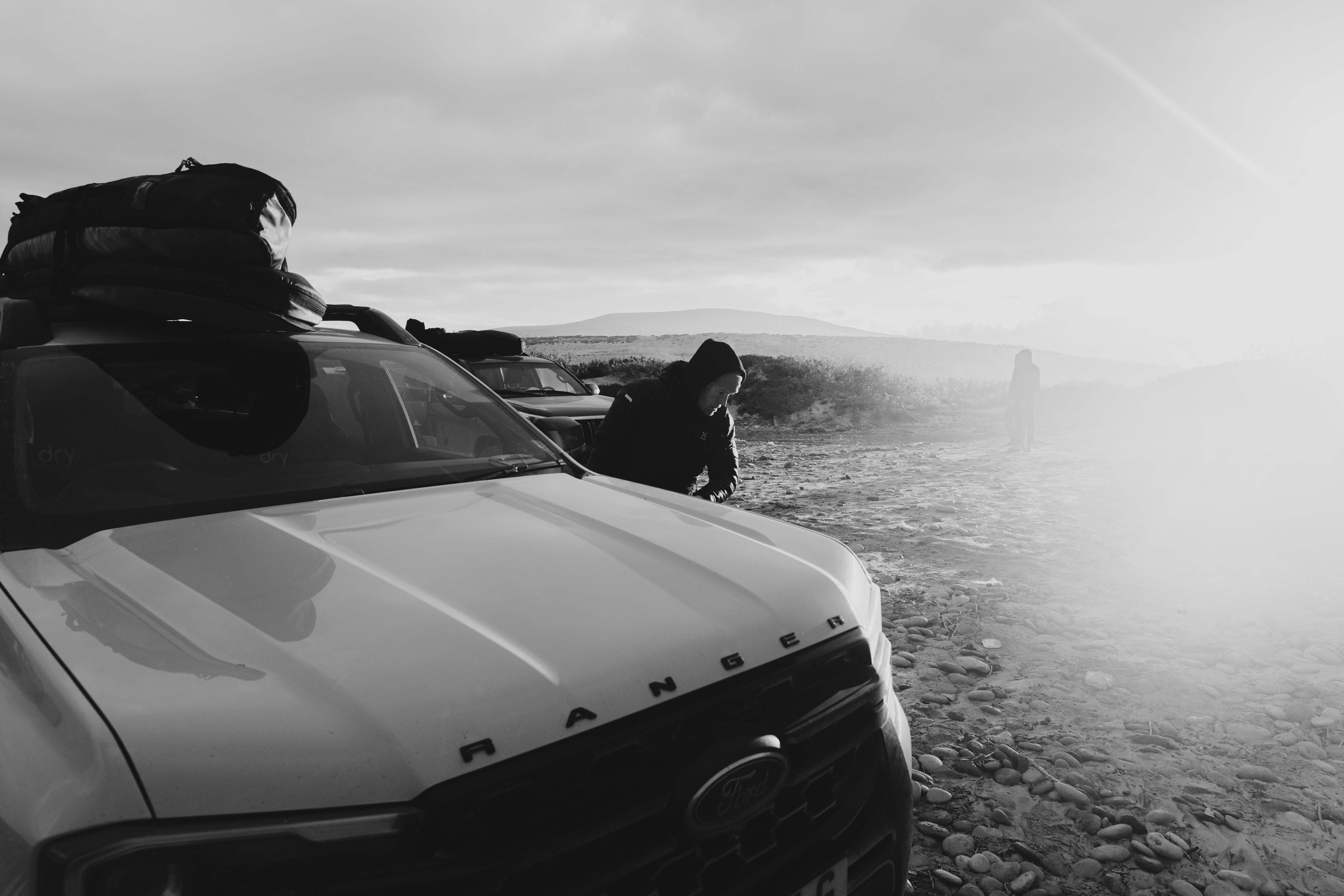
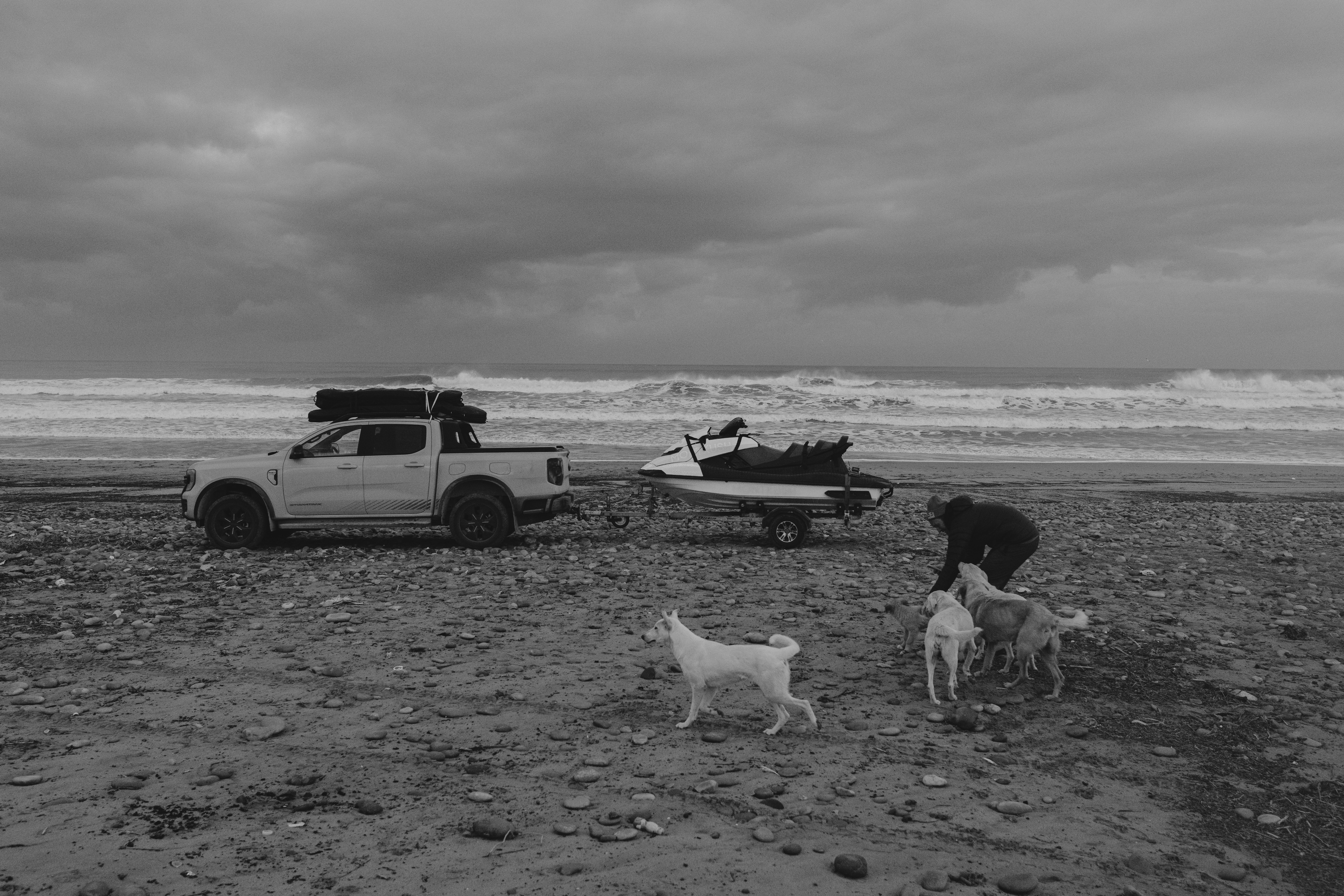
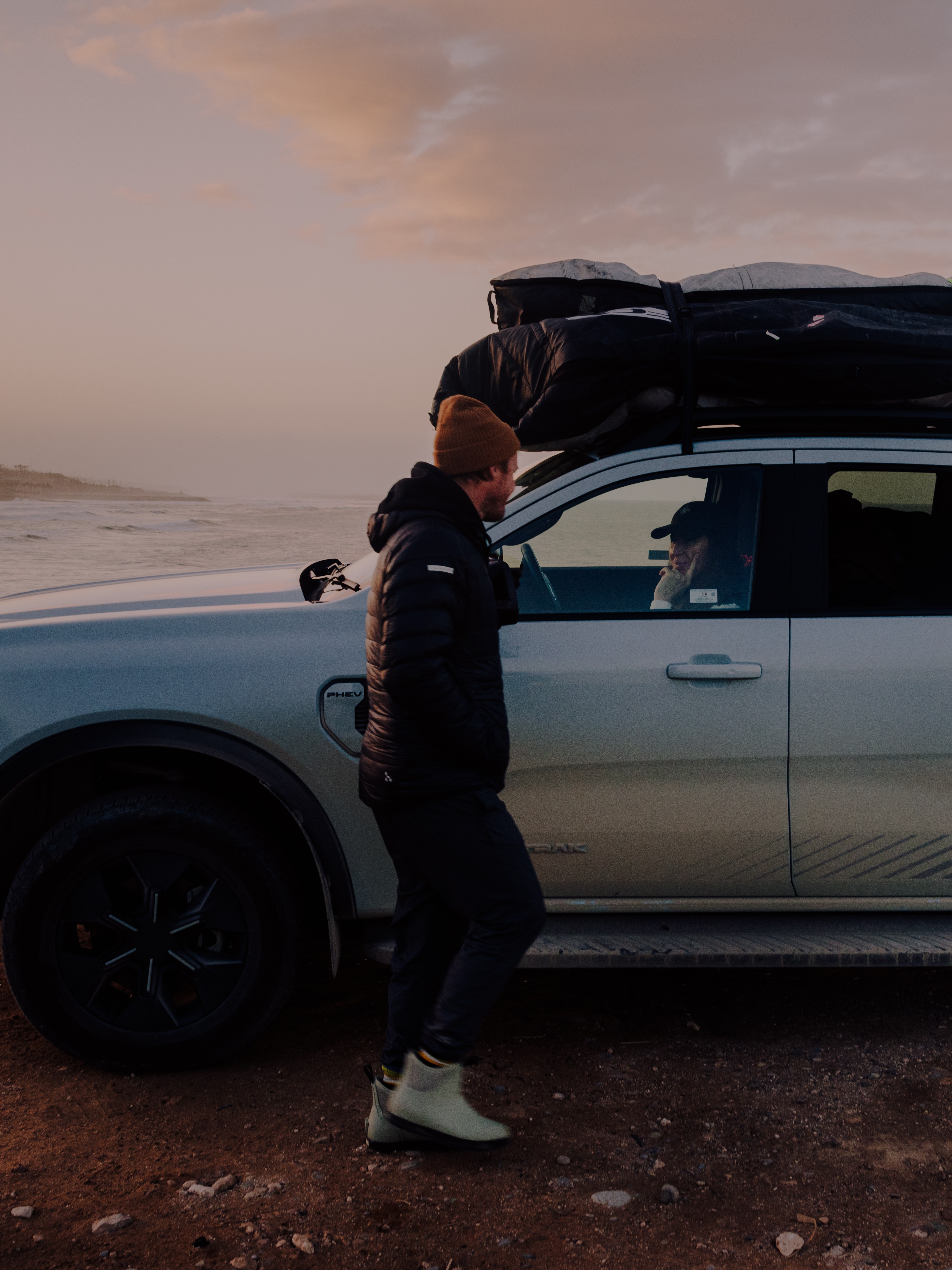
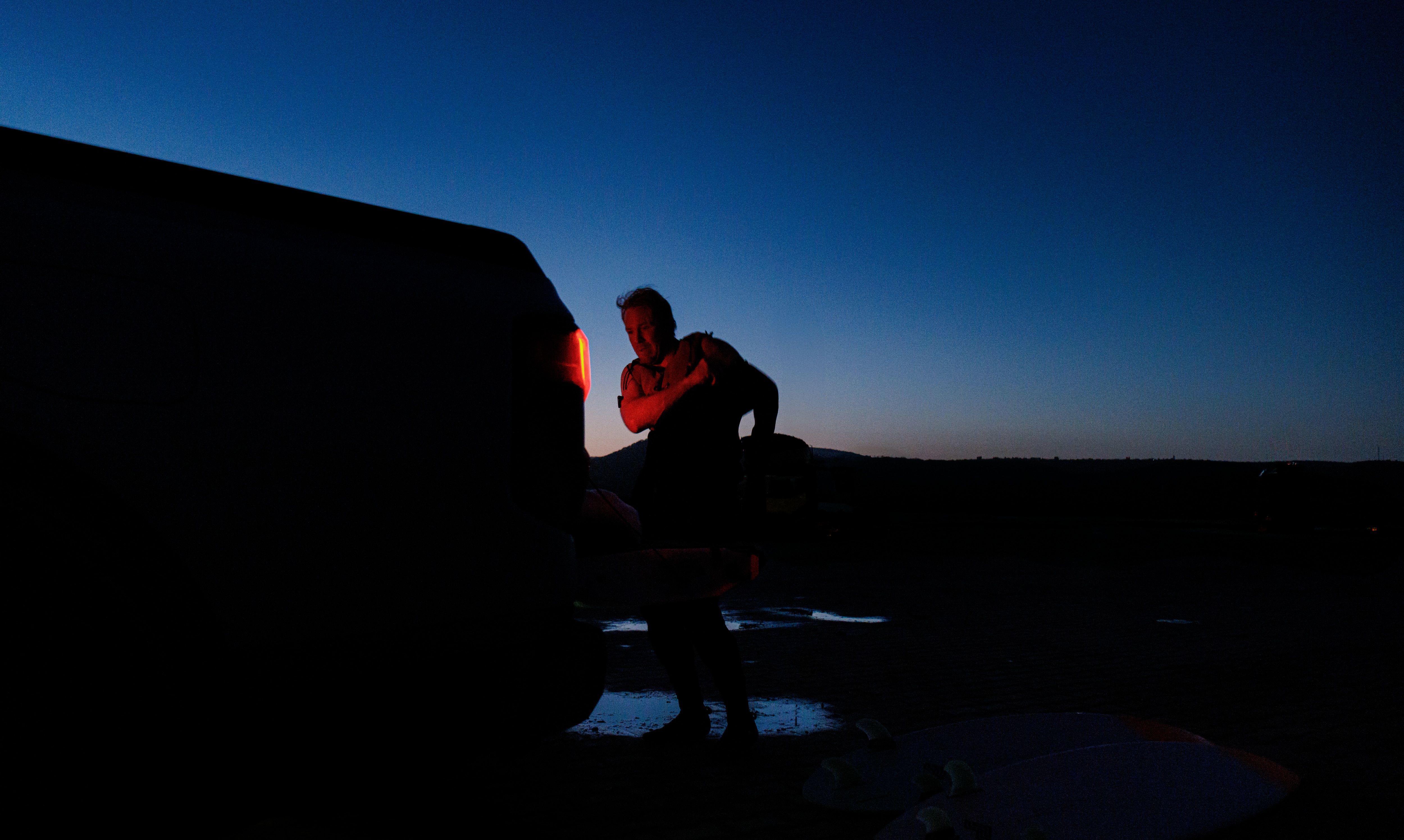
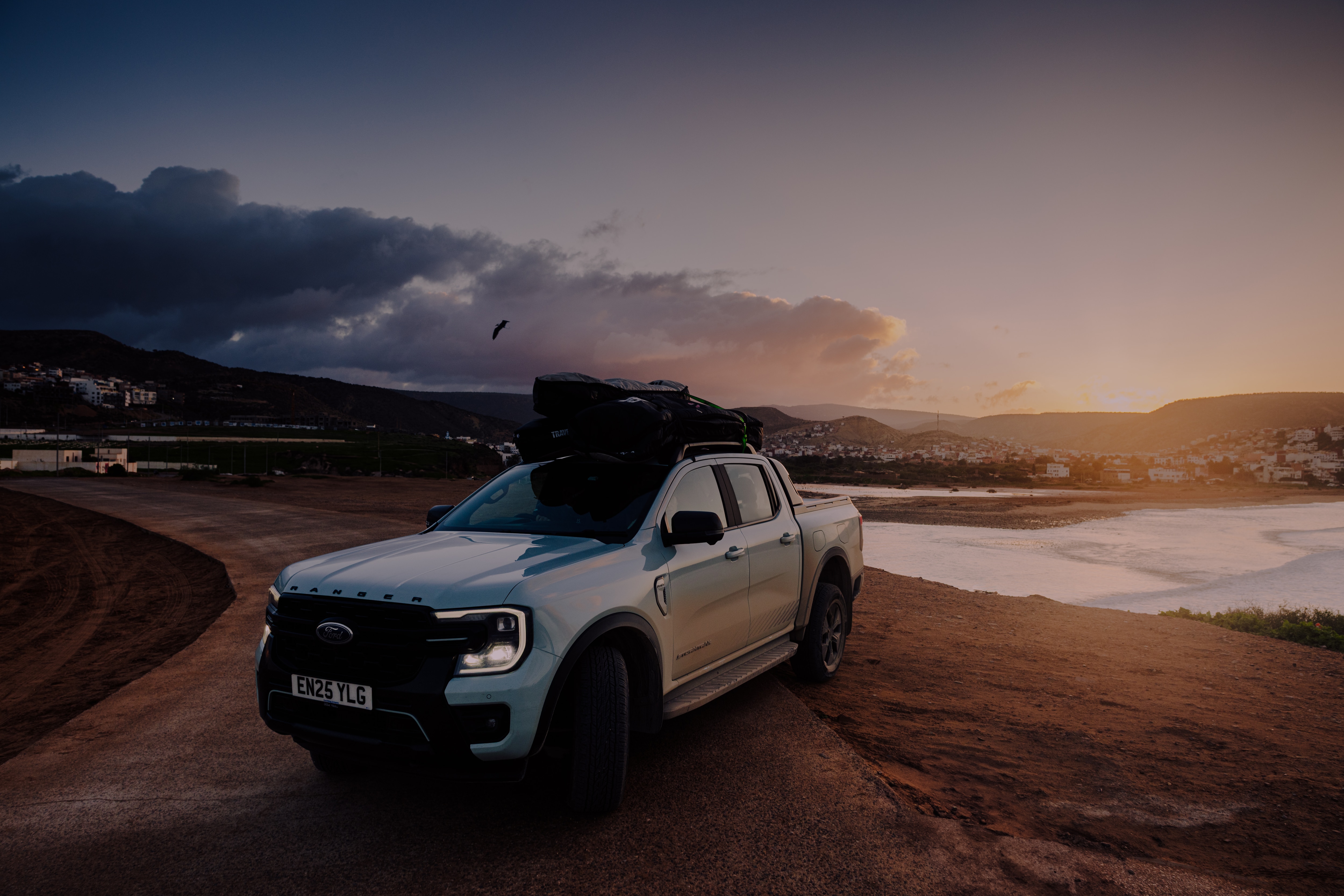
Nowadays, I travel with a crew to capture everything on film. But it’s not like in a skatepark; if you miss the shot of a wave then you’ve missed it. Having a Ranger PHEV 1 with Pro Power Onboard 2 was such a relief, knowing the crew could charge drones and batteries even if we were somewhere totally remote. But sometimes I think it can also be good that some waves don’t get caught on camera. Maybe it adds to the myth of certain spots.
With the winter season for big waves drawing to a close, I’ll finish up in Portugal and then head back to the UK for the summer where I’m renovating my house. The Flexible Rack System on the Ranger PHEV is great for that too. I can get my surfboards on the roof rack, but for sheets of plywood or lengths of pipe being able to extend the rack is brilliant. Whoever thought of that is a genius.
I’ll be planning for next winter too, ready to chase more monsters. I’m 46 years old now, and people always ask when I’m going to stop. The thing is, you can’t fast-track experience, and when it comes to big wave surfing, knowledge and experience count for a lot. Ultimately, I don’t need to be the star of the show; as long as I’m catching my waves I’ll keep going. You don’t retire from passion.
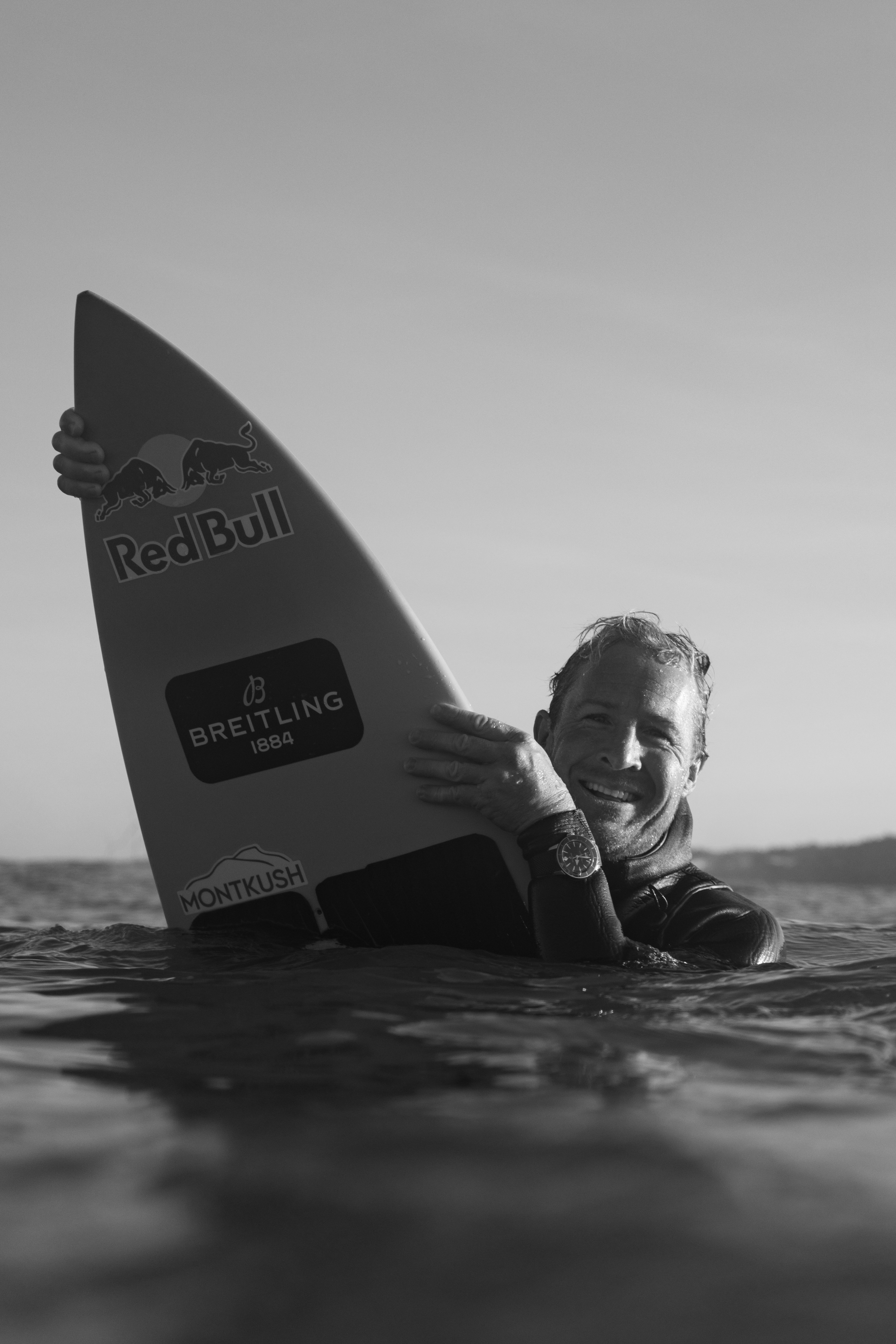
Andrew ‘Cotty’ Cotton is a UK big wave surfer and Red Bull athlete

1 Ford Ranger Plug-In Hybrid homologated CO2 emissions 143-145 g/km WLTP Euro 6e-bis (UK: 70-72 g/km Euro 6e), homologated fuel efficiency 6.2-6.4 l/100 km WLTP Euro 6e-bis (UK: 3.1-3.2 l/100 km Euro 6e) and pure electric driving range up to 43 km WLTP. The declared WLTP fuel/energy consumptions, CO2 emissions and electric range are determined according to the technical requirements and specifications of the European Regulations (EC) 715/2007 and (EU) 2017/1151 as last amended. The applied standard test procedures enable comparison between different vehicle types and different manufacturers. A range of up to 43 km can be achieved with a fully charged battery - depending on the existing series and battery configuration. The actual range may vary due to various factors (e.g. weather conditions, driving style, route profile, vehicle condition, age and condition of the lithium-ion battery)
2 See Owner’s Manual for important operating instructions