
More than a century after Henry Ford walled off a team that created the Model T, the company is again rethinking how it designs and builds vehicles, this time for the electric era.
As other companies pull away from EVs, Ford is expanding operations at its Long Beach, California hub. There, it has brought together tools, talent, and labs to design, test, and refine Ford’s next generation of electric vehicles, beginning next year with an affordable midsize truck.
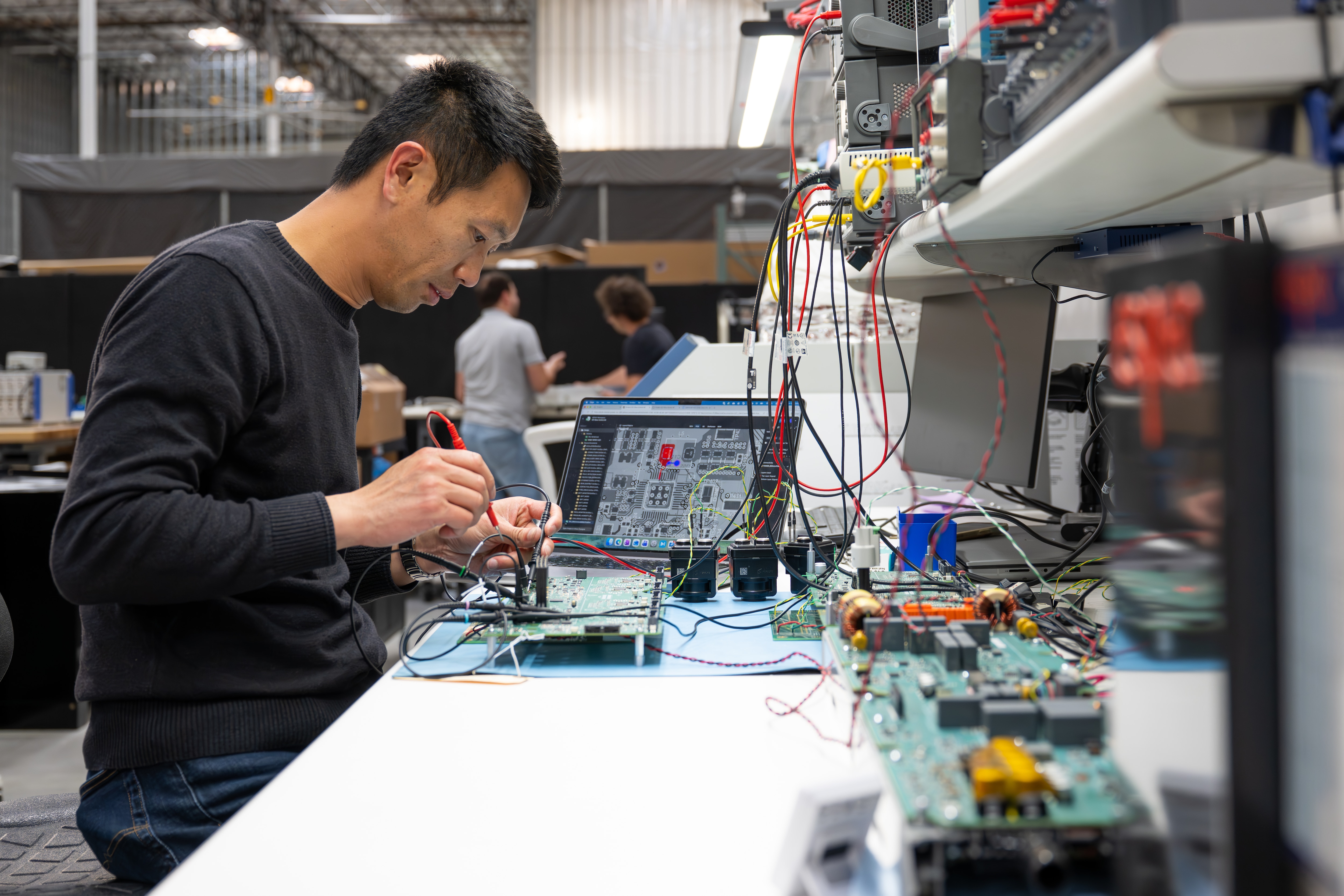
What started three years ago as a secret skunkworks project has grown into a 350-person team at the Electric Vehicle Development Center, blending Ford veterans and newcomers from automotive startups and consumer electronics. Staff from across vehicle development — including designers, engineers, and supply chain experts — work just steps from one another and powerful technologies.
The campus also pairs the speed of a startup with the expertise and scale of a 122-year-old automaker. With freedom to experiment, the right tools nearby, and Ford’s manufacturing know-how behind them, the Advanced EV team can move ideas from concept to testing in hours or days instead of weeks or months — a pace reflected in its mantra of “fail fast, learn faster.”
“Innovation, ultimately, is what is going to help Ford win,” said Alan Clarke, vice president of Advanced Development Projects. “It is a whole different culture when you mix that all up.”
Everything in Long Beach is focused on Ford’s Universal EV Platform. So the team doesn’t have to compete with other products for resources. Work spaces feature a design studio, a complete milling and 3D printing lab, battery development, and real-world testing capabilities.
Akshaya Srinivasan, director of range, performance, and battery systems modeling, has often popped outside her battery lab for discussions with staff from other disciplines. These conversations, she said, have saved tangible dollars.
One recent chat over boba tea with the powertrain team sparked an idea that shaved multiple cells off the battery, reducing costs by hundreds of dollars.
“It is about making decisions quickly, always moving forward,” Srinivasan said. “Being together under one roof, it really does help. It allows us more conversations. You end up solving something more quickly.”
Making of a Hub
This isn’t the first time Ford has sequestered an independent team to retool a design. It’s EVs now, but the first example came in 1907. Henry Ford sectioned off part of the Piquette Plant’s third floor to design a radical new vehicle. The result: the Model T.
When Ford announced its Universal EV Platform last August in Louisville, Kentucky, President and CEO Jim Farley likened the program to a Model T moment, saying the company needed new solutions for electric vehicles.
“We tore up the moving assembly line concept,” he said, “and designed a better one.”
Moving away from the traditions of Michigan while drawing on the company’s history in Long Beach, where it has made vehicles on and off since 1914, is part of the effort to write a new electric chapter.
Early on, Nathan Kollross served as a liaison between the burgeoning Advanced EV team and the workspace architects. The Electric Vehicle Development Center, known as EVDC, started with a 120,000-square-foot building, then quickly grew to include a second, slightly larger one beside it.
“The driver behind our space was never to make a Taj Mahal,” said Kollross, senior operations manager. “It was always functionality and efficiency. Here, we have all the ingredients we need for success.”
The campus layout means teams go from raw material and ideas straight through complete project and testing, with an aim of creating a design and manufacturing plan that can support multiple affordable vehicles.
EVDC Floor Plan

“It is all 100 feet, 200 feet away to get your hands on a part,” Kollross said. “Having the team all in one space and seeing how quickly and efficiently we can work together is the biggest positive.”
Collaborating Creates Change
Daniel Smith, director of occupant architecture and seating at the EVDC, was one of the team’s first employees, back when it was known as “skunkworks”. He recalled sitting alone in an office in nearby Irvine early on. Over time, he’s watched the Advanced EV team and campus take shape.
“These are not people that just got a project assigned to them,” he said, “but people who are mission-driven on that topic.”
Throughout the facility, conversations about building better EVs ping around daily in person, rather than through emails or video calls.
“We can see all these teams and collaborate with them while getting a cup of coffee,” Smith said. “It doesn’t have to be a scheduled meeting two weeks out.”
Before ideas become physical, collaboration goes digital. A meeting room features a floor-to-ceiling LED wall to display life-sized vehicles and is even large enough for the team to drive in multiple prototype vehicles.
Long Beach staff can also use the wall to collaborate with colleagues in Dearborn, Palo Alto, Louisville, or elsewhere, helping speed decisions. Roughly 500 employees at those locations also work on the Universal EV Platform.
“We are not waiting for a more formal forum to make the decision,” said Yohann Ory, head of design.
A Campus Built for EVs
Nothing informs rapid decision making like a finished prototype. Long Beach makes that possible every day with its 22,000-square-foot design studio sitting squarely in the center of the site.
That center features seven milling towers for modeling at scale, 3D printers, a trim shop, and a 360-degree turntable. Every team member has access to a fabrication shop for turnarounds on full-size prototypes that can take as little as 30 minutes or up to just a few days, allowing more iterations while saving time and money.
“We are going to get as much a quality benefit as a quantity and speed benefit,” Smith said. “Our absolute deadline might not change. But we can do three or four more iterations and try more variety, while taking more risks to try crazy ideas in-house.”
Whether an engineer needs to craft from metal, foam, clay, or composites, they can do so with the site’s capabilities. A five-axis Fooke 911 gantry machine with a large robotic arm can carve full-size vehicle models as large as a F-150 in a matter of days. Tools with water-cutting jets can also cut metal.
“Everything you touch goes through the design studio’s hands to make it real for our customers,” designer Eva Ross said. “We go through the whole process from that early initial sketch to understanding the production implications.”
For smaller components, the trim shop, with banks of sewing and cutting machines, offers prototyping for seating and interior elements. No matter the part, Long Beach can sculpt and shape it for a hands-on representation, reducing a typical three-month turnaround to as few as two weeks.
From designing the tiniest knob to the full-size vehicle, Scott Anderson, senior manager of seating, says the team can take a virtual design into a physical product so “that we can all poke and prod and determine what’s good, bad, or absolutely fantastic.”
Testing Early, Quicker Gains
At Long Beach, the Advanced EV team can test prototypes in almost any simulated weather or load condition. Srinivasan, whose work focuses on the battery lab, said this lets teams fine-tune designs and make meaningful changes earlier in the process.
“Having everything here, we can go back to the vehicle and see how it works, take parts off, test a cell,” she said. “And it can all happen in one day.”
That speed is helped by a range of on-site equipment. In the battery lab, a thermal shock chamber tests battery packs and an ultra-high precision coulometer technology simulates years of wear in weeks.
Nearby, a thermal lab can house a full-size vehicle and mimic environmental extremes to see how batteries and other parts hold up. And a climatic chassis dyno lab — a simulation of wind resistance, speed, humidity, and grade using a vehicle strapped down and driving on 48-inch rollers — will help engineers spot efficiencies .
“Testing early, fail fast. That is one of our commandments,” Srinivasan said. “We target zero failures, so we have to understand where they failed. Our goal is to build and design the system that rarely, if ever, fails in our customer’s hands.”
Forging a Future
With the battery accounting for roughly 40% of an EV’s cost, producing the most efficient battery requires foresight. But performance isn’t only about the battery. It also requires innovation across every element of the Universal EV Platform so that future vehicles benefit from the team’s advances.
“We are finding ways to make our vehicles affordable, and not just thinking about the first vehicle,” Smith said. “We have in mind the second, third, fourth, and fifth vehicles that utilize a lot of the same components, assembly methods, the same techniques to save engineering costs over time.”
With a clean sheet, the early skunkworks team joined Ford manufacturing veterans in reimagining the Universal EV’s platform. Staff put everything under scrutiny — the number of parts, the weight of wiring harnesses, hose connections, mounting points, and more.
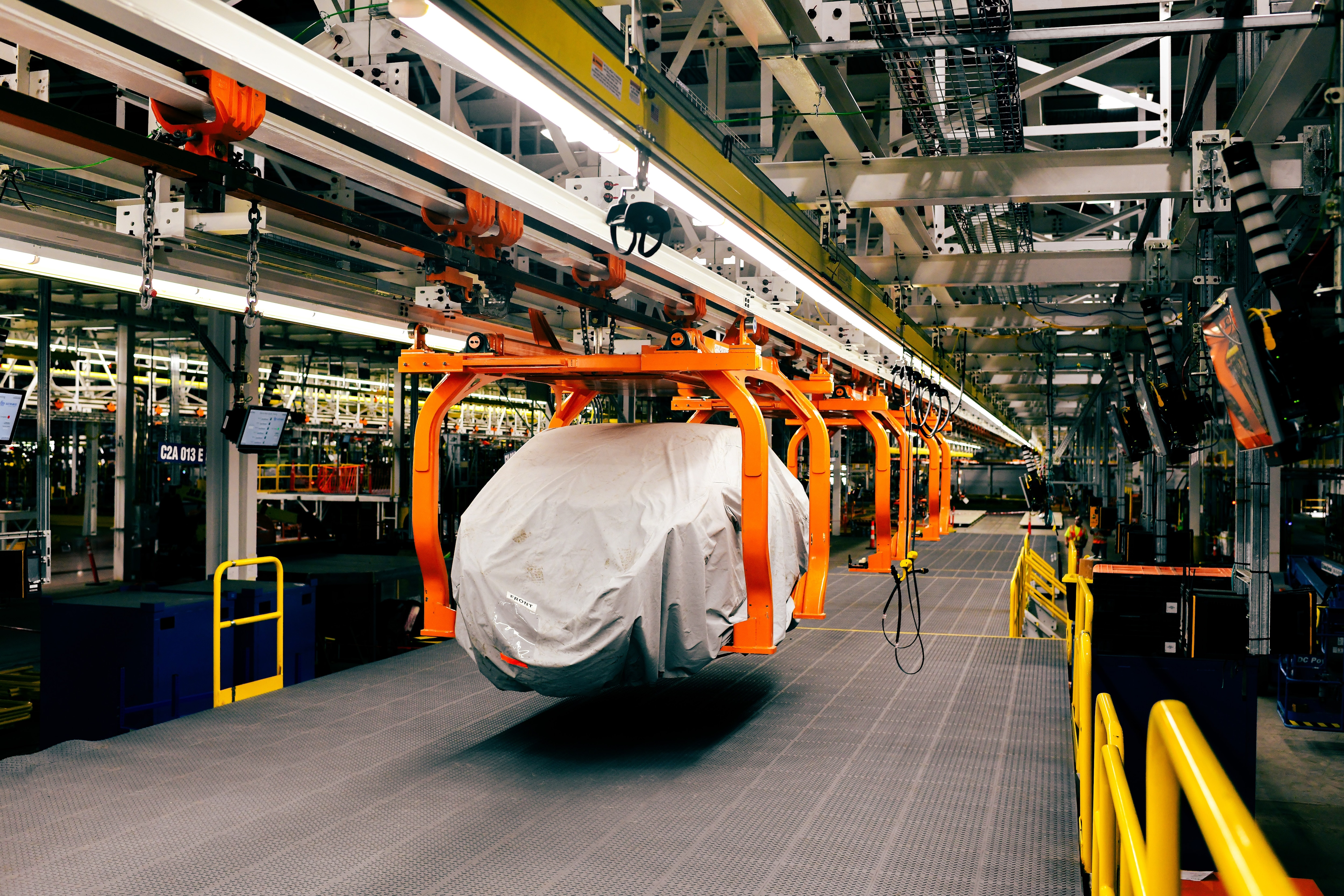
The efficiencies translated into 20% fewer parts and 50% fewer cooling hoses and connections, meaning assembly of the midsize truck will ultimately net out at 15% faster than Louisville Assembly Plant’s previous products.
The changes also improved the ergonomics of the assembly process, with leaders hopeful that operator fatigue will decrease.
Those manufacturing innovations — underscoring the Advanced EV team’s startup mindset and Ford’s industrial capability — will transfer through to the assembly plant in Louisville and other products, ensuring savings across the company.

“I don’t think there is anything we couldn’t build in the space,” Kollross said. “We are dead focused on the program right now. Whatever the engineering teams bring to us, we want to make without having to outsource to other companies.”
The focused approach to EV development is fresh for a company backed by 122 years of tradition. Just like the Piquette plant’s historic third-floor Model T program, the Long Beach campus is critical to recharging Ford’s electric future.
“Culturally, it’s a really big shift,” Clarke said. “Ultimately we deliver this, or we have no justification for existing.”
Tim Newcomb is a contributing writer based in Lyden, Washington.