Ford Makes Progress in Building a More Sustainable Future
Company News
At Ford, our sustainability goals remain constant despite changing global conditions. We remain focused on achieving carbon neutrality across our vehicles, operations, and supply chain by 2050, and we’re making real progress.
I recently spoke with BloombergNEF about how we’re driving toward our goals, the challenges we face, and why transparency matters more than ever. We also discussed Ford’s milestone achievement as the first U.S. company to receive limited assurance on its integrated sustainability and financial report, a step that brings the rigor of financial reporting to sustainability data.
Our approach is practical and customer-driven: expanding customer choice, growing hybrid options and working closely with suppliers to reduce emissions. Sustainability isn’t just a trend for us — it’s a long-term strategy built on collaboration and innovation.
Here are some excerpts from the Bloomberg Q&A:
A: In 2019, Ford established 10 aspirational goals, and one of those was to be carbon neutral no later than 2050 for three aspects of our company — for our vehicles, our manufacturing facilities and our suppliers. We determined those three by focusing on the data: our vehicles constitute over 85% of our emissions, our facilities about 1% and our suppliers about 10%.
For our vehicles, we have a whole fleet of powertrains that help us to decarbonize our fleet, from hybrids to extended range electric vehicles to plug-in hybrids. Fuel cells are the future for some of our larger products. We are also investigating low carbon fuels and carbon-free electricity for our vehicle use.
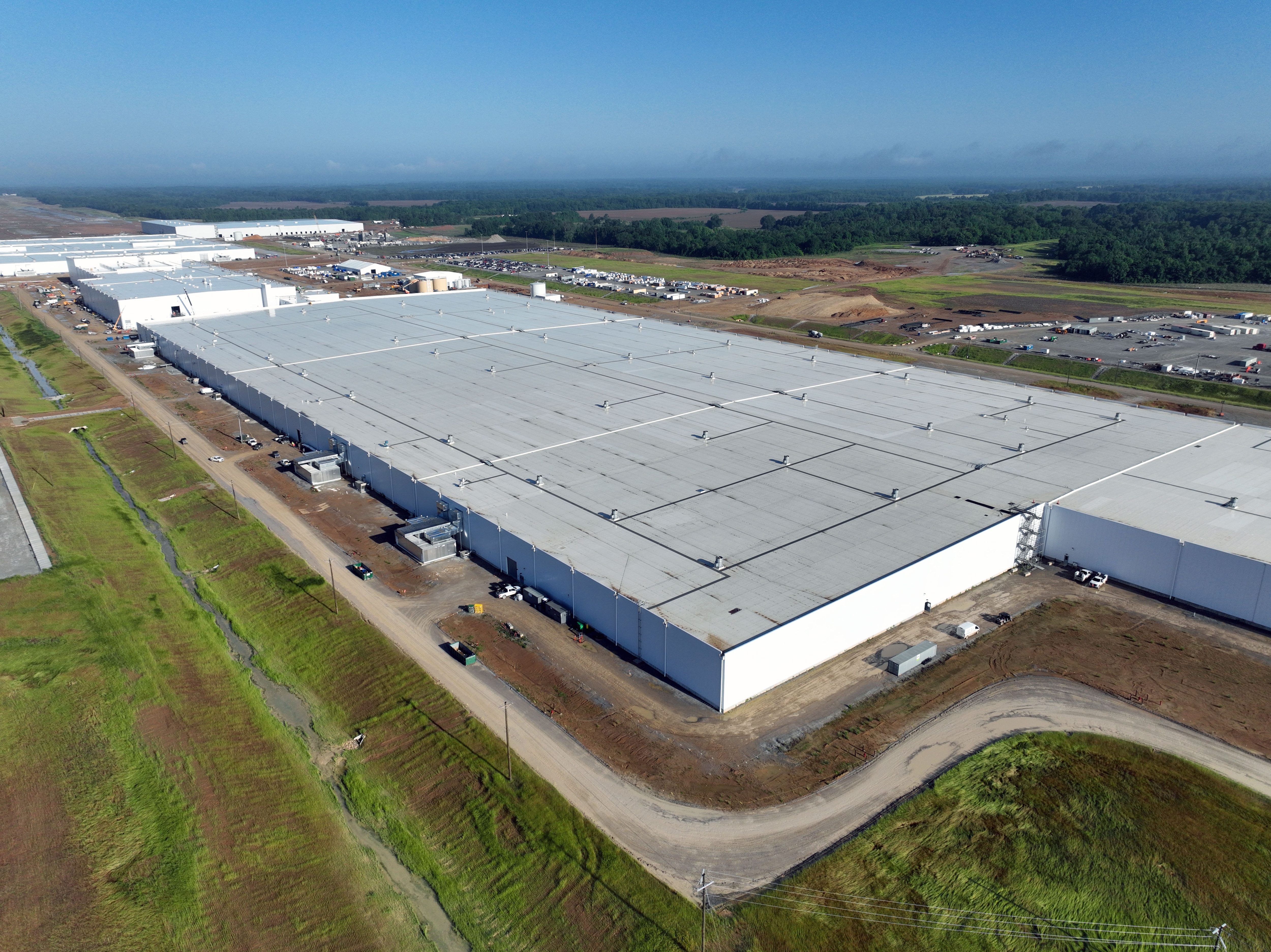
Moving on to operations, we are working hard to reduce the amount of energy that we use in our manufacturing facilities. We think of it from a strategic perspective where we want to conserve our energy, use energy more efficiently and use lower-emission energy as well as renewable energy. By 2027, all Ford facilities in our home state of Michigan will run on 100% carbon-free and renewable electricity.
We set carbon neutral targets with our suppliers. Earlier this year, we have set a new aspirational goal for our suppliers to reduce their carbon footprint by 25% by 2030. We are also asking our suppliers to set science-based greenhouse gas (GHG) reduction targets to support carbon neutrality by 2050.
A: Ford’s big-picture sustainability goals remain unchanged. We are fundamentally driven by a desire to build a better world — to enhance the lives of our people, strengthen the communities we call home and protect the planet we all share.
Over the past year, we decreased our carbon footprint across our vehicles and operations while increasing our use of carbon-free and renewable electricity. We’ve seen a 49% reduction in absolute global operations GHG emissions since 2017, and a 16% reduction in total Scope 3 GHG emissions since 2019.
Overall, our sustainability strategy concentrates on better products, better business practices and working better together with our partners, industry peers and local communities to drive progress.
A: We adapt. We designed our product portfolios for maximum flexibility, so we're prepared until customer demand naturally increases and drives adoption. Meaning, that’s when we can’t keep electric vehicles on the lot, when the consumers are running to the dealership and buying them all up. Until that pivot happens, you'll have a lot of these near-term changes and fluctuations.
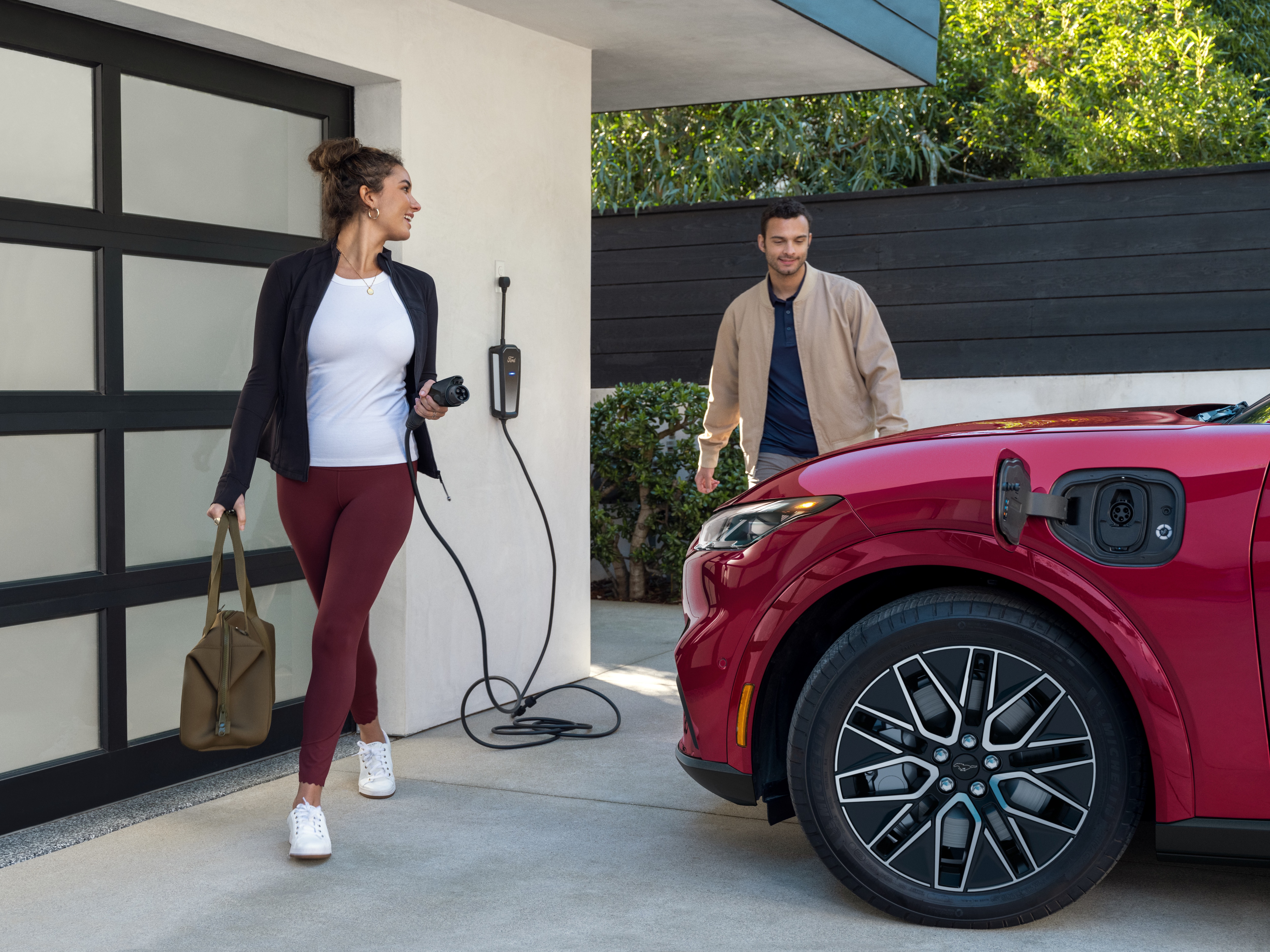
I'll share myself as an example. I recently got a charger installed at my house, and I live in a home that was built in the 1800s. I had to have the charging company come out to my house at least five different times to figure out how to adapt this new technology — an electric vehicle charger — to the old infrastructure of my home. If you start scaling up home chargers across the whole US, you can only imagine all the challenges. Or they opt for public charging, and the chargers wouldn't be working sometimes.
As soon as we've flushed through the early adopters and electric vehicles are more mainstream, and you have the customer demand and the infrastructure, you can start pivoting. You'll always have near-term challenges in markets all over the world. We're a global company. We have to think on a much broader basis than on the four-year election cycle and make short-term adjustments as needed but know where we're headed in the future.
A: One thing we really haven't talked about is this: we are the first US company to achieve limited assurance on our integrated report. That was pretty hard. We've been publishing a sustainability report — and migrated to an integrated sustainability and financial report — for the past 26 years.
What made the 2025 report different was that we had a sustainability statement that was audited. It went through a limited assured audit through PricewaterhouseCoopers. We had to take a rigor that is typically applied to 10-K financial reporting and apply that to sustainability reporting.
Every data point in the sustainability statement has gone through multiple layers of verification to prove that that data is correct. For instance, all our electricity data from all over the world was audited to make sure that our renewable electricity percentages that we state in our sustainability statement are correct.
Our auditor had to go through thousands of statements, add up all the carbon-free electricity, and make sure the carbon-free electricity total matched the total that we stated in our report. We've never had this level of rigor before. Every sentence we wrote, we had to verify.
Our report now meets the expectations established in the European Corporate Sustainability Reporting Directive.
Mary Wroten is Executive Director, Global Sustainability, ESG and the Environmental Quality Office.